
Find out what the propagation and garden teams have been up to this week.
Thriving in the heat - part 2
POSTED 10th June 2026

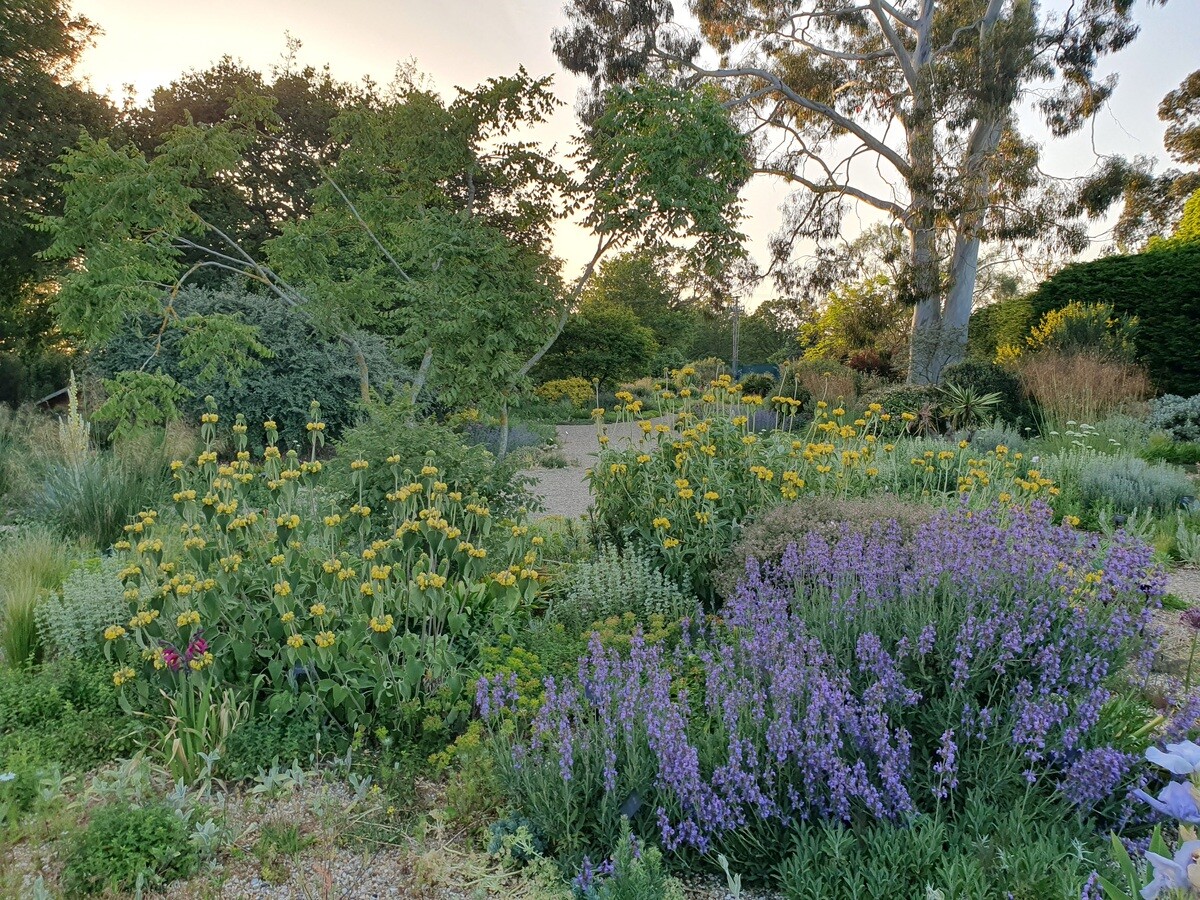
Welcome to the second part of the blog, highlighting the plants that remained impressively unfazed by the scorching May Bank Holiday heatwave.
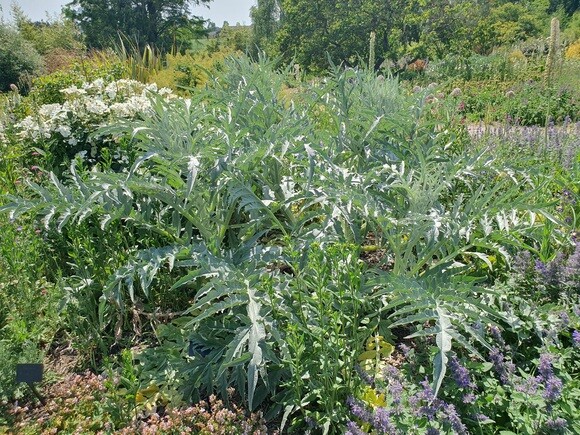
One plant I long to grow at home is Cynara cardunculus, but with limited space I must settle for admiring it here at Beth’s, where it forms dramatic mounds of boldly cut, silver-grey foliage – an unmistakable architectural presence in the garden. By summer, towering flower stalks rise above the clump, each topped by luminous purple thistle-like blooms, known for attracting bees and other pollinators.
The deep rose-pink flowers of Centaurea 'John Coutts' pairs beautifully with nepeta, salvia, hardy geraniums and hemerocallis, flowering for months if dead headed regularly. For a smaller space, Centaurea bella (Caucasian cornflower) offers a compact, equally charming alternative.
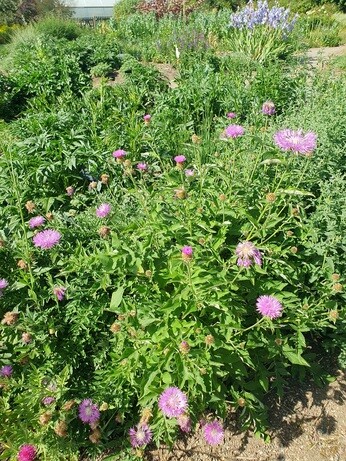
Centaurea 'John Coutts'
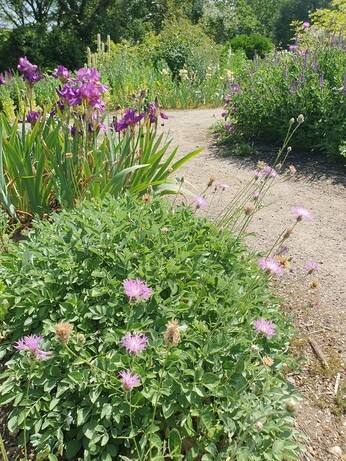
Centaurea bella
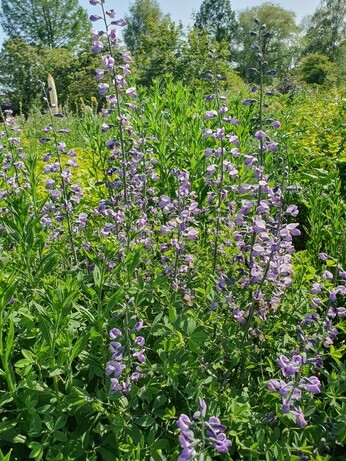
Baptisia sinks its roots deep into the ground, giving the plant remarkable drought tolerance. With their bold, colourful spires, they make an excellent lupin substitute and once the blooms fade the foliage remains attractive, providing a quiet backdrop for later blooming perennials.
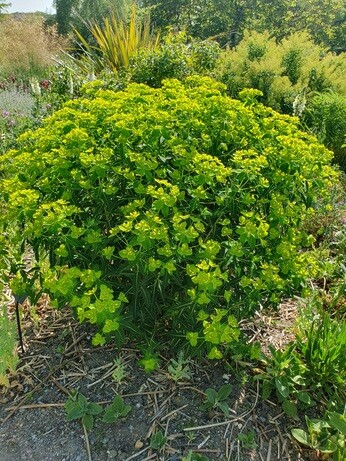
Euphorbia cornigera is a striking and reliable spurge with a compact habit and vibrant lime-yellow bracts over a long period.
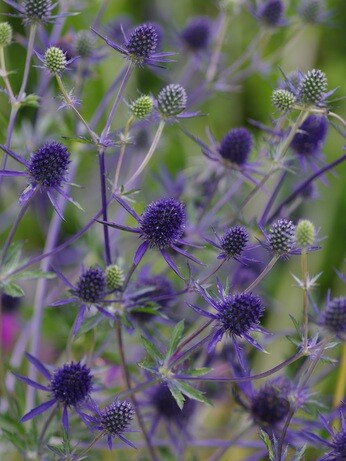
At this stage, before it begins to colour, most people walk straight past this sea holly without giving it a second glance. Eryngium planum 'Blaukappe' emerges a muted silver-green, then slowly intensifies into a striking metallic blue. In richer soil the colour softens and the plant relaxes its posture – still beautiful, but without that electric charge.
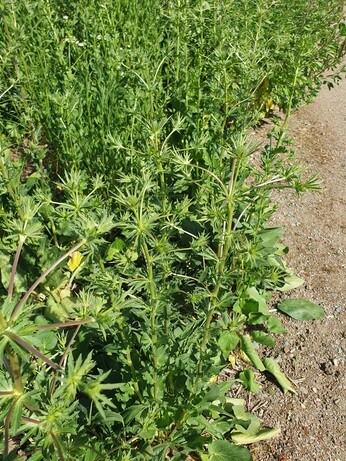
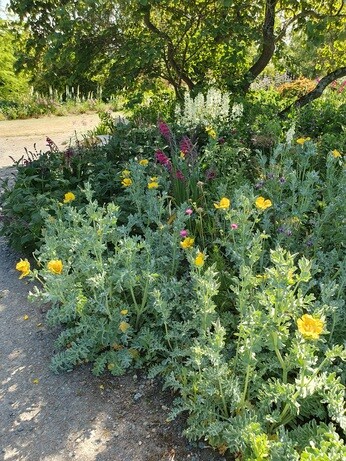
Glaucium flavum is a perfect example of the kind of plants we love to grow: drought resistant, long season of interest and pollinator friendly. Our native yellow horned poppy forms an attractive rosette of deeply ruffled, glaucous foliage, giving it presence even when it’s not in bloom. After the bright yellow flowers fade, the long, elegantly curved seed pods – the feature that inspires its common name – continues to add sculptural interest.
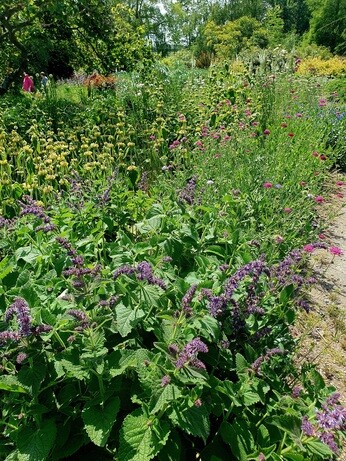
Knautia macedonica (pronounced naughty-ah) is known for its long blooming time. Dead headed regularly, it continues to send up wiry branched stems, topped with crimson pin-cushions. We’ve paired it with Scabiosa columbaria subsp. ochroleuca – which appears to be even more resistant to hot, dry weather - Salvia verticillata, amsonia, Phlomis russeliana and Calamagrostis x acutiflora ‘Karl Foerster’.
Amsonia, aptly called bluestar, is a fantastic genus of hardy, resilient plants that offer an impressively long season of interest. Like baptisia, their deep root system makes them highly tolerant of heat and drought. In our Reservoir Garden the clump-forming Amsonia 'Ernst Pagels' produces pale, slate-blue flowers in early summer and carries slender willow-like foliage that turns a lovely golden yellow in autumn. Across the path, Amsonia 'Blue Ice' grows lower in stature, with clear sky-blue flowers and a habit of spreading slowly by underground runners.
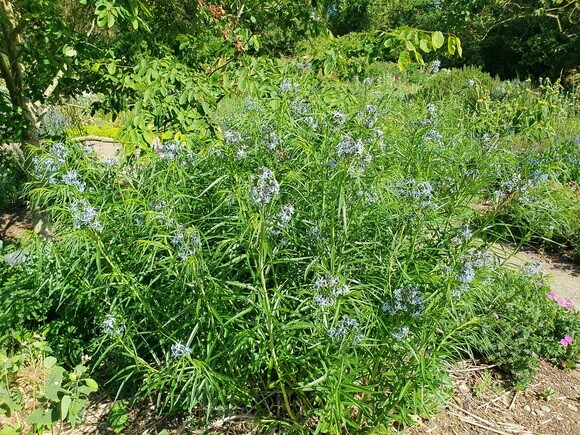
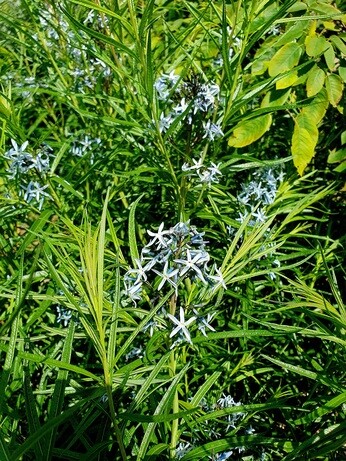
Amsonia 'Ernst Pagels'
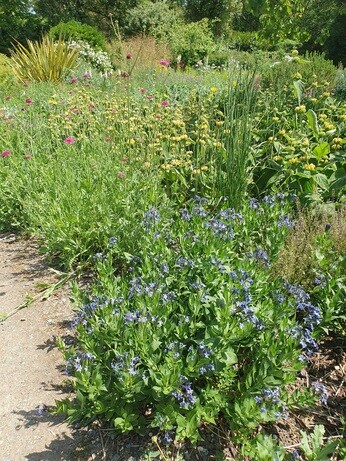
Amsonia 'Blue Ice'
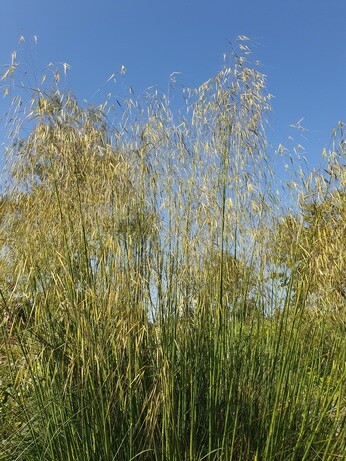
The oat-like flower heads of Stipa gigantea have not yet reached their full height; some may remain shorter than usual this year due to the dry spring we’ve had. Gardening in one of the driest parts of the UK, and on predominantly free draining soil, we often find that our plants develop a more compact habit compared with those grown in lusher conditions.
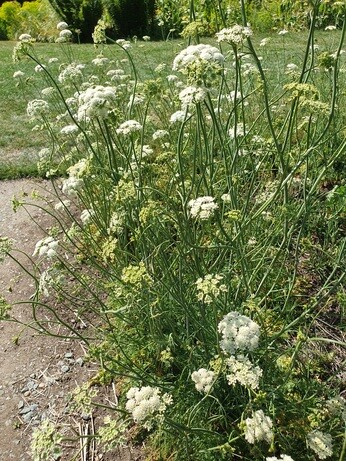
Among the umbellifers, Oenanthe pimpinelloides stands out for its reliability and impressive drought tolerance. A British native, it thrives in both damp and dry grassland. Its foliage forms a dense, ground hugging carpet, so pair it with companion plants robust enough to hold their own. It scatters its seeds freely yet never tips into unruliness.
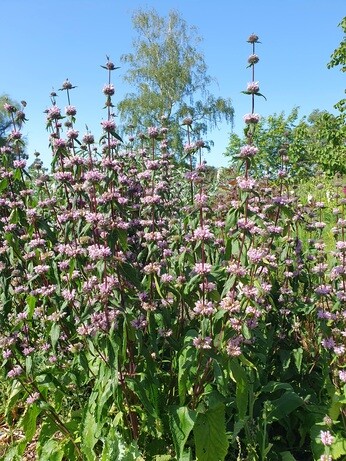
Phlomoides tuberosa 'Amazone' makes a superb vertical in a sunny border, sending up tall stems ringed with whorls of hooded lilac flowers, which later mature into sculptural seedheads, adding long-lasting architectural interest and a strong silhouette that persists well into autumn.
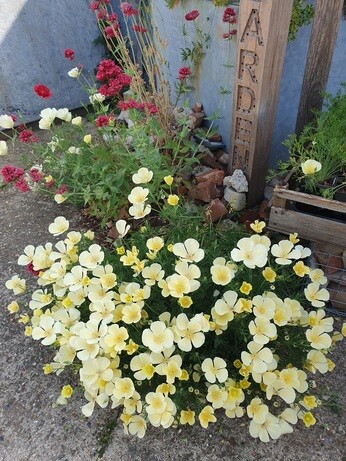
We only grow the pale cream form of Eschscholzia californica – any plants that revert to the typical bright orange are removed immediately to prevent polluting the seed strain. This selective approach keeps the population in the garden true to type, ensuring a consistent pool of soft cream colour, rather than the usual fiery tones.
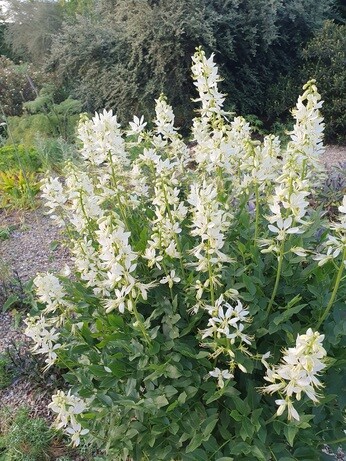
Dictamnus albus var. albus – the white-flowered form of burning bush is known for its hardiness and longevity. Like its pink-blushed sibling, it can be a little bit slow to settle in, often taking a couple of seasons before it truly decides to perform. But once established, it rewards patience with a mature clump of spires carrying the loveliest pure-white flowers, later followed by star-shaped seed capsules.
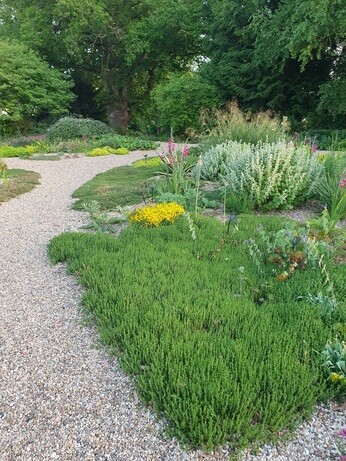
Teucrium x lucidrys is one of the best evergreen groundcovers for a dry garden. There appears to be some confusion over the name – our superb form makes a ground-hugging carpet of dark green, crinkly edged, glossy leaves. Smothered with nectar-rich, rose-pink flowers in summer – audibly buzzing with bees. After flowering we give it a haircut to encourage fresh growth. There’s also a low, bushy subshrub that goes under the same name.
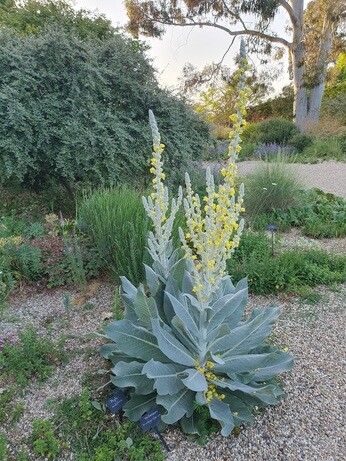
Verbascum bombyciferum, commonly known as giant mullein - a biennial bringing real theatre to a garden, forming a huge rosette of densely felted leaves in its first year. The following year it sends up a tall candelabra head studded with yellow flowers.
There so many more plants worth mentioning that I haven’t yet included. Digitalis purpurea f. albida, the elegant white form of the common foxglove, is looking particularly lovely at the moment, unbothered by the heat. Later-flowering perennials such as sedum, hylotelephium, Oenothera lindheimeri and agapanthus also deserve recognition, as do a number of drought tolerant shrubs: santolina, lavandula, phlomis, Bupleurum fruticosum, Genista lydia, Salvia officinalis, Spartium junceum, Argyrocytisus battandieri.
I really must stop now – though it’s tempting to keep going.
Åsa, Head Gardener
COMMENTS