
Find out what the propagation and garden teams have been up to this week.
Gardening Dilemma - Part 4
POSTED 22nd July 2026

Welcome to the fourth in our new series where Head Gardener Åsa and Head of Horticulture Steve share their expert advice on tackling your gardening and garden design dilemmas.
'My husband and I are on our seventies. How can I make my garden easier to manage? I can’t keep cutting back the geraniums, oriental poppies and I can’t cope with staking tall plants which flop over if unsupported. I also don’t want to have to do too much watering. What plants should I use and how do I convert what I have? I need easy care.
I live in Norfolk.'
-Judith
This is such a thoughtful question, and one that many gardeners are asking. The good news is that an easier care garden doesn't have to mean a less beautiful one. In fact, many of the most natural looking gardens are also among the least demanding.
Rather than thinking about replacing everything at once, I'd suggest editing the garden over a few years. Each autumn, remove the plants that ask the most of you and replace them with ones that are naturally well behaved.
The plants you've mentioned are all lovely, but they're quite labour intensive:
- Hardy geraniums often need a midsummer haircut to keep them tidy.
- Oriental poppies leave large gaps after flowering.
- Tall perennials that require staking inevitably create extra work every spring.
Instead, I'd look for plants that naturally hold their shape, have a long season of interest and are happy with Norfolk's generally dry conditions once established.
Some of my favourites are:
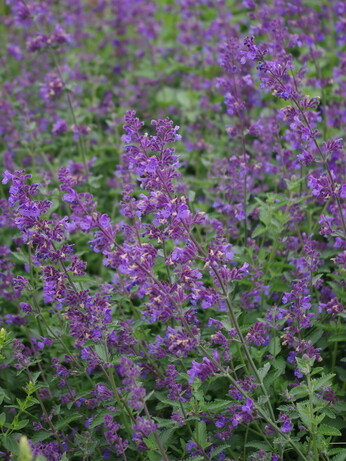
- Nepeta 'Walker's Low' – long-flowering and rarely needs more than one tidy up.
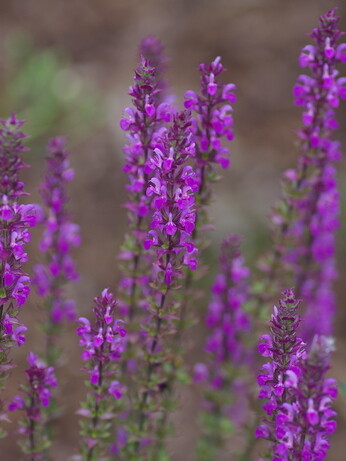
- Salvia nemorosa cultivars – upright, repeat-flowering and self-supporting.
- Stachys byzantina – lovely silver foliage that suppresses weeds.
- Sesleria caerulea – a neat evergreen grass that never really flops.
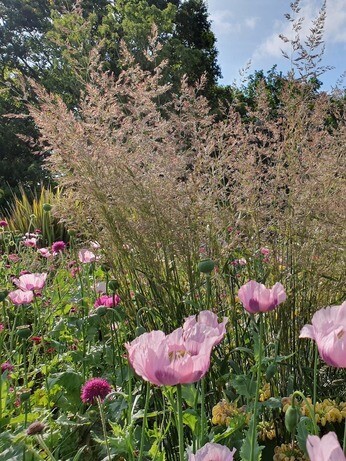
- Calamagrostis 'Karl Foerster' – one of the few taller grasses that stays upright without staking.
- Hylotelephium (formerly sedum) – excellent for late summer and autumn, with seedheads that look good through winter.
- Geranium macrorrhizum – unlike many hardy geraniums, it forms a tidy, weed-suppressing carpet and doesn't usually need cutting back mid-season.
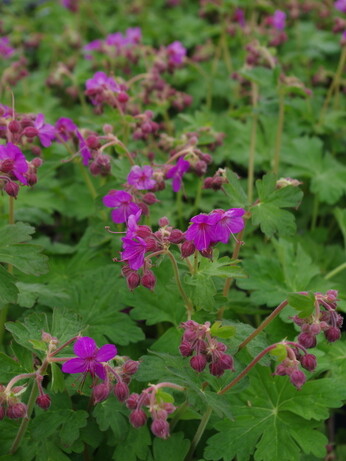
Let shrubs do more of the work
One of the biggest changes you can make is to rely a little more on shrubs and a little less on high maintenance perennials.
Shrubs such as cistus, choisya, pittosporum, hebe and spiraea provide structure all year and usually only need an annual prune, or none at all. Dwarf forms of deutzia, weigela, syringa and Hydrangea paniculata produce a profusion of blooms, while staying a manageable size. Sarcococca and Skimmia x confusa ‘Kew Green’ are great evergreen choices for shade, known for their captivating scent that can fill the air in late winter and early spring.
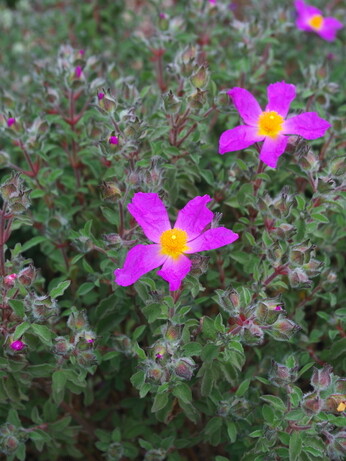
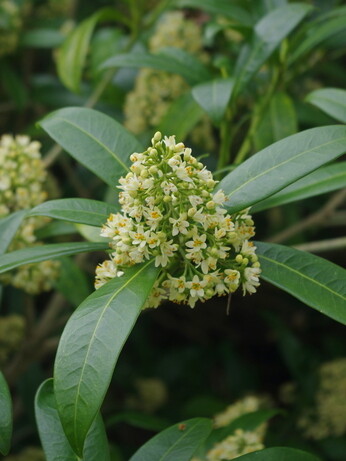
Don't be too tidy. Leaving grasses and sturdy seedheads standing through winter means you only need one main cut back in late February, rather than constantly tidying throughout the year. It also provides food and shelter for birds and insects.
In summary
If I were redesigning your borders, I'd aim for a matrix of:
- evergreen ground cover,
- clumps of reliable grasses,
- repeat flowering salvias and catmints,
- autumn sedums,
- a few shrubs for year-round structure.
It would still be colourful and wildlife friendly, but without staking, frequent cutting back or endless watering.
A new approach to gardening
Finally, I'd encourage you to give yourselves permission to garden differently. A garden doesn't have to be perfectly manicured to be beautiful. Many of the most successful gardens today embrace a slightly looser, more natural look, one that is kinder to wildlife and much kinder on the gardener's back! With a few gradual changes, you can create a garden that continues to bring pleasure for many years, while asking much less of you.
Be the first to hear about our next Gardening Dilemma invitation by subscribing to our newsletter HERE

Head gardener Åsa
COMMENTS