In this summer of drought and extreme temperatures, it is more important than ever to look closely at our gardens, to observe, to share, and to value the work and care needed to create sustainable futures together. This was the theme for my garden at RHS Sandringham Flower Show 2026, where I was exhibiting in the Long Border Category with the generous support of Beth Chatto’s Plants & Gardens. With a raised border of 1.8m x 7m to work with, I wanted to use this space to show the often-undervalued role of gardeners by leaving traces of them behind in the border as if they had just gone on their tea break.
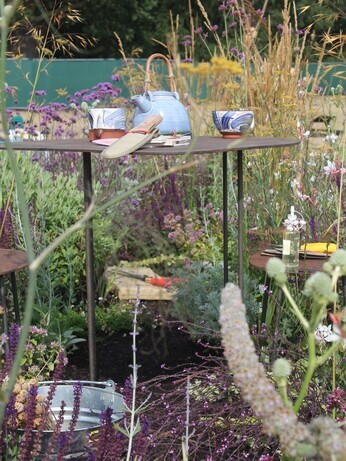
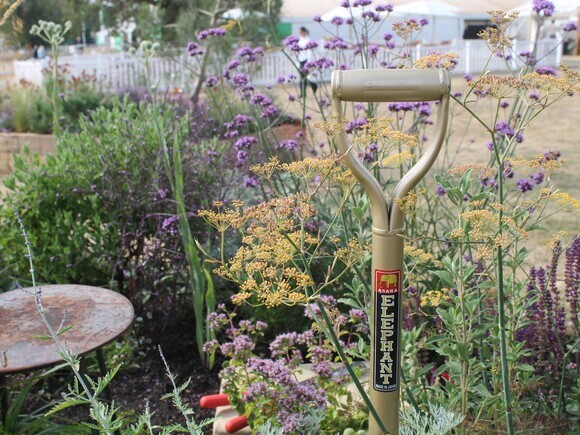
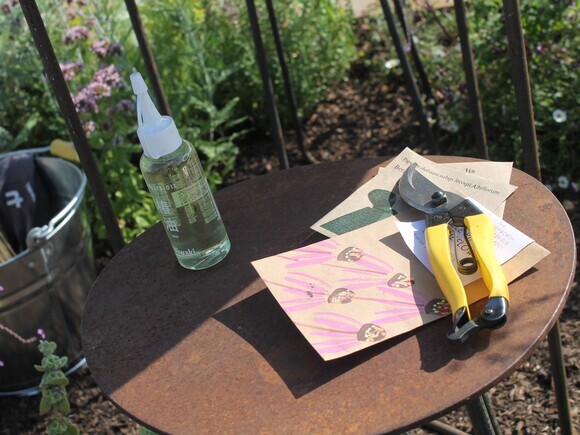
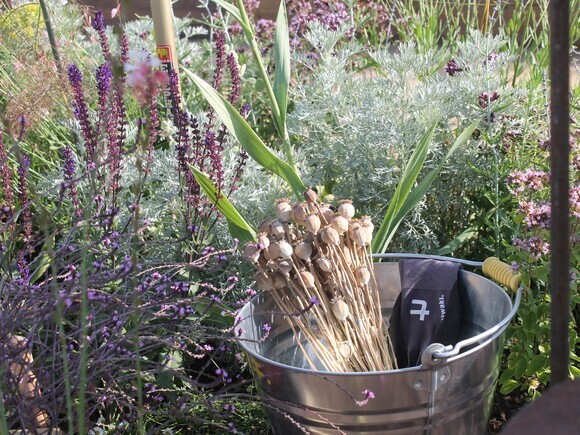
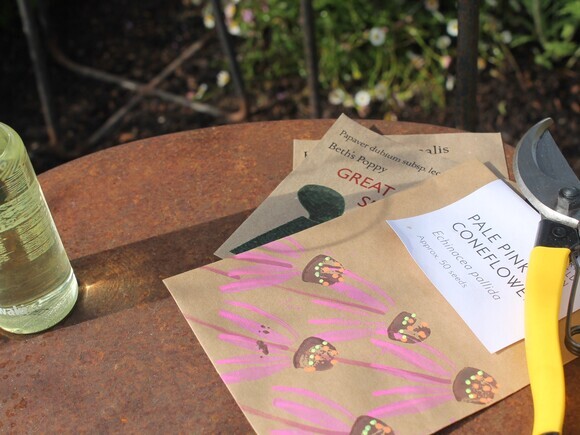
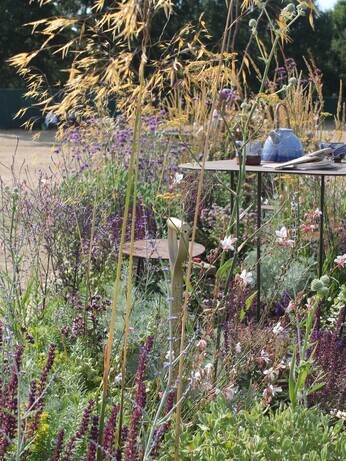
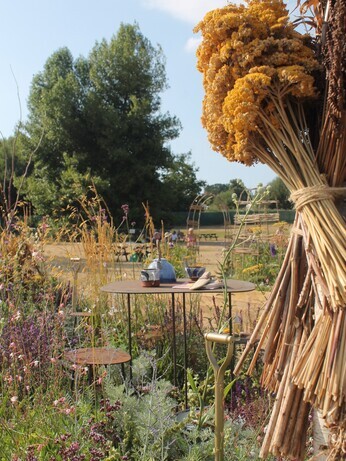
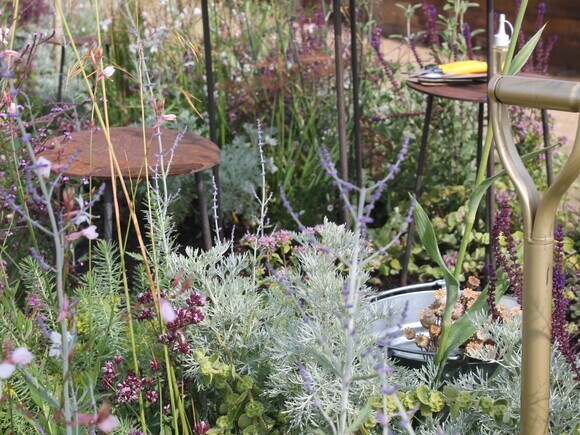
Golden spades, Hori Horis, secateurs, gloves and many other tools kindly donated by Niwaki poked out through the drought resilient planting which I was able to borrow from Beth Chatto’s. A winding path between golden froths of Foeniculum vulgare ‘Smoky’ and Calamagrostis x acutiflora ‘Karl Foerster’ led you to a table and stools where tea and Victoria sponge awaited the gardeners taking a well earned break. Seed packets, notebook and pencil, a bucket full of poppy heads, hinted at future plans, for a garden is always evolving and changing as we observe its changes on the ground.
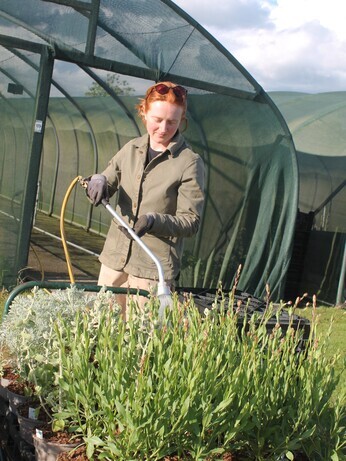
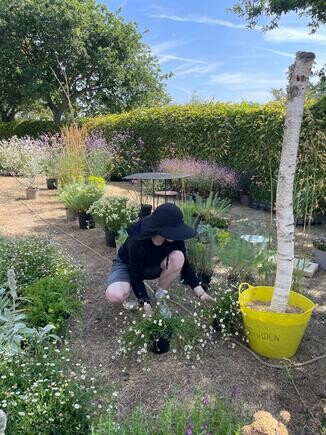
As our climate is becoming drier and hotter, the gardeners at Beth Chatto’s are pointing out the role of having the right plant in the right place and staying firm by not watering and just observing the changes. With this in mind, I wanted to select plants from the rich array of drought tolerant species that the Beth Chatto nursery stocks, such as Verbena officinalis var. grandiflora ‘Bampton’, Eryngium yuccifolium, Erigeron karvinskianus and Artemisia ‘Powis Castle’. Starting early, I set aside plants in March I thought would work and began potting them after work on from 1L to 2L. One great idea suggested by Propagation Lead Emily was to plant a couple of Stachys byzantina in trays of compost, and this gave them a really brilliant, naturalistic look for my border.
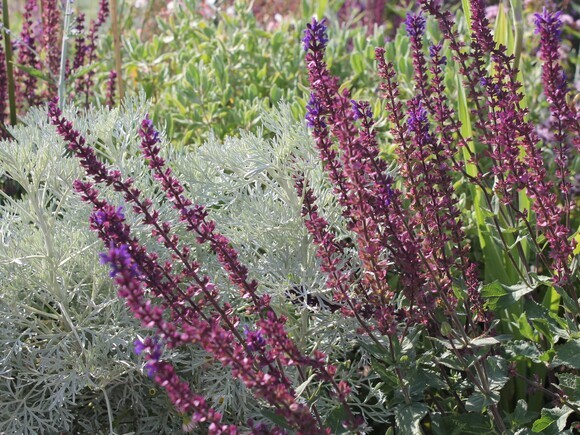
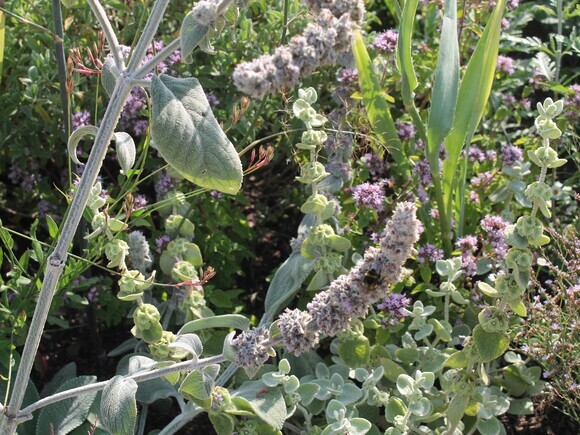
Over the next few months as I grew the plants on, observed them, tidied them up, and watered them I became really quite intimate with how they change throughout the seasons. Due to it being a hot summer, lots of things did end up flowering earlier and finishing before the show, so I had to make some quick decisions to swap some plants around. Although I would have loved Achillea ‘Fanal’, nepetas and Crambe maritima, this year it was just a little too late for them to be at their best. Instead, walking around with Emily, Steve, Malin, Cathy, and Scott, we picked out Salvia ‘Blue Spire’, Origanum laevigatum ‘Herrenhausen’, Origanum vulgare ‘Pink Thumbles’, and Limonium bellidifolium as great alternatives which were a total magnet for the bees.
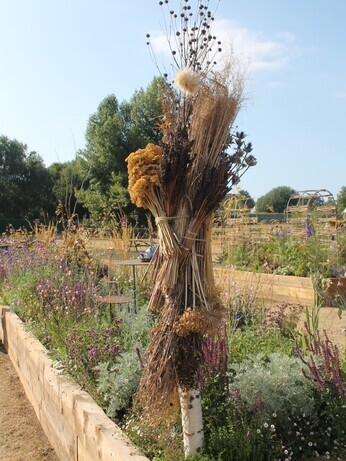
With the plants growing, the tools donated by Niwaki, and tables and stools kindly lent from my gardener friend Selina Ozanne, there was one final piece I wanted to bring to the garden - habitat piles. The gardening community has become increasingly aware of the value of providing habitat, nesting and foraging material for wildlife, which is so essential to the future of our gardens and planetary health. So I began to collect material during the wet sodden months of this winter, putting grasses like Chasmanthium latifolium, Miscanthus sinensis and seedheads of eryngiums, asters, and poppies aside.
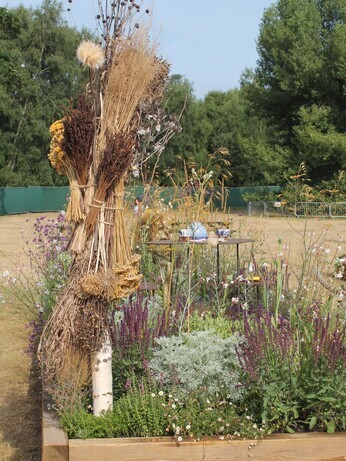
Recently, we’d been as a team to the Horniman Museum to help the garden team with their annual cut back of the Prairie Garden and creating habitat stakes with cut material. This means that insects hibernating in the material can remain in the ecosystem rather than being put in the compost, ready to pollinate the garden when the warmer weather comes. In the month before, I sorted through this material and made mini bouquets with the help of intern Caroline Colino and my partner Kit. The piles and stakes were installed into the garden, bringing height, wildlife benefits, including seeing a wasp scrape stems for their papery nests, and showing how these piles can also be beautiful.
The lead up to the show was busy getting the plants ready but with the help of Emily we managed to carefully load up the van ready for the drive up to Norfolk. The whole journey of getting these plants ready for show has made me appreciate just how much work and care nurseries who supply these plants put into them. I also borrowed some Cistus x canascens f.albus from Rymer Trees & Hedging and a splash of colour of Salvia nemorosa ‘Caradonna’ from Howards Nurseries. All the plants arrived safely, and it was time to get started making the garden.
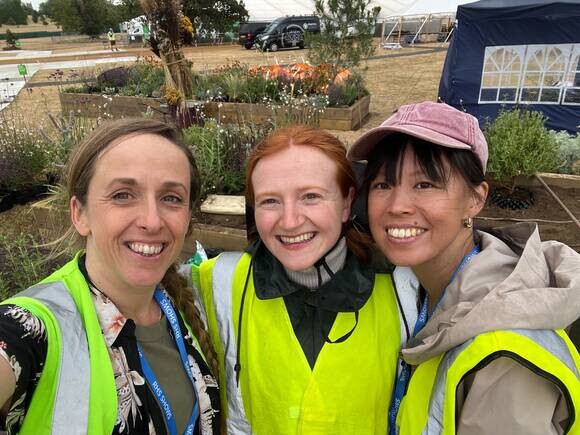
I was really lucky to have a fantastic team come to help with the making of the garden including Charlotte Waters from Kings College Cambridge, Cathy Butcher from Beth Chatto, Miya Okabe a gardener and former colleague, and gardener and designer Caroline Colino. My parents and partner Kit joined in as the best support team for the 11 days, helping set up, plant and make sure everyone was well fed with pastries, a hearty lunch and an endless supply of hot drinks.
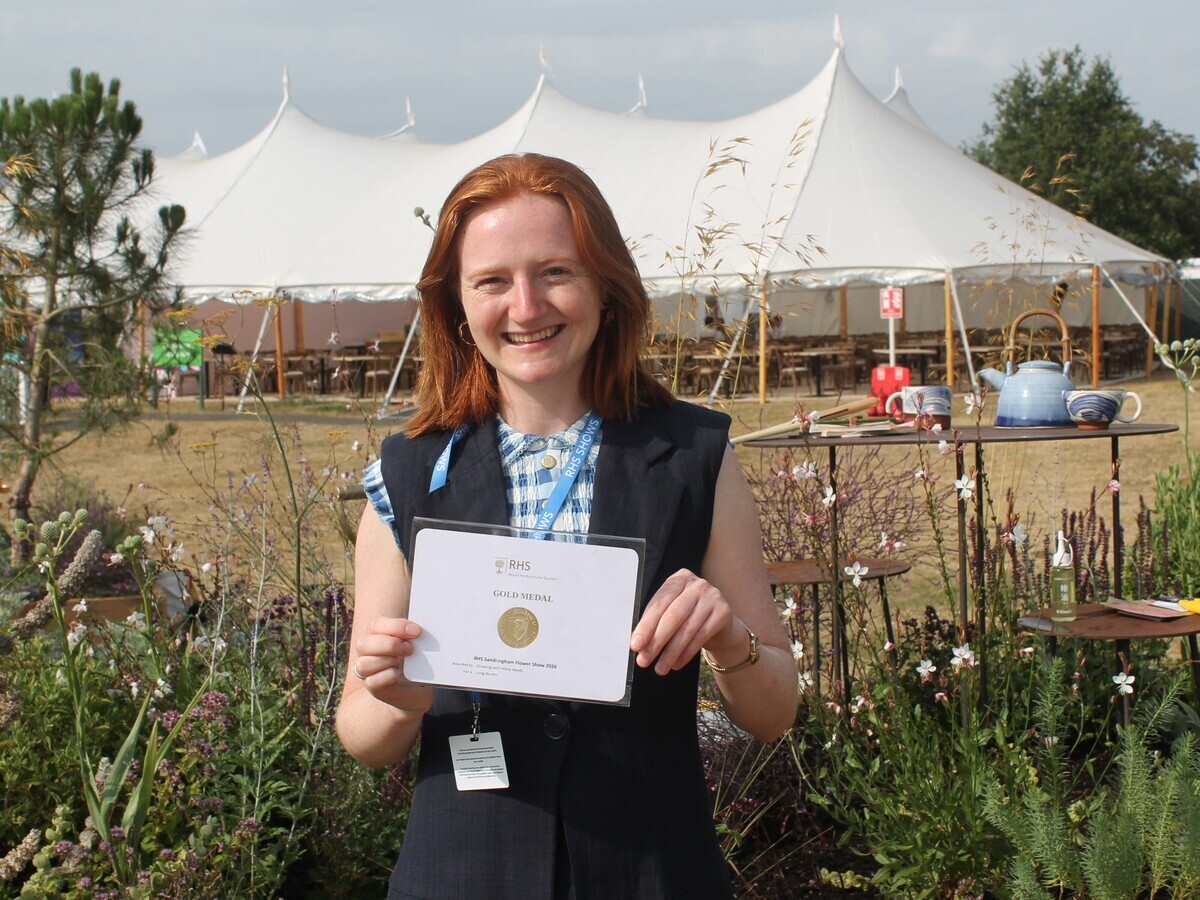
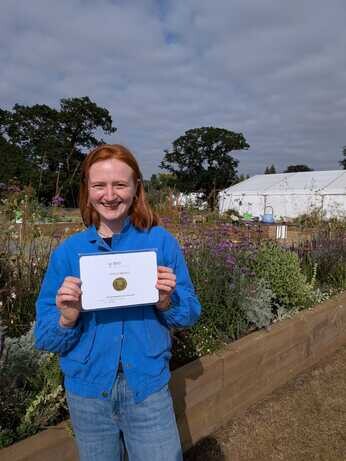
After five days of making and sprucing up the garden, it was then truly an amazing moment receiving a Gold Medal from the judges and the credit to everyone who helped, supported or cheered me on from the side. It takes a whole community to make a garden and I really wanted to celebrate the great work gardeners were doing. It was also a pleasure to see so many different types of bees move in, even as we were setting up, getting drunk on oregano, verbena and stachys.
Before the good news started to settled in, enthusiastic members of the public arrived in streams the next day. It was amazing chatting with them, hearing how their gardens had been affected by drought, hose pipe bans, but how keen they were to now learn about creating their own drought tolerant gardens inspired by many of the exhibits at the garden. Verbena officinalis var. grandiflora ‘Bampton’ was the star plant of the show, with everyone loving its frothy flowers, and rich purple stems. It worked really well with the silver of Artemisia ‘Powis Castle’, the glauca of Euphorbia seguieriana and bronzes of Stipa gigantea ‘Shorter Form’. Eryngium yuccifolium was another favourite, with its rattlesnake heads growing inches taller each day. Other highlights included sweet-scented Thymus sp. ex Turkey, whorls of Pseudodictamnus mediterraneus and Teucrium x lucidrys.
With the border complete, it was now a chance to enjoy the other Long Borders. I especially loved Sam Outing’s The Goldcrest Garden, Joao Teixeira Alfonso and David Congram’s medicinal garden to be relocated in Lewisham, and Zac Willitts and James Horne’s resilient garden growing out of rubble. It had been so lovely working with a supportive community of other designers and gardeners, sharing wheelbarrows, hoses, plants, and moral support throughout the week. It was also great to have visitors from the Beth Chatto team, including Åsa, Emily and Steve alongside family and friends coming to support the show.
Too soon the show came to an end and it was back to the garden to organise the plants and materials. Plants are going to be reused for show displays, planted out in the garden or sold on the nursery. This week we’ve put up a new habitat pile in the garden from the material at the show creating space for wildlife to make their home over the coming seasons. We can’t wait to use the tools kindly donated from Niwaki for the garden team to continue creating resilient and beautiful spaces.
Thanks so much to the Beth Chatto Team for their unwavering support, and to my sponsors Niwaki, Essex Gardens Trust and Suffolk Gardens Trust.


COMMENTS