
Find out what the propagation and garden teams have been up to this week.

Jack Frost – horticulture’s friend and foe
POSTED 12th January 2026

‘The first frost has been forecast!’ Comes the first cry. ‘Battle stations!’ comes the next. We arm ourselves with fleece and bubble wrap. In the distance, a voice is calling out, they sound panicked, ‘The mulch! The muuuulllllcchhh! It’s half a centimetre shorter than what’s recommended.’ Someone outside, carrying a potted fuchsia towards the door, screams. ‘The horror. The horror!’
Perhaps this is a slightly embellished reaction. Yet, Jack Frost does seem to hold a cold grip over us as gardeners. It dictates our work and sometimes scuppers our efforts. We speak of frost as if it’s trying to catch us out. Sometimes it does. A short spell of milder weather and we unwrap the greenhouse, move our sheltered plants back onto the patio. Two days later, we look out the kitchen window and sob as hoar frost has turned the washing line into an avant-garde chandelier.

It can seem that frost is an intermittent enemy of the garden. Hiding in the clouds, lurking in the shadows of the night, biding its time for when it will reach out and frame your pride and joy beneath crystal glass. However, it can also be a great and important friend to us and our gardens, so let’s take a look at these two sides of Jack Frost, and why he should be respected as well as thanked.
Foe
There are many different types of frost, such as ground, grass, air, and hoar. You might read or hear about a light frost, hard frost or even a freeze. Definitions vary depending on the source, but principally, frost and freezing temperatures, regardless of their appellation, affect our gardens.
When the temperature falls below the freezing point, we see ice crystals forming; this is essentially what we see when we look out the window and say ‘Frost!’ Plant cells freeze, harming the cell wall and in turn our plants begin to suffer. This damage can occur across the entirety of the plant, from the leaves, buds, flowers, and down to the roots. This can result in the death of frost tender plants, but not always, and frost-damaged plants often do flourish again.
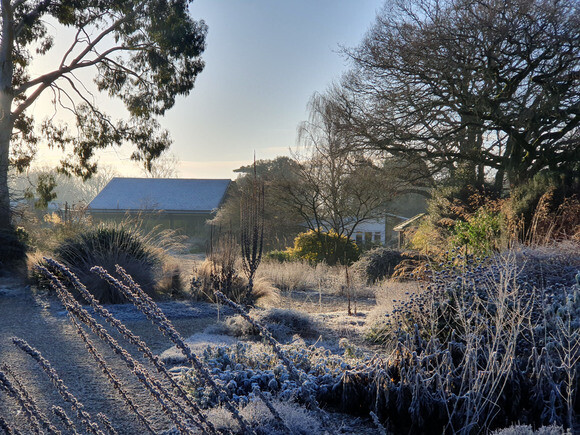
We tackle frost primarily with preventive measures, such as insulating our polytunnels, greenhouses and plants with fleece and bubble wrap. Some varieties, we bring inside over the colder months to negate the chance of damage. I think it’s important to state here, at Beth Chatto’s, we bring a wide variety of potted plants indoors during winter because of increased rainfall and damp conditions, rather than fear of the frost. The vast majority of these garden plants would be fine if established and planted in the ground.
The best way to combat frost is, of course, ‘RIGHT PLANT, RIGHT PLACE.’ And by growing hardy varieties (I’ll include a plant list at the bottom, with a twist), the frost is no longer something to fear. I understand there’s a culture of growing plants which always require protection, and that comes down to a choice. We can still have beautiful, interesting gardens without having to do so. Take your pick.
Friend
Many of us know some of the ways frost can benefit plants. This is usually spoken about with respect to the plants we eat. The sort of temperatures we see with a frost encourages many of the plants we munch on to convert their starches into sugars. They do this as an act of self-preservation, helping control the level of their cell freezing point, and we get a tastier meal. The other area chiefly spoken of in respect to frosts is dormancy, a vital part of the deciduous cycle and survival. The cold is essential for many plant processes, such as vernalisation required by winter/spring-flowering bulbs like alcea, digitalis, narcissus and tulipa. Many trees also benefit from this, such as malus and prunus. And of course, these cold spells encourage a great list of flora to begin the germination process.
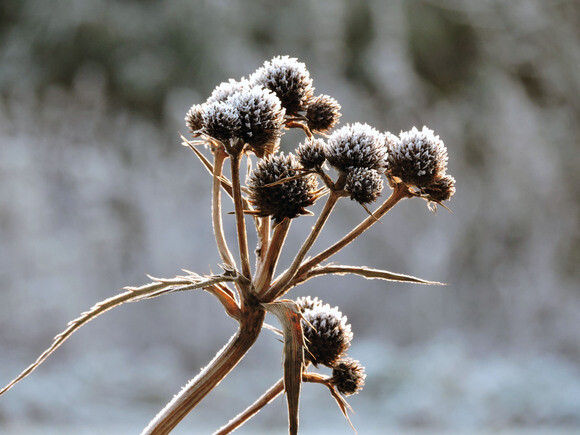
Harmful Organism Control (I’m not a fan of the term pest, so I’ve gone for this awful alternative) – Who can remember the slug invasion of 2024? I do. I have flashbacks. Nightmares! We had an exceptionally warm and wet winter during 2023/2024, with really broken spells of cold weather and significantly less ground frosts than we would expect. It was ideal weather for many creatures and diseases, which would go on to cause havoc in the months ahead.
A good hard frost, prolonged periods of cold and freezing weather, help incredibly with reducing the population of slugs and snails. Even impacting the number of aphid eggs or soil-dwelling larvae, who were waiting patiently to burst forth and bring many a gardener to misery. This climate can even lower the pathogen loads of certain bacteria and fungal spores, which cause diseases our plants could certainly do without. That frost we moaned so passionately about all those months ago has an impact long after it has been forgotten. Hopefully, it forgives us for moaning about it at the time.
Groundworks – This might not apply to some, but where I am, I’ve got more clay out back than a Roman potter. Getting a fork into the ground can sometimes give me such a punch, I’ve nicknamed one of the borders Cassisus. Frost can be a great friend when you have clay soil. The groundwater, freezing, expanding and contracting, results in less of a workout and less digging. This process aerates the soil, gifting a plot with better drainage and structure. Thanks again, Jack Frost!
Beauty – I have nothing myself to say here, apart from directly quoting Beth, who could capture the beauty of frost better than most.
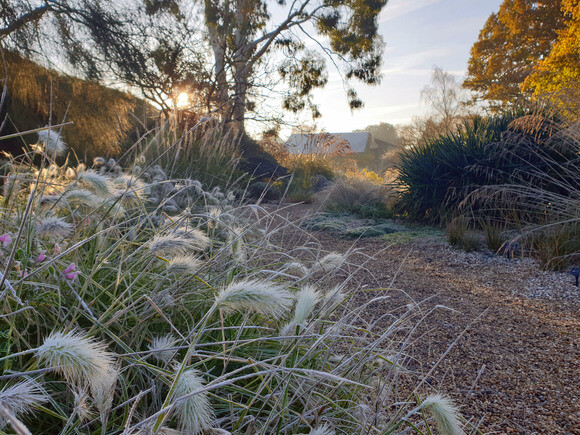
'On winter mornings, when frost is slowly peeled away by almost horizontal rays of sunlight, I delight in the effect made by grasses in my Gravel Garden, in their vital contribution to the scene. If I remove them in my mind's eye from among their neighbours, it would be like turning out a light.' - Beth Chatto
Frosts and the Future
Are frosts a thing of the past? Well, clearly not. At least, not yet. We are increasingly seeing warmer winters, later first frosts, and some research suggests parts of Britain will cease to have sub-zero days as soon as the next twenty years. However, we still do suffer with more extreme weather events, and periods of minus temperatures continue to occur, although less frequently.
We are in an era when we place great focus on drought-tolerant planting. The question has been raised: should we be? Many of these palnt varieties are more susceptible to frost and periods of prolonged cold and wet conditions. My answer to this is unequivocally YES! The key to navigating the risk is again, 'right plant, right place'. A poor, free draining soil will ensure roots won't sit in wet, cold soil - usually the death knell for drought tolerant plants.
It’s undeniable that we are in a contrasting transitional period when it comes to our climate, but to question whether we should be steering towards drought-tolerant planting due to this is to oversimplify what we are facing. We are experiencing hotter summers with less rainfall, warmer and wetter winters, and we also have frosts. We must navigate in transforming our gardens for the future by paying heed to all. There are a multitude of plants which are tough as old boots, that persist and thrive in drought conditions and can shake off a frost without much or any compromise to their integrity. And what we are facing runs deeper than whether ornamental plants will survive the changing climate, and water must remain at the forefront of all our minds as garden lovers.

So, there we have it. A study in frost. A worthy subject to make a song and dance about. Or, at the very least… an article.
Below, I’ve made a list of plants suitable for drought-tolerant inspired planting, which are also hardy enough to deal with periods of cold and frost. (Remember, if a plant of interest isn’t ready yet, you can join a mailing list to be notified as soon as it is.)
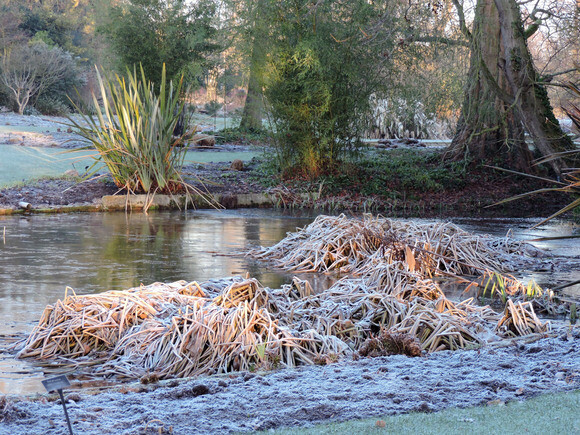
Drought tolerant, frost tolerant plant list
(Please note there are many more varieties available, and it’s worth looking into other varieties within the genus and subspecies)
- Euphorbia characias subsp. ‘Wulfenii’
- Hylotelephium ‘Bertram Anderson’
- Lavandula angustifolia ‘Hidcote’
- Lavandula angustifolia ‘Munstead’
- Nepeta racemosa ‘Walkers Low’
- Origanum vulgare ‘Thumble’s Variety’
- Salvia nemorosa ‘Ostfriesland’

Rob Byford
Thankyou