
Find out what the propagation and garden teams have been up to this week.
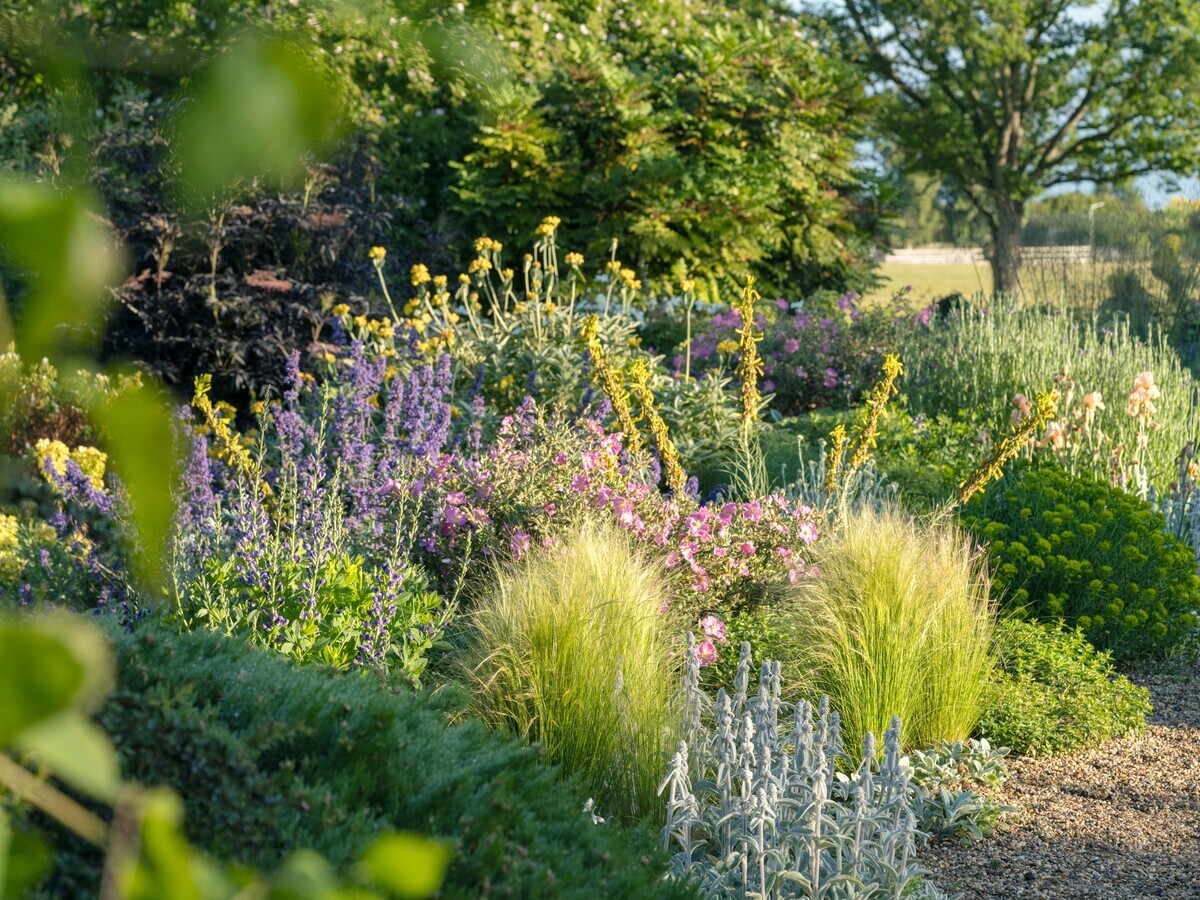
Team Chatto's favourite plants
POSTED 20th May 2026

The plants we love
Ask anyone of us to choose a single favourite and we’ll almost certainly hesitate - how could we possibly? Still, some plants do manage to entwine themselves more deeply into our affection than others, and I thought I’d share a few that my colleagues and I especially treasure.
They may not be the showiest performers or the rarest treasures, but each plant brings a presence, a steadiness, or a quiet charm that has won us over. Some are long-standing companions we’ve grown for years; others are more recent discoveries that have quickly claimed a place in our hearts.
Before we get to our favourites though, it’s worth remembering that the heart of good gardening begins with choosing plants that suit the conditions you actually have, not the ones you wish you had. The right plant in the right place makes all the difference. A content plant thrives; a discontent one sulks, struggles or simply fades away. A sun-lover won’t prosper in deep shade. A moisture-seeking perennial will wither in dry, sandy soil. And a woodland plant that revels beneath a protective canopy will never be happy on an exposed, windswept slope.
Over the coming weeks, members of the Beth Chatto team will be highlighting the plants they’re especially fond of and the qualities that make them shine in the garden. So let’s dive in with the first pick.
Scott - Gardener
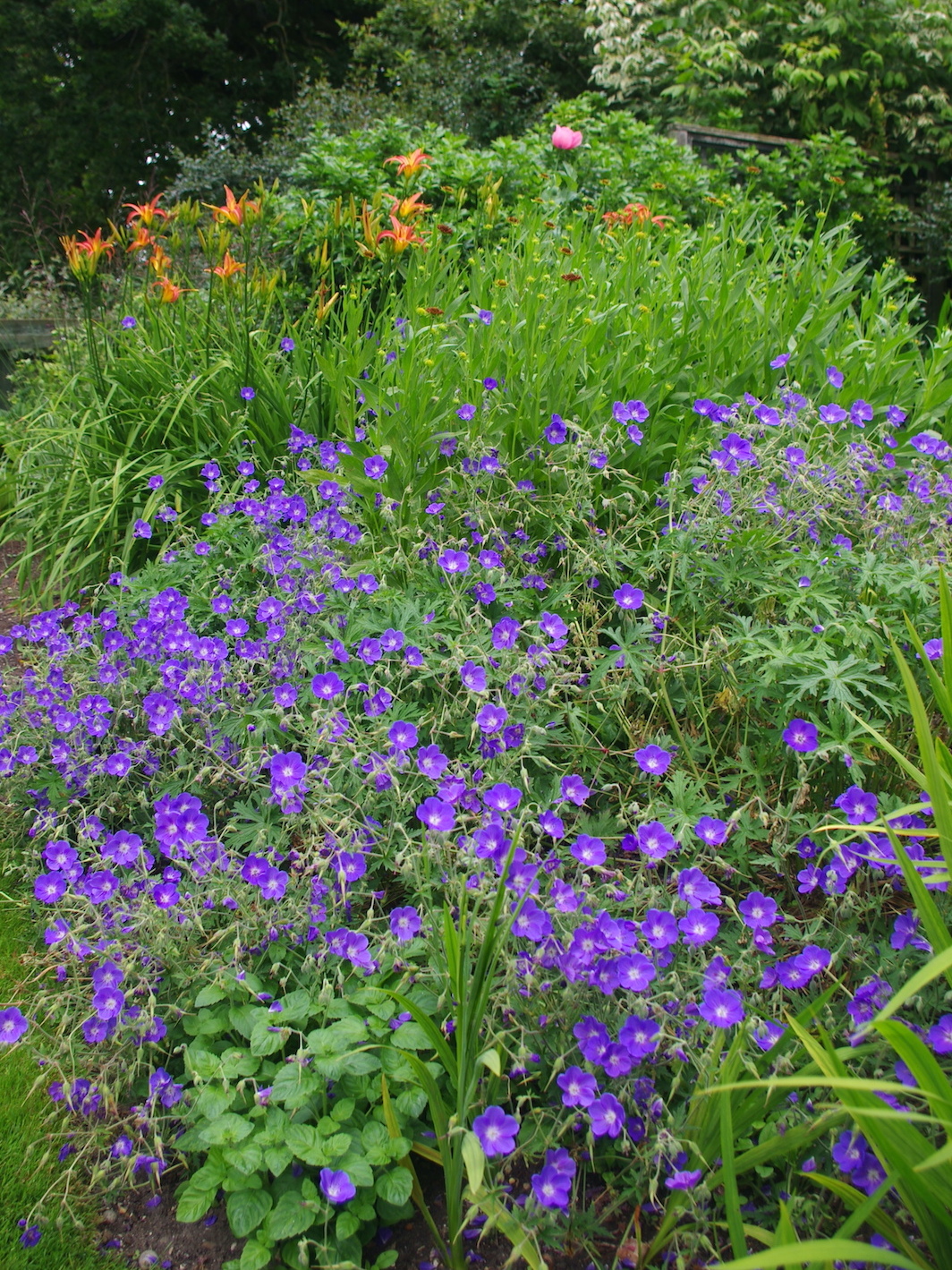
“Geranium 'Brookside' (Cranesbill) is a favourite of mine because it just works so hard for you in the border, by being the plant that weaves in between others knitting a scheme together. Given a little more space, they form a slightly loose dome that is beautiful on its own right.
The leaves are interesting, deeply cut and fresh green held below masses and masses of large rich blue / purple flowers that go on for months.
It is simple to grow, needs little maintenance and flowers from late spring through summer and often longer. It's a true workhorse which I think deserves to be grown in any garden.”
Cathy - Gardener
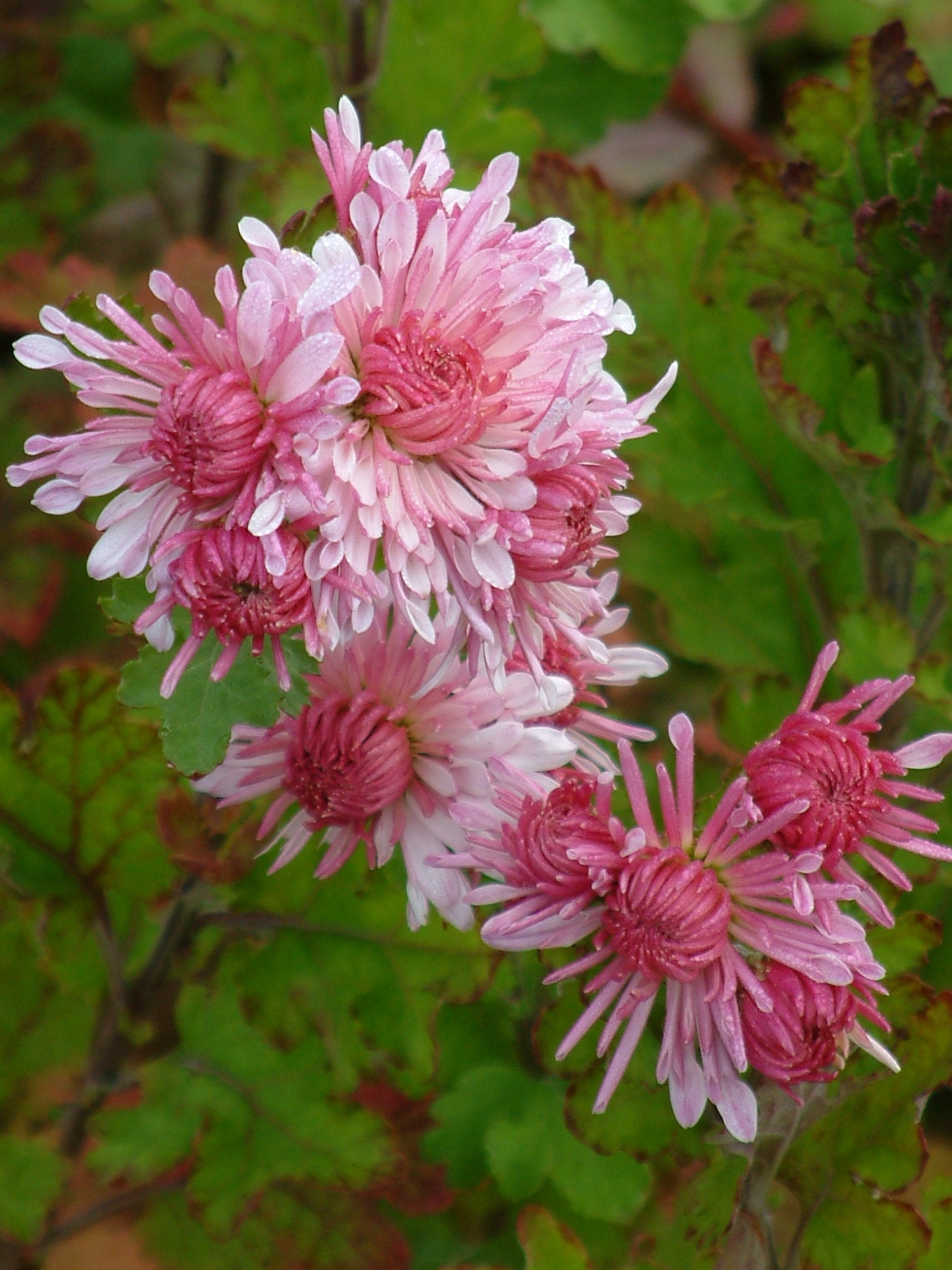
"I discovered Chrysanthemum ‘Emperor of China’ flowering in a border at Beth’s in late summer and it was such a joy to see. The flowers have quilled petals which are dark pink in the centre fade to dusky pale pink as they unfurl. As autumn arrives the leaves colour up with beautiful tones of red adding more colour and interest. It looks great in a border alongside asters and ornamental grasses giving colour when a lot of perennials have finished flowering. It’s also brilliant as a cut flower to bring inside and admire in a vase."
Mattie – Garden & Nursery Trainee
“Meandering through the Woodland Garden seeing my first spring at Beth Chatto, I became entranced by the soft unfurling of Anemone nemorosa 'Robinsoniana'. This low growing wood anemone catches the morning light with its lavender cup flowers shimmering with silver undersides. It has a strong foliage of mid-green deeply cut leaves, moving you out of the winter browns.
Anemone nemorosa 'Robinsoniana' will reward you by flowering throughout the spring. Named after the naturalistic gardener William Robinson, it sits well in light shade beneath trees and will naturalise to form a soft lilac carpet especially in humus-rich, leafy soil. At the end of spring it will die down, sleep underground until it heralds the end of winter again. “
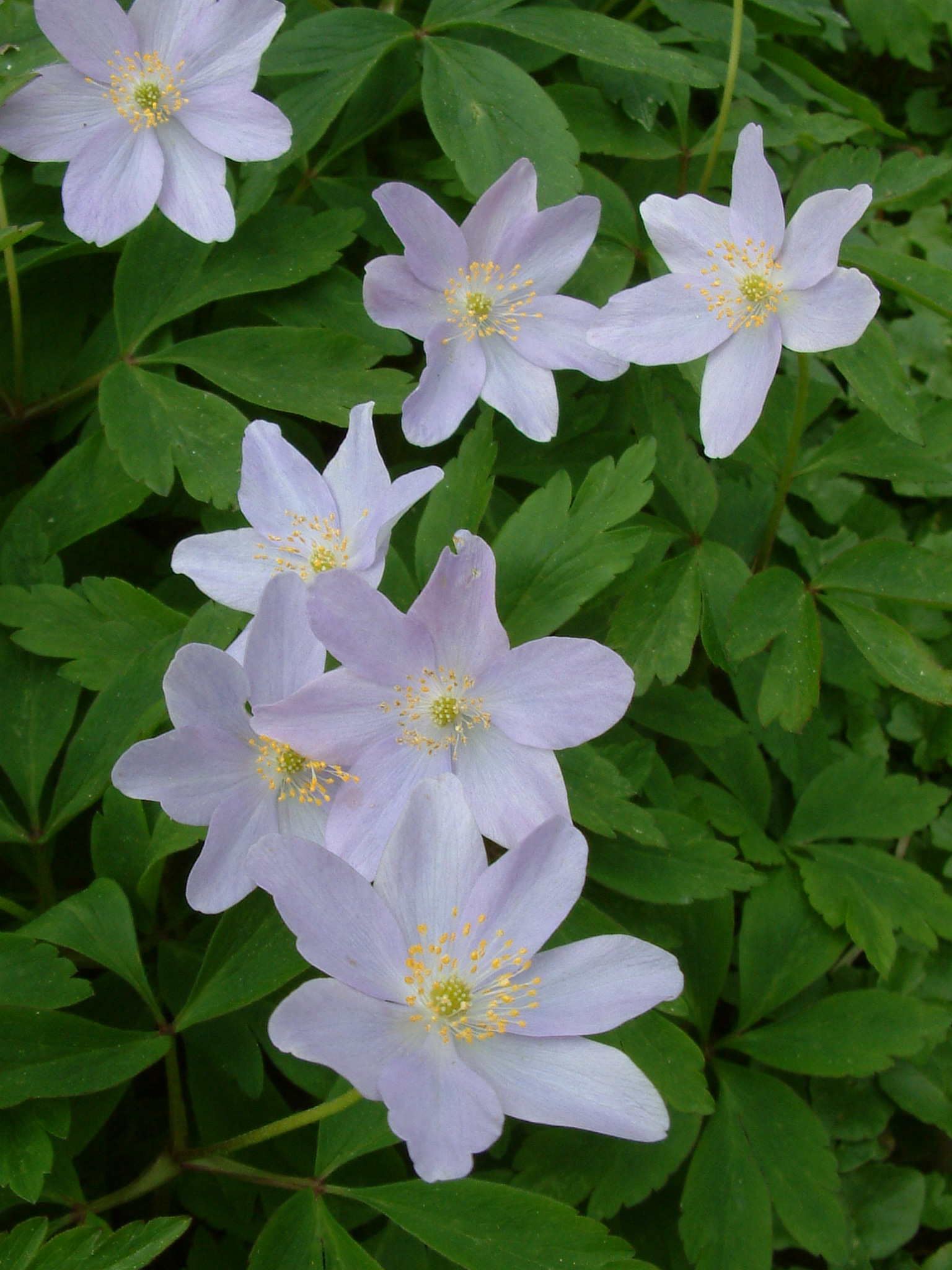
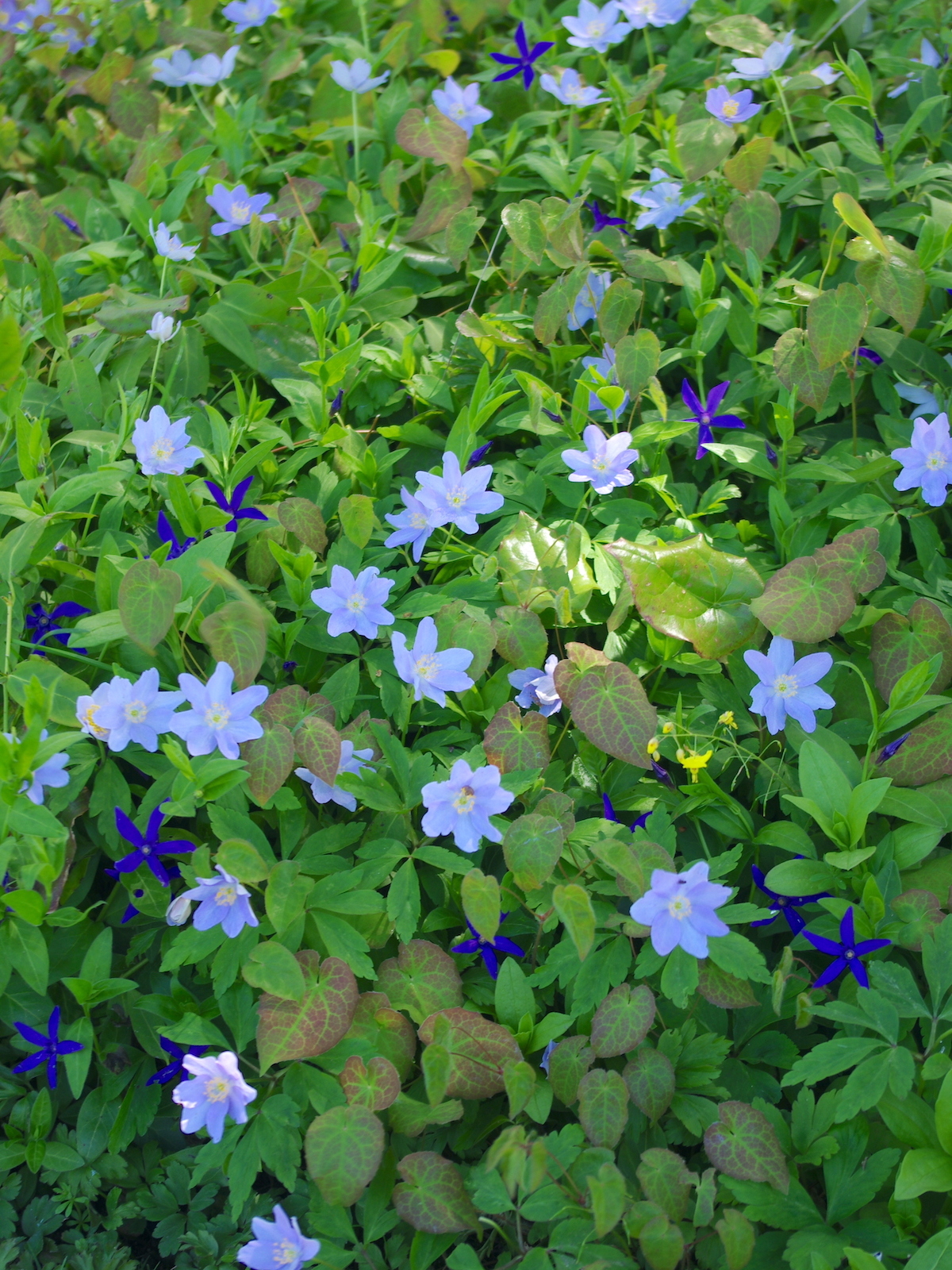
Anemone nemorosa 'Robinsoniana' mingling with
Vinca oxyloba and the young foliage of Epimedium 'Frohnleiten'
Malin - Garden Manager
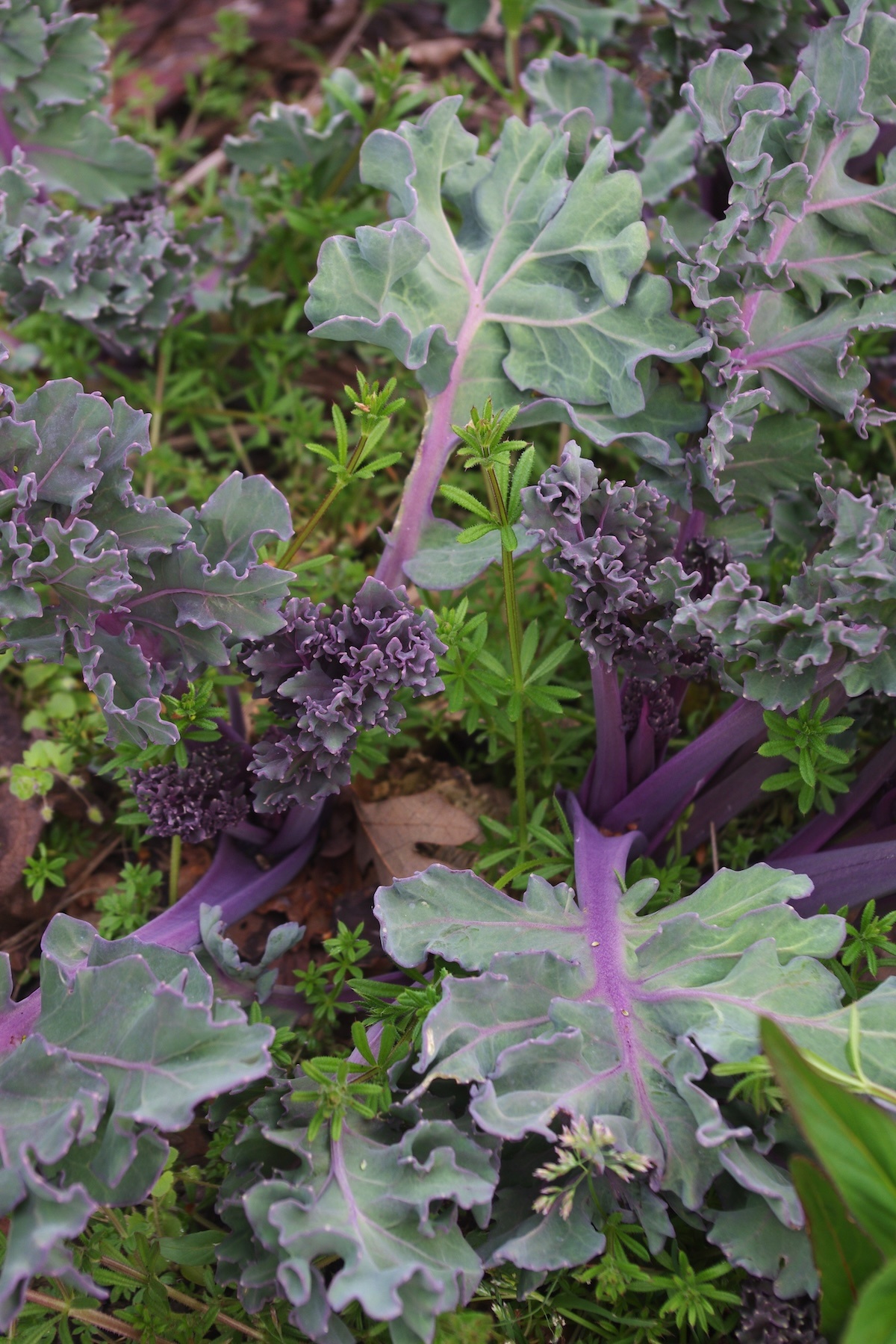
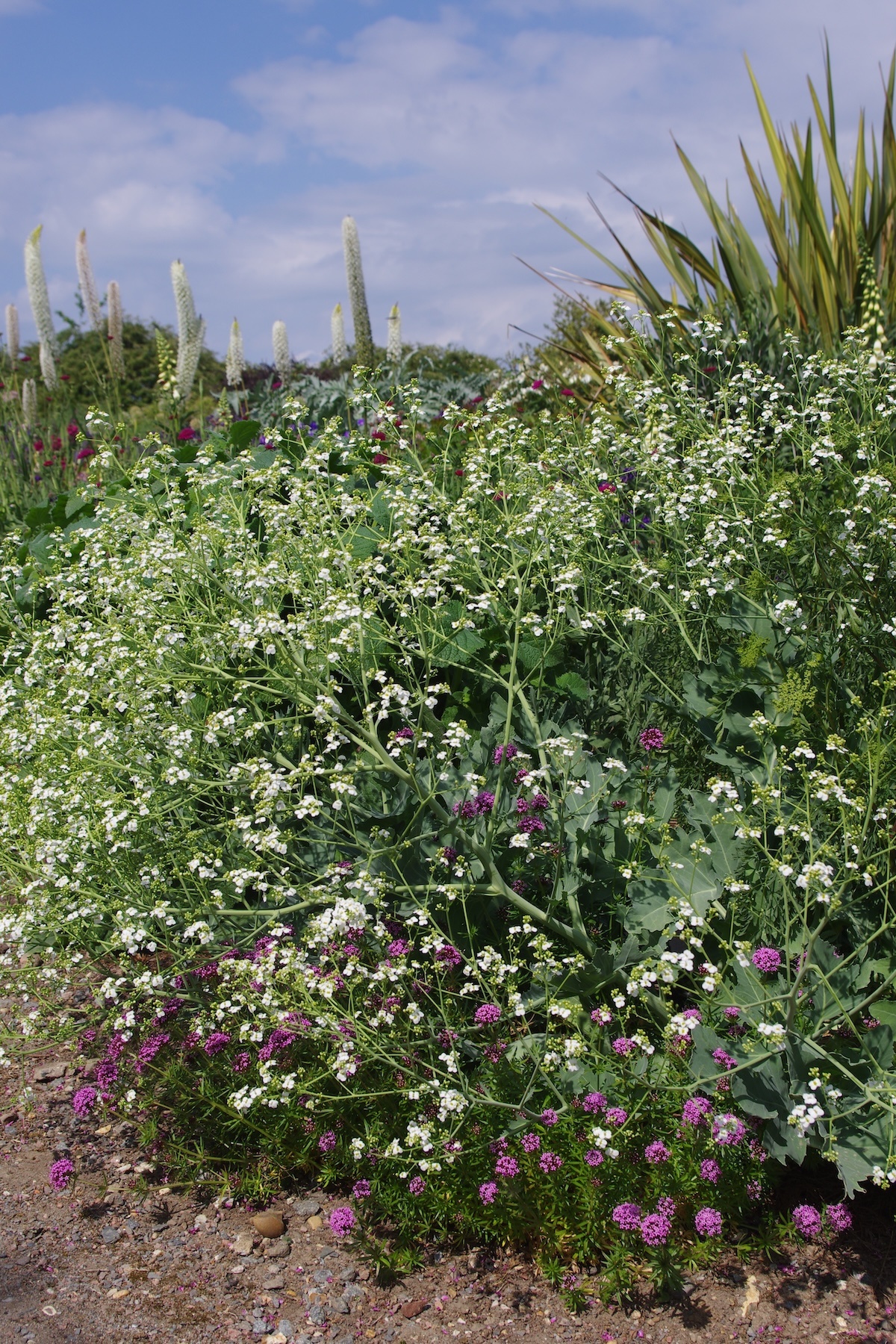
“Sea kale, Crambe maritima, is one of my favourite plants in the garden. In March it starts off with dark purple frilly foliage that later unfurl into thick waxy glaucous leaves on which water droplets form like little beads. By the end of May it starts to flower with a cloud of tiny white honey-scented flowers, loved by both humans and pollinating insects.
I was excited to find crambe growing wild on shingle beaches on the British Isles. In Sweden, where I’m from, they’re more of a rarity. Growing on beaches they have a high tolerance for salty winds and are suitable if you want to create your own gravel garden.”
Leanne – Media and Communications Manager
"I first fell in love with Knautia macedonica after seeing it planted alongside Stipa pseudoichu and another pincushion flower, Scabiosa columbaria subsp. ochroleuca, in the Reservoir Garden. To fully appreciate its rich crimson blooms up close, I grow it in large containers by my back door, where it can bask in full sun.
To create a display that carries through the whole summer, I’ve paired it with the Chilean quaking grass, Briza triloba, along with Salvia nemorosa ‘Ostfriesland’ and Verbena ‘Bampton’. Although the verbena produces delicate lavender-pink flowers, I chose it mainly for its airy, purple-tinted foliage, which provides colour and texture all summer long."
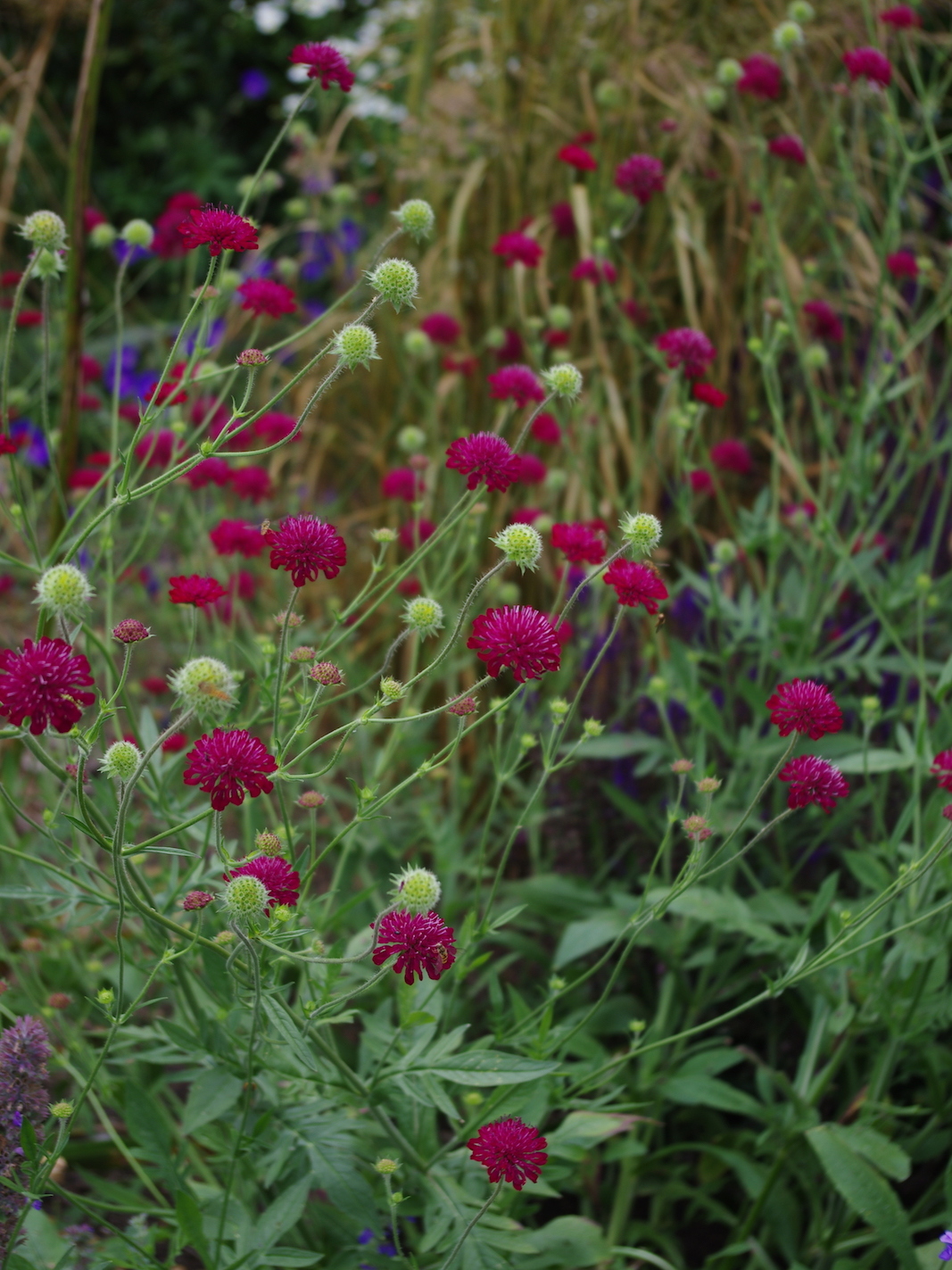
Knautia macedonia
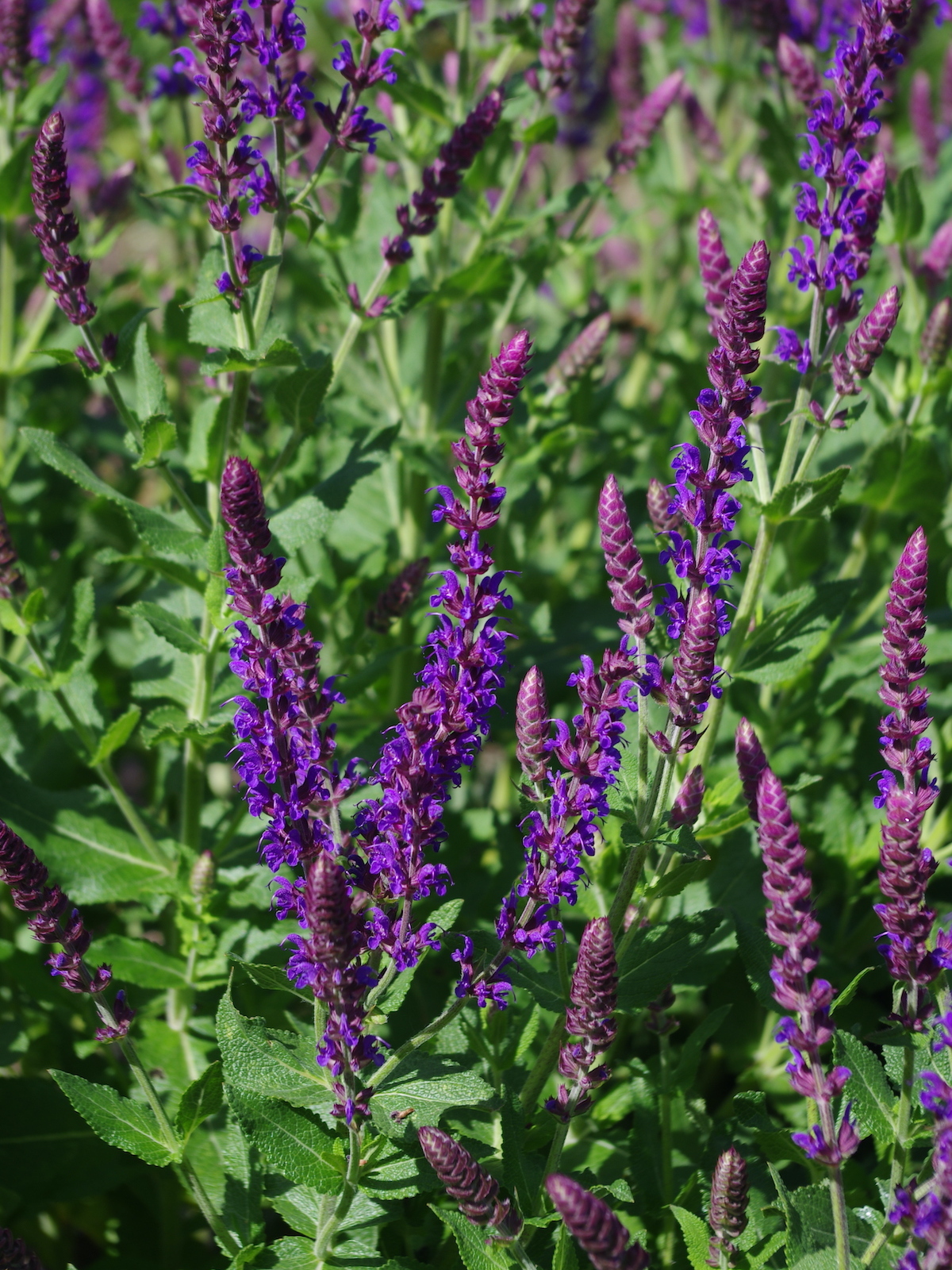
Salvia nemorosa 'Ostfriesland'
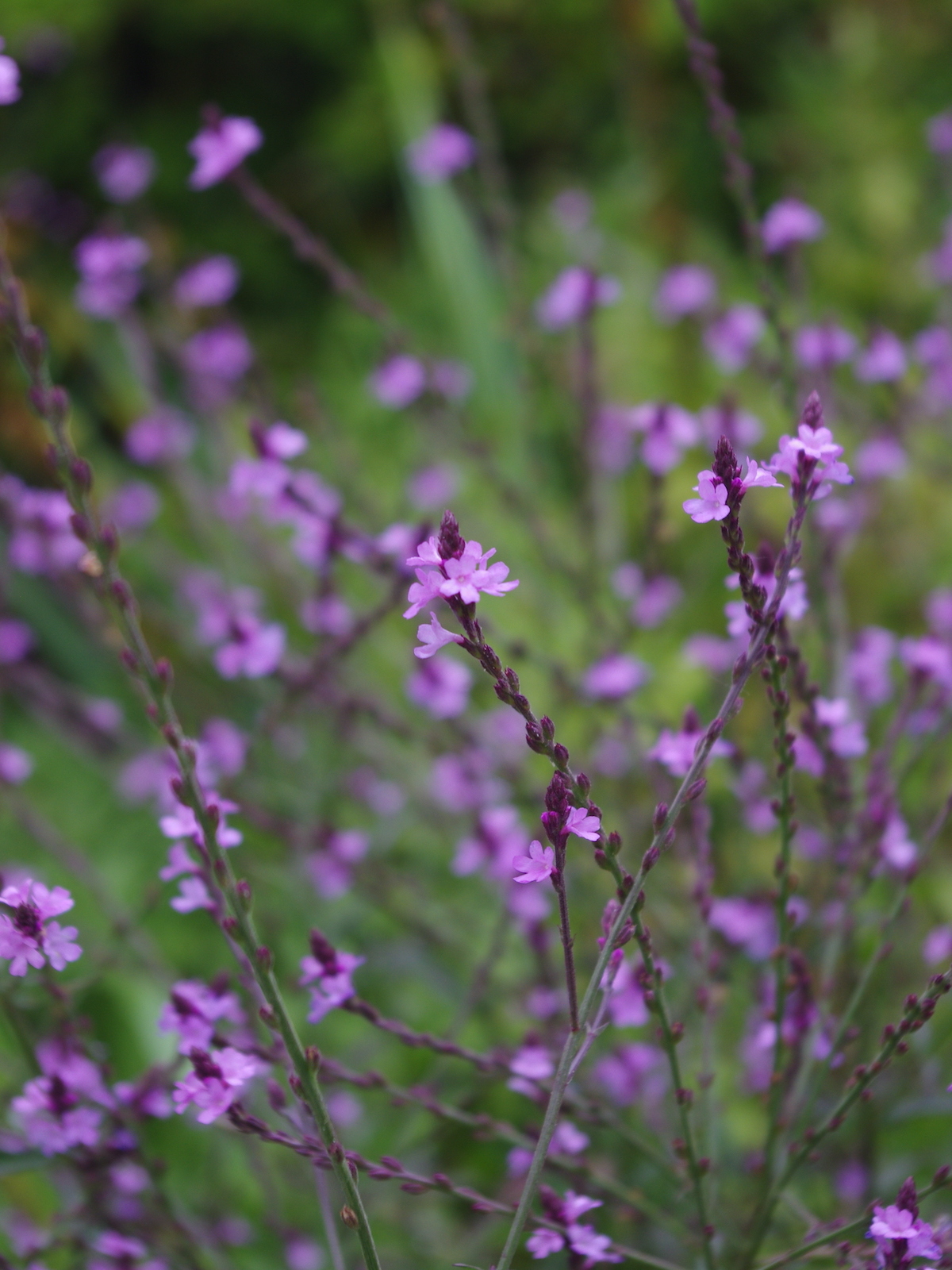
Verbena 'Bampton'
Åsa – Head Gardener
"Nepeta ‘Chettle Blue’ has proved invaluable in our Gravel Garden, consistently drawing attention with its upright, bushy habit, and its abundant, intense blue flowers set against rich purple calyces. A timely cut-back after the first flush encourages a reliable second display later in the season.
In early summer it pairs beautifully with phlomis, bearded iris, euphorbia and cistus, creating a tapestry of contrasting forms and textures make good companions in early summer. For interest that carries the garden forward into late summer and early autumn, weave in stipa, hylotelephium and agapanthus.
If I had to choose only one catmint for my garden, this would be my choice: abundant blooms, stunning colour, great for pollinators and reliably drought-resistant."
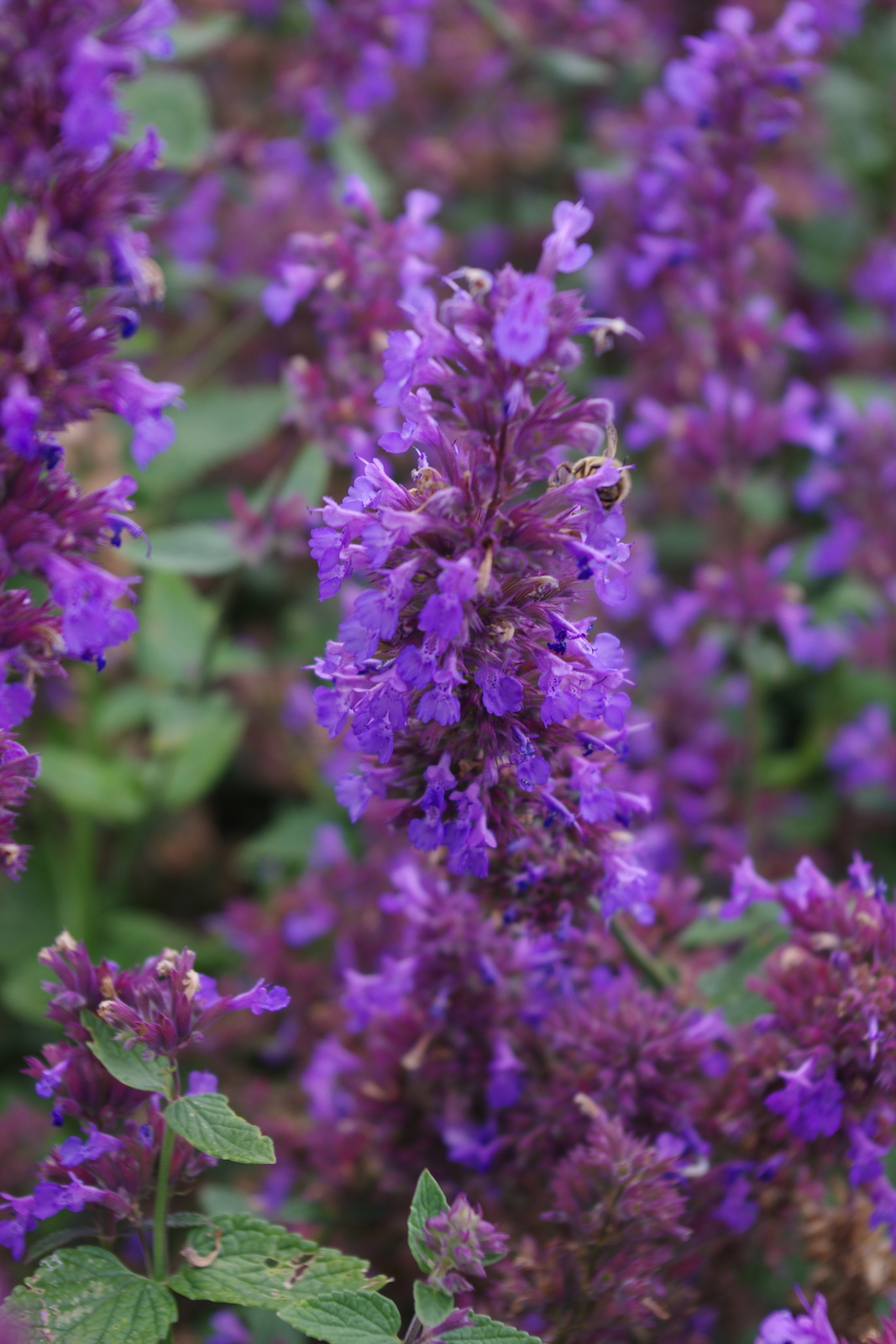
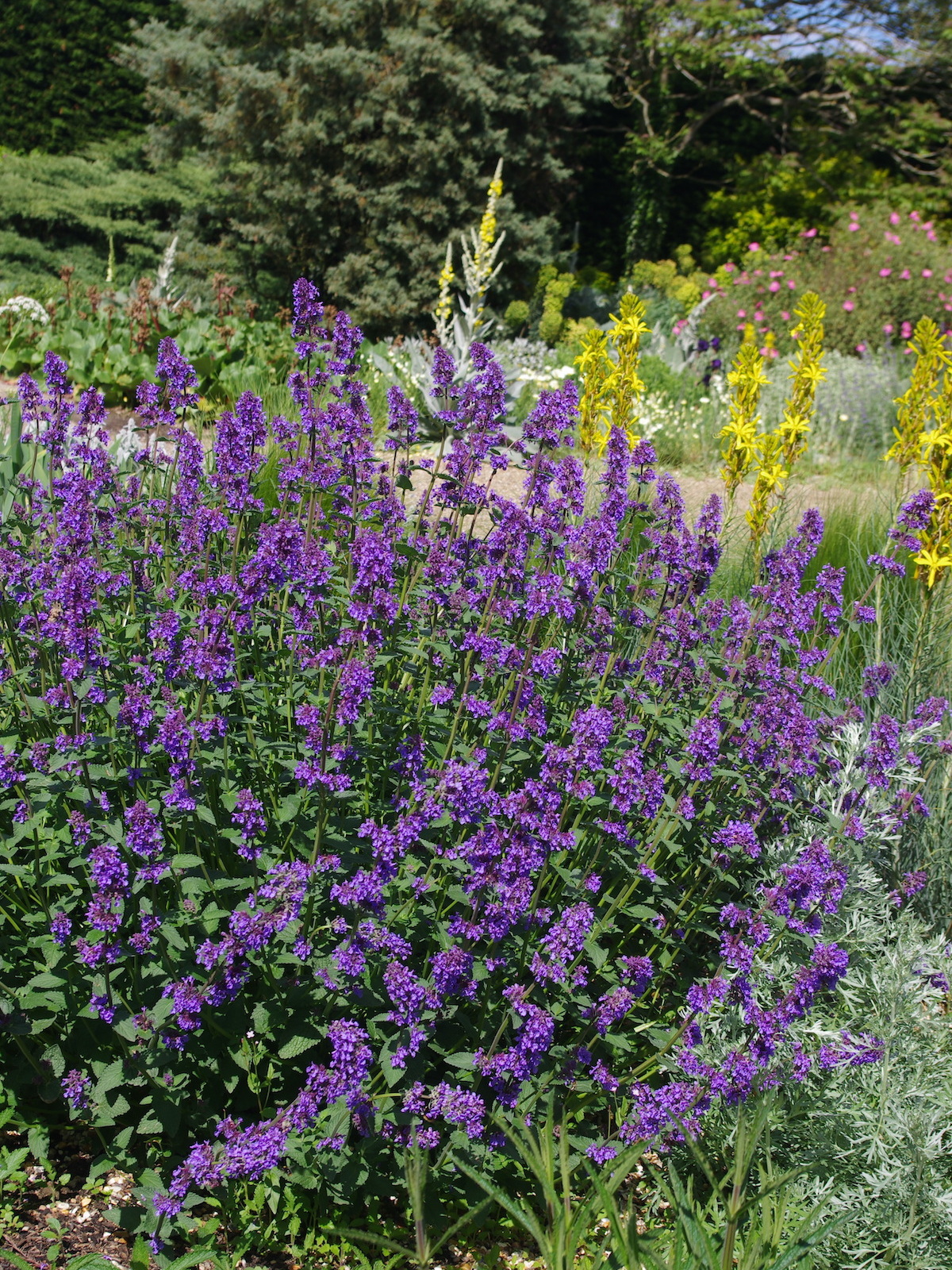
By Head Gardener Åsa
To Mattie: I live in a wood surrounded by hundreds of anemones which always remind me of my father who, in the 1950's, taught all his classes a song about the 'windflower'. I did trace it once to an American hymnal but no longer have details. These are a few of the words I can recall:
" There's a song in the woods where the windflower sleeps,
And the violets hide in the green,
There's a song in the woods where the harebell swings,
By the gorse where the bees have been,
Sing children sing, for the year is young,
And the breezes are sweet and keen."
It's many moons ago now--I'm nearly 85. but I can remember the waltz tune he played to accompany it.
Kind regards,
Margaret.