
Find out what the propagation and garden teams have been up to this week.
Thriving in the heat
POSTED 28th May 2026

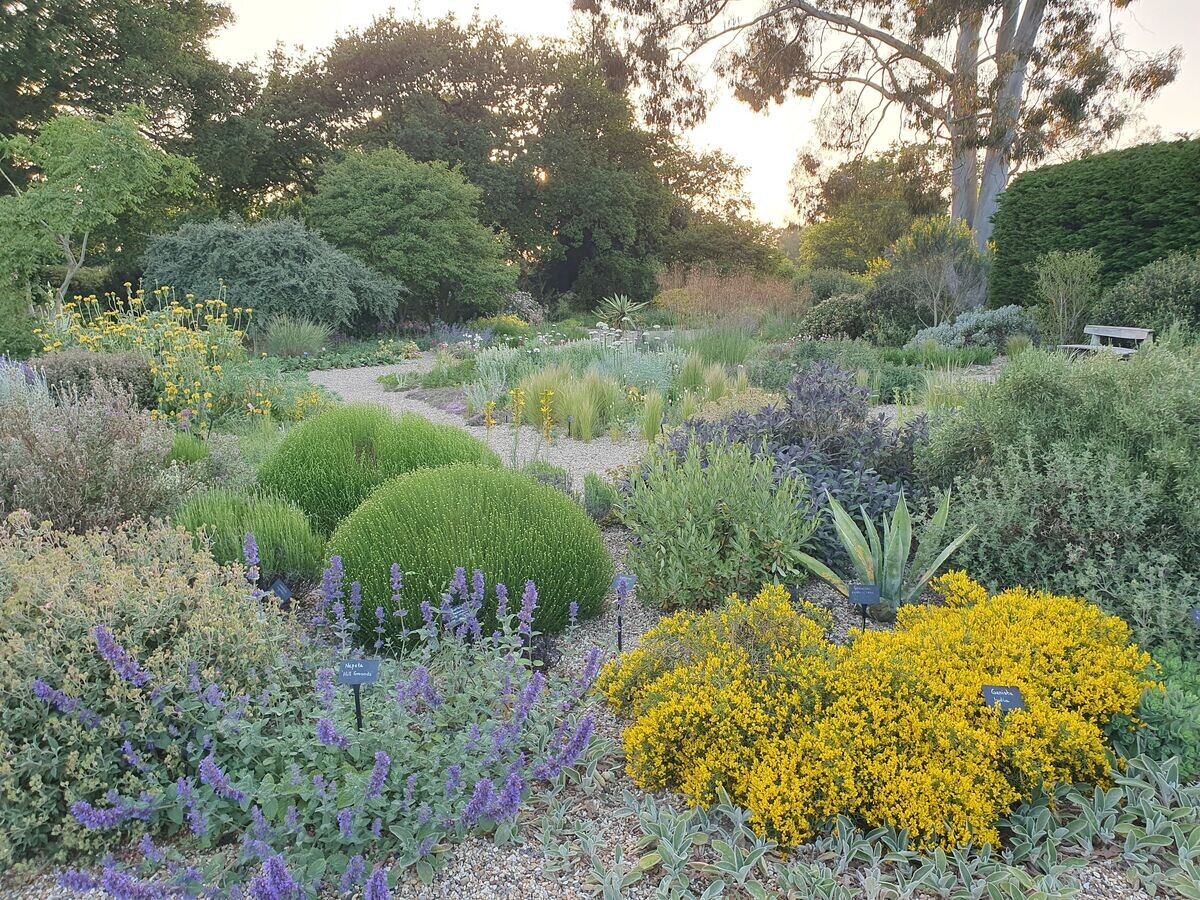
As much of Britain baked under what now appears to be the hottest May day on record for the second day running, with temperatures climbing into the low thirties – heat usually reserved for high summer – I went for an early-evening stroll around the gardens to see which plants were holding their nerve, thriving in the hot weather.
The Water Garden, unsurprisingly, remains lush and untroubled thanks to its naturally high water table. Yet what’s striking is how many plants elsewhere, in far drier soil, remain remarkably unfazed by the sudden heatwave. After several days of scorching, record-breaking heat, these are the ones that are not just coping but thriving without any irrigation.
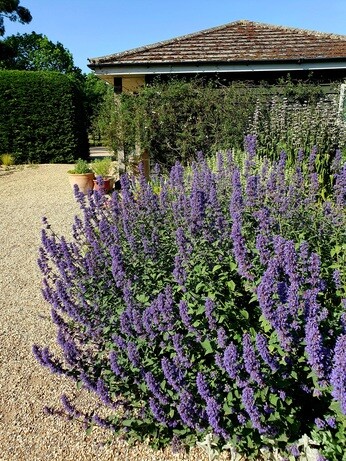
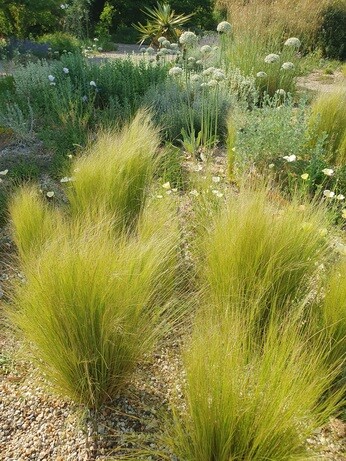
At the entrance to the Gravel Garden, one of the first plants to catch the eye is Nepeta 'Chettle Blue’, its deep-blue blooms trembling with the soft, purposeful hum of bumblebees drifting from flower to flower. Nearby, swaying in the faint breeze, Stipa tenuissima looked luminous basking in the evening sun.
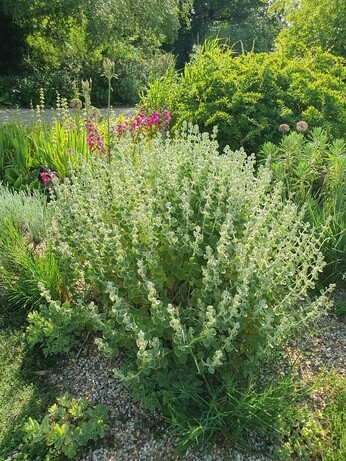
Pseudodictamnus mediterraneus is extremely drought tolerant and one of the loveliest greys, with leaves clothed in grey-white felt.
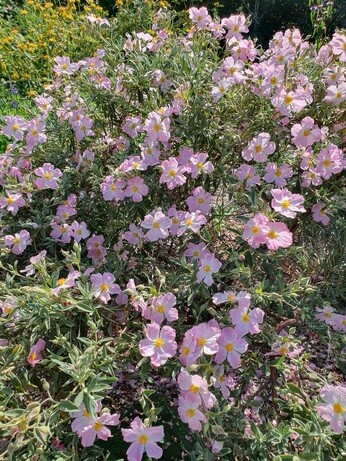
Cistus drop their delicate papery petals like confetti by the evening and afternoon, producing a daily succession of new blooms from late spring through summer. To prolong the colourful display, select varieties with different bloom time. Cistus x bornetianus 'Jester' is a firm favourite with soft pink flowers fading to white in the centre.
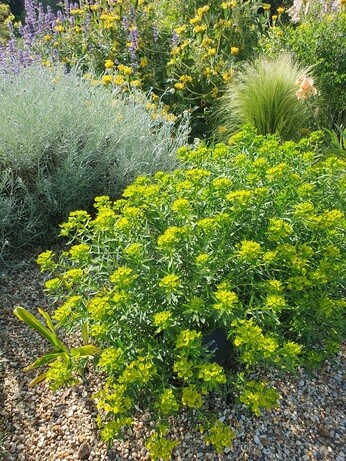
The compact habit of Euphorbia 'Abbey Dore' makes it ideal for the front of a border, here paired with Helichrysum italicum, phlomis, nepeta and Stipa tenuissima.
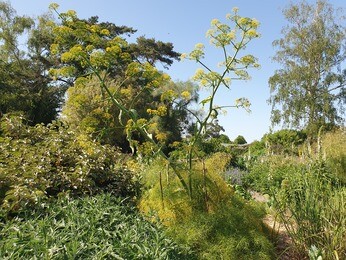
The flower stalks of giant fennel, Ferula communis, can easily soar to 3m, lifting its yellow blooms high against the sky. For a smaller garden, the Tangier fennel Ferula tingitana 'Cedric Morris' makes a great alternative.
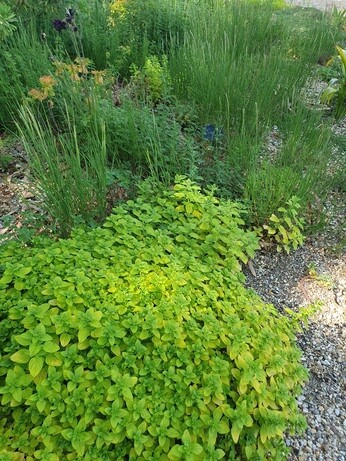
While the chartreuse-yellow foliage of Origanum vulgare 'Thumble's Variety' rarely scorches in full sun, I prefer placing it in dappled shade where it’s useful for brightening up dark corners.
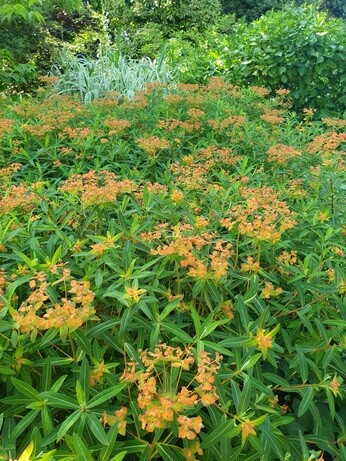
Orange flowered Euphorbia griffithii 'Fireglow' is drought tolerant once established and can handle dry spells, as long as the soil isn’t too poor.
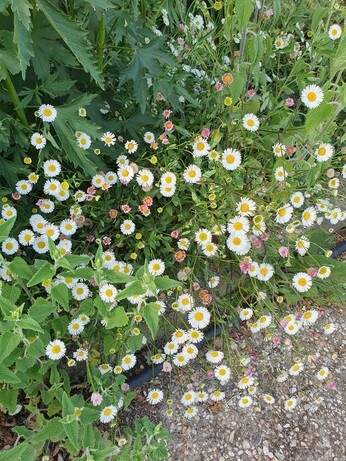
Erigeron karvinskianus – the Mexican fleabane – spills from stone walls and carpets steps, thriving with minimal care. It’s floriferous nature, drought tolerance and ability to root in the smallest crevices makes it one of the most resilient self-seeders in the gardens. Erigeron ‘Lavender Lady’ is a refined form with slightly larger, soft-lilac flowers.
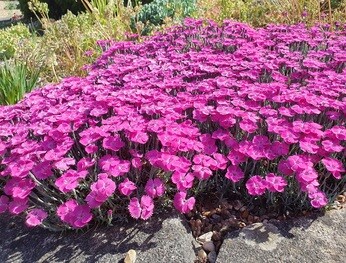
We’ve grown this bright pink dianthus in our Scree Garden for as long as I can remember. Even when it’s not in bloom it earns its place by forming a neat mound of attractive, glaucous foliage.
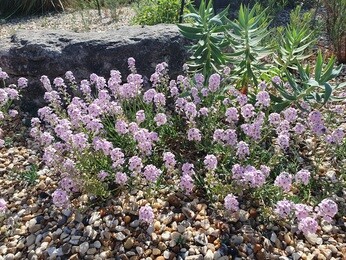
The Persian stonecress Aethionema grandiflorum is a delightful choice for a rock gardens or trough.
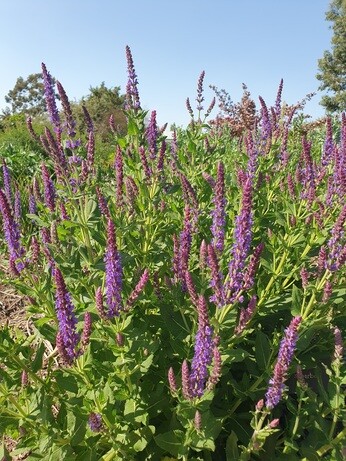
Salvia is a drought-tolerant genus, often blooming from late spring into early autumn - especially if deadheaded regularly - providing months of colour and their nectar-rich flowers are a magnet for bees and butterflies.
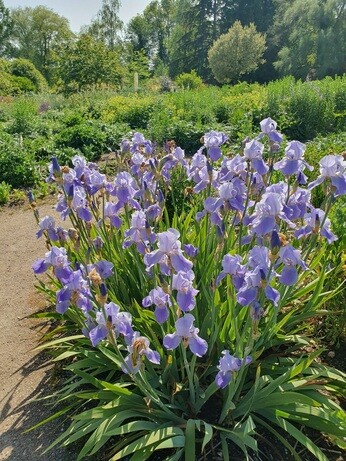
Bearded irises may bloom for only a short while, but their beauty is so striking that one wouldn’t want to be without them.
As I'm writing this, it turns out one blog isn’t enough for all the plants I want to mention, so a second on is on the way.
The Beth Chatto garden has been a great source of pleasure, relaxation, inspiration, hospitality…expense…for many years! The newsletters and blog a welcome addition.
Much gratitude to ALL staff and volunteers. You are a very special place, if that makes sense, combining ‘you’ and ‘place!’
All good wishes, Heather