
Mattie our Trainee reflects on their year spent gardening here at Beth Chatto Plants & Gardens.
Garden connections – planting at Benton End
POSTED 28th March 2026

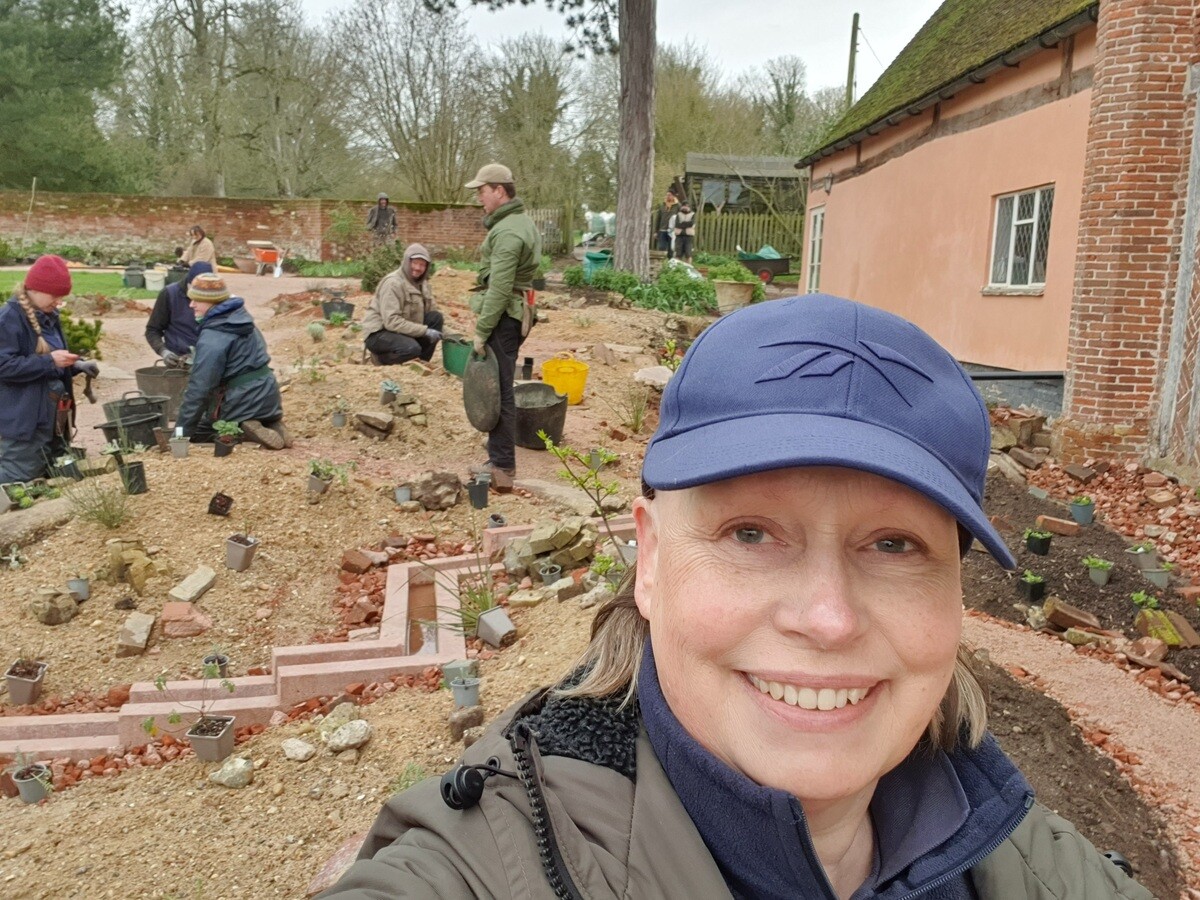
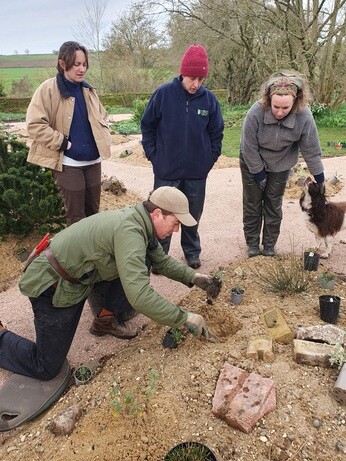
Recently, the garden team and I had the privilege of spending a day planting at Benton End, Hadleigh, working alongside Head Gardener James Horner and his small but dedicated team.
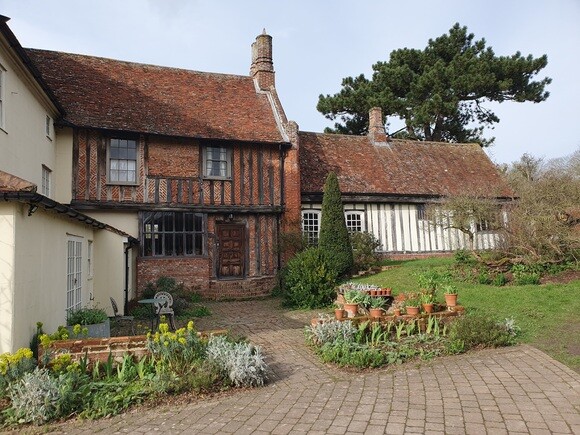
For anyone unfamiliar with Benton End, it was the home of artist and plantsman Cedric Morris, who was both a friend and mentor to Beth. The house sits just outside Hadleigh, nestled in the Suffolk countryside. Now, under the stewardship of the Garden Museum, Benton End is being carefully restored and revitalized, marking a new chapter in its remarkable story.
Sir Cedric Morris (1889-1982) and his life-long partner Arthur Lett-Haines, known as Lett (1894-1978) founded the legendary East Anglian School of Painting and Drawing, transforming their home into a vibrant creative hub for students such as Lucien Freud and Maggi Hambling. Benton End also became a gathering place for artists, writers and other friends including John Nash, Benjamin Britten, Ronald Blythe and Elizabeth Davis, who visited regularly.
Cedric was not only a gifted painter but also an extraordinary plantsman and his garden, with its sweeping drifts of rare bulbs and perennials, became a mecca for plant enthusiasts.
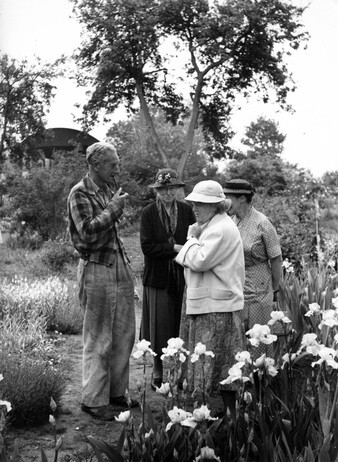
When Nigel Scott, a dear friend of Beth and Andrew Chatto, casually suggested that they should visit Benton End together, having heard that Cedric’s garden was something truly extraordinary, Beth initially balked at the idea of inviting themselves.
For Beth this became a transformative experience. Cedric’s garden was like nothing she had encountered before: there were no formal flower beds. Instead, she found what she later described it as an “eye-widening canvas of colour, textures and shapes”, all arranged in a naturalistic free-flowing planting style. Beth said she felt like a child in a sweet shop.
She found Benton End both bohemian and exotic, and she described Cedric and Lett as bon-viveurs, who broadened her horizon and enriched her palette - of flowers as much as of food.
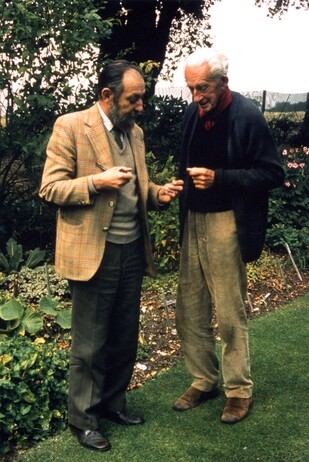
Beth remembered how she first trailed a little shyly behind Andrew and Cedric as they strolled through the gardens, listening as they discussed plants and pausing to identify intriguing species, leaving her both intimidated by their knowledge and enthralled. She soaked up every word like a sponge.
Visits to Benton End soon became a regular ritual and it wasn’t long before Cedric recognized Beth’s genuine passion for plants and her eagerness to learn. He encouraged her to begin growing them herself, becoming a true mentor who shared not only his knowledge but also the treasures he grew - rare plants and unusual bulbs gathered and brought back from his winter travels abroad.
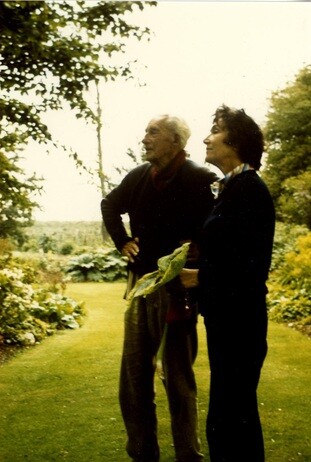
“I taught myself to propagate plants from precious screws of paper filled with seed, berries or cutting I’d been given by Cedric, as well as generous earthy bundles of roots, tubers and bulbs.”
Beth Chatto
Decades later, we have the privilege of returning the favour by bringing some of those very plants back to Benton End.
It’s hard to imagine what Beth’s garden might have looked like had she not crossed paths with Cedric. His naturalistic approach shaped her thinking profoundly, clearly influencing her style, and it was Cedric who, in typically forthright fashion, told a dismayed Beth that she’d never be able to create the kind of garden she envisioned at Weston - the Chatto’s first family home – because its heavy boulder-clay soil simply wouldn’t allow it. That blunt assessment prompted Beth to persuade Andrew to build a house on part of his fruit farm at Elmstead Market.
After Cedric’s death the house was sold and passed through several owners before being purchased in 2018 by the Pinchbeck Charitable Trust. In 2021 Benton End was generously gifted to the Garden Museum, with the intention of restoring the house and garden and establishing it as a new centre for art, horticulture and creativity. This marked the beginning of the journey to bring the garden back to life.
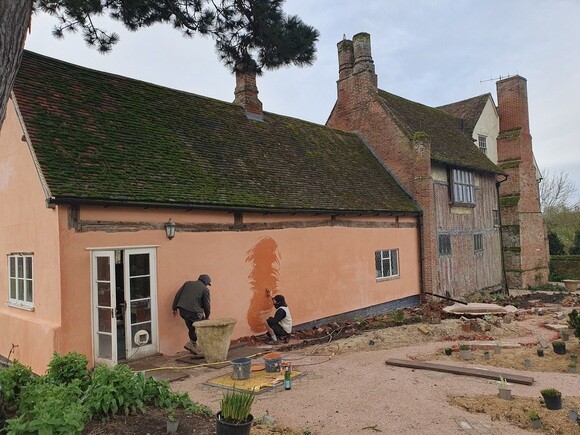
Before his death Cedric appointed a plant executor, Jenny Robinson, to distribute his collection of precious plants and unusual bulbs to ensure they would live on and be cared for by friends and fellow plant enthusiasts. Over the years I’ve driven past the gate to Benton End countless times, sometimes with Beth beside me, wondering what treasures - if any - still linger behind those walls.
The first person to venture into the overgrown walled garden – and beginning the delicate work of untangling it - was the Garden Museum’s Head Gardener, Matt Collins. During lock-down, he spent a year living in a cottage at Benton End, giving him the rare chance to observe and document the precious remnants of Cedric’s once-renowned collection.
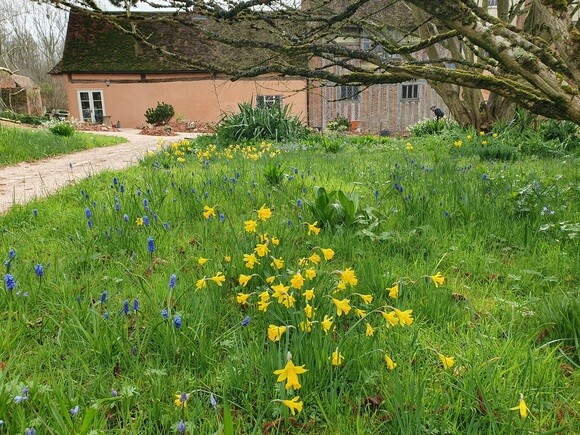
In spring 2023 James Horner became Head Gardener taking the lead on the Benton End renewal project. In the years since Cedrics death the garden had become increasingly overgrown: trees and shrubs had spread unchecked, grass engulfed the borders, forming a meadow where the remnants of Cedric's bulbs still pushed their way through the long grass.
It’s been a joy to witness James - a former Great Dixter scholar with a background in floral and garden design – breath his gentle brilliance into Benton End, shaping the garden in a way that is both respectful of the past and full of fresh possibility.
For more than two years, James and his team have been carefully peeling back those layers of overgrowth. The aim was never to recreate the garden exactly as it was in Cedric’s days, but to renew it while preserving the essence and spirit of Benton End, while allowing it to evolve. The renewal of the walled garden is a creative collaboration with Sarah Price Landscapes, reimagining the space with a design that respects its past while embracing a modern aesthetic.
Over the past few years selected trees have been removed to open up views, while others were kept for their character. Shrubs were either taken out, rejuvenated or sensitively pruned, and barrowloads of ground elder, bindweed and arum were dug out to make way for new planting.
It felt like such a privilege to spend a day with our friends at Benton End and, in our own small way, contribute to the making of the new garden.
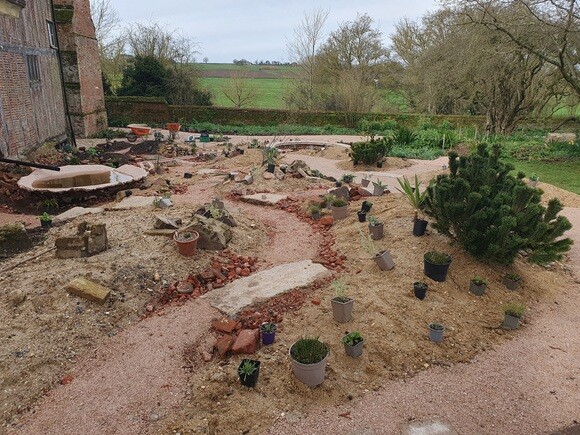
James, Sarah and WRAGS trainee Sybille (who we were waiting to greet us as we stepped out of the car and together we made our way to the walled garden. The transformation since our last visit was remarkable: newly laid paths now define the space and mounds of sand stood ready for planting. We had seen some drawings and plans before, but with the new paths in place the project no longer felt like an idea on paper – it felt like a real garden beginning to take shape.
Before we began planting James invited us inside and showed us a series of slides: Cedric’s paintings, photographs of the garden in its heyday and plant lists written in Cedric’s hand.
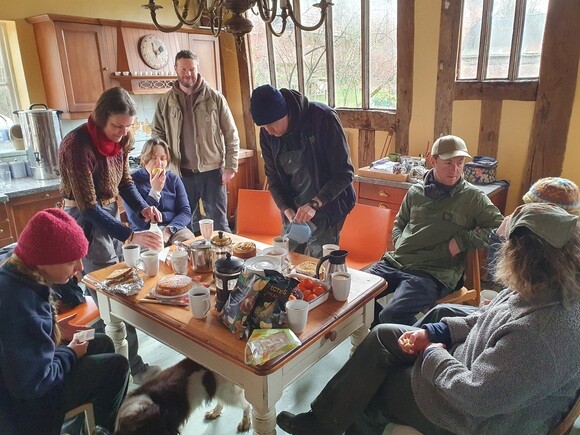
James shared how invaluable Cedric’s artwork has been in helping him identify the plants he cultivated, and how Cedric’s deep love of nature has informed their approached of restoring the garden. James has always gardened organically, avoiding chemicals and artificial fertilisers, and he said paintings such as Landscape of Shame, currently on display at Tate Britain - affirmed that choice. The work, Cedric’s 1960’s depiction of a field strewn with dead birds in a desolated landscape, expressing Cedric’s outrage at the devastating effects pesticides and crop-spraying had on the bird population, confirmed for James that their commitment to organic gardening was well aligned with Cedric’s values.
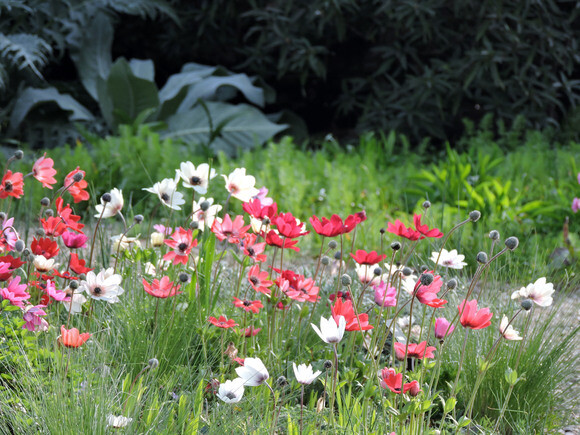
As James gave us a quick tour of the garden, we spotted a few Anemone pavonina poking their heads up through the grass, most of them still in bud, and lovely drifts of Corydalus cava beneath an old medlar. James pointed out a rarity, one of his favourite daffodils, Narcissus tazetta subsp. italicus, saying that he plans to add more this autumn. It was a new acquaintance for me, but I was instantly taken with its elegant charm – I have a soft spot for the wild species - so it’s now firmly on my must-have list.
In the wilder area beside the walled garden, the felled trees and pruned branches have been gathered into several large habitat piles, creating valuable shelter for beetles, bugs and other wildlife.
At the back of the house, and again at the far end of the walled garden, mounds of sand waited to be planted. James was eager to experiment with sand planting - something he hadn’t tried before - and decided to top-dress the mounds nearest the house with recycled crushed brick. The contrast in colour between the paths and mounds made the planted areas more visible, helping to prevent visitors from wandering across the beds and accidentally trampling young plants, a problem I’ve encountered many times before at Beth’s garden when the edges aren’t clearly defined.
Growing plants in sand encourages deep, resilient root systems, as the plants are forced to develop extensive root systems to find water. The excellent drainage also makes sand an ideal growing medium for alpine and Mediterranean species. The material used here – known as 6N/As Raised sand (sometimes called as-dug sand) - came from a local quarry and had not been graded or washed, so it naturally contained both sand and smaller stones. It’s the same type of sand we’ve successfully used at Chattowood and the Albert roundabout in Colchester. All the plants had been carefully chosen for their drought tolerance and James was keen to “grow them hard”, ensuring we removed as much soil as possible before planting.
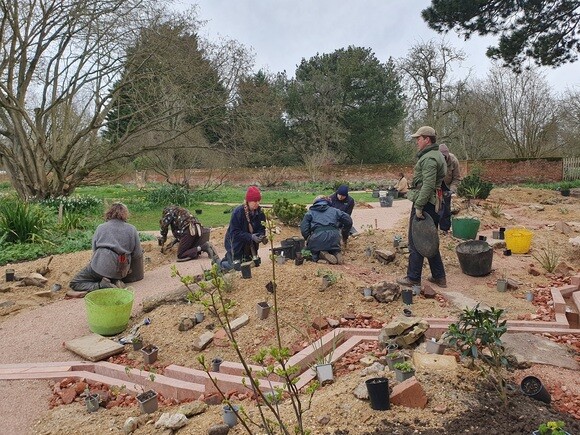
Since all the plants had been watered the previous day and the weather forecast warned of a hard frost, James decided to delay watering for a couple of days, as excessive moisture could potentially damage the young plant.
We continued planting the yucca bed at the bottom of the garden, using the same approach and removing as much soil as possible. To avoid trampling the border we worked from wooden planks.
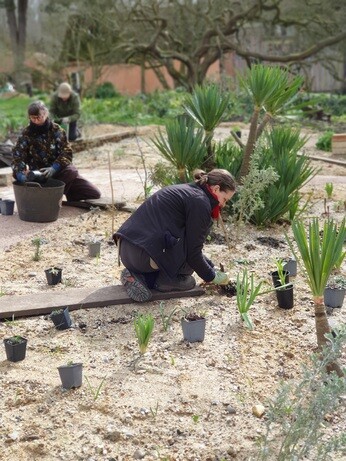
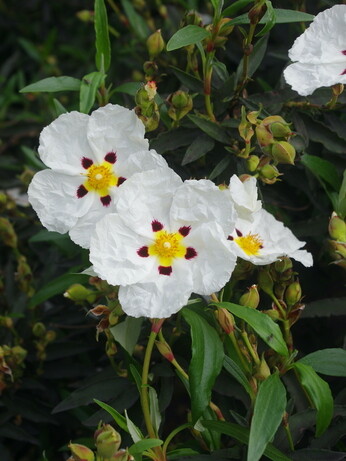
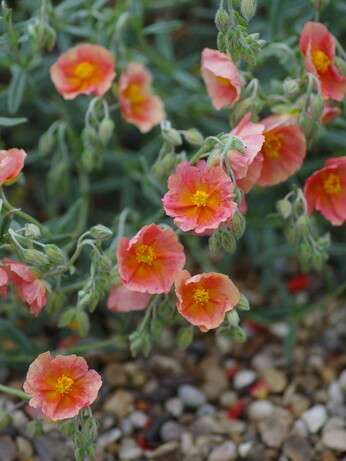
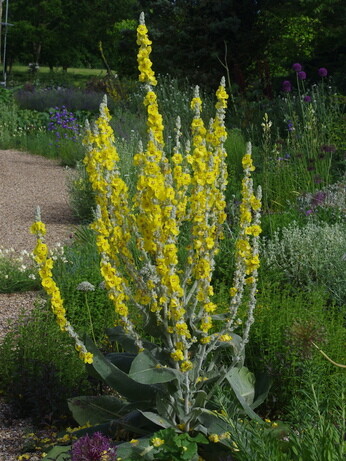
Among the plants we planted were Atriplex halimus, with its silvery, salt-tolerant foliage, eventually forming a large silvery shrub; Pseudodictamnus mediterraneus forming soft, velvety mounds of grey-green leaves; sun-loving cistus and helianthemum, both studded with papery blooms in early summer; and the dramatic Verbascum bombyciferum, its candelabras rising from wool-clad rosettes.
Cedric Morris famously bred bearded irises, many of them carrying the prefix ’Benton’ and were named after friends and favourite pets. Thanks to the dedication of Sarah Cook, the former Head Gardener at Sissinghurst, many of these long-lost Benton irises have now been traced, recovered and brought back into cultivation. Like Sarah, I value them for their ability to associate well with other plants in the garden and their subtle elegance. They have none of the over-the- top frills so common in many cultivars.
Among the many irises we grow is Iris ‘Benton Menace’, named after one of Cedric’s cats. I planted it in our Reservoir Garden where its purple blooms with a contrasting golden beard sit beautifully alongside Amsonia ‘Ernst Pagels’ and the yellow spires of Asphodeline lutea.
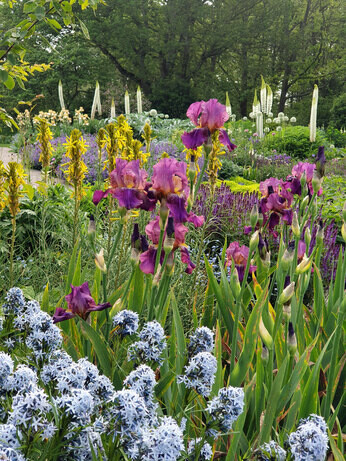
Iris ‘Benton Menace’, Amsonia ‘Ernst Pagels’
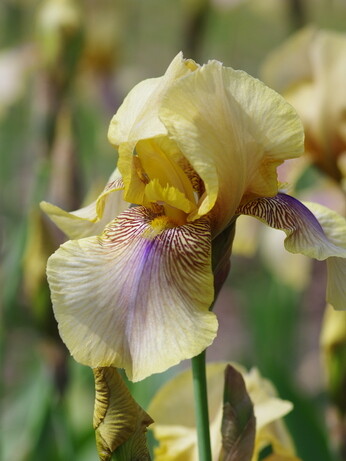
You’d be forgiven for assuming that I. ‘Benton Olive’ – with its lilac flush and purple veining on the falls – was named for its flower colour. In fact, it was named after Olive Murrell of Orpington Nursery in Kent, a successful fellow iris breeder and friend. It surged in popularity after it appeared in Sarah Price’s stunning garden at the 2023 Chelsea Flower Show.
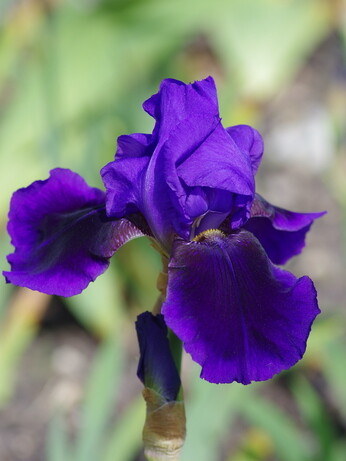
The violet-blue Iris ‘Benton Nigel’, with its inky purple falls, is named for Nigel Scott, who first brought the Chattos to Benton End. A devoted plantsman and gardener, with a love of species plants, Nigel quickly became close with Cedric, working alongside him in the garden and also accompanying Cedric on his winter travels abroad.
“During his time, the garden expanded and blossomed to the peak of its development and fame. This takes nothing away from Cedric as its creator; in Nigel he found a companion who shared his enthusiasm for plants to its fullest extent. They worked together from dawn till dusk.”
Beth Chatto in her article for Hortus; A Gardening Journal No. 1, Spring 1987
Plants and people both bring so much joy into our lives. In tending and exchanging plants, we cultivate more than gardens – we nurture our connection with one another. It’s been wonderful to rekindle this bond with Benton End in recent years and to help carry forward the legacy Beth and Cedric began so many years ago.
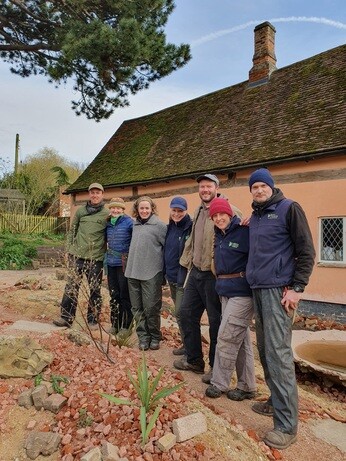
The walled garden at Benton End is set to reopen for a limited number of visits this summer.
Visit the walled garden at Benton End - Garden Museum
I always enjoy reading your blog and find it inspirational.