“I think all the plants in the garden, even more so in a small garden, must have interesting or valuable leaf texture, colour or form.”
Beth Chatto, the Green Tapestry
Relying on flowers alone gives you short bursts of colour, followed by empty gaps and borders that lack continuous interest. Foliage, on the other hand, provides the structural backbone of a garden, carrying the design from early spring right through to autumn – and in many cases into winter – offering form, texture and colour long after the blooms have faded.
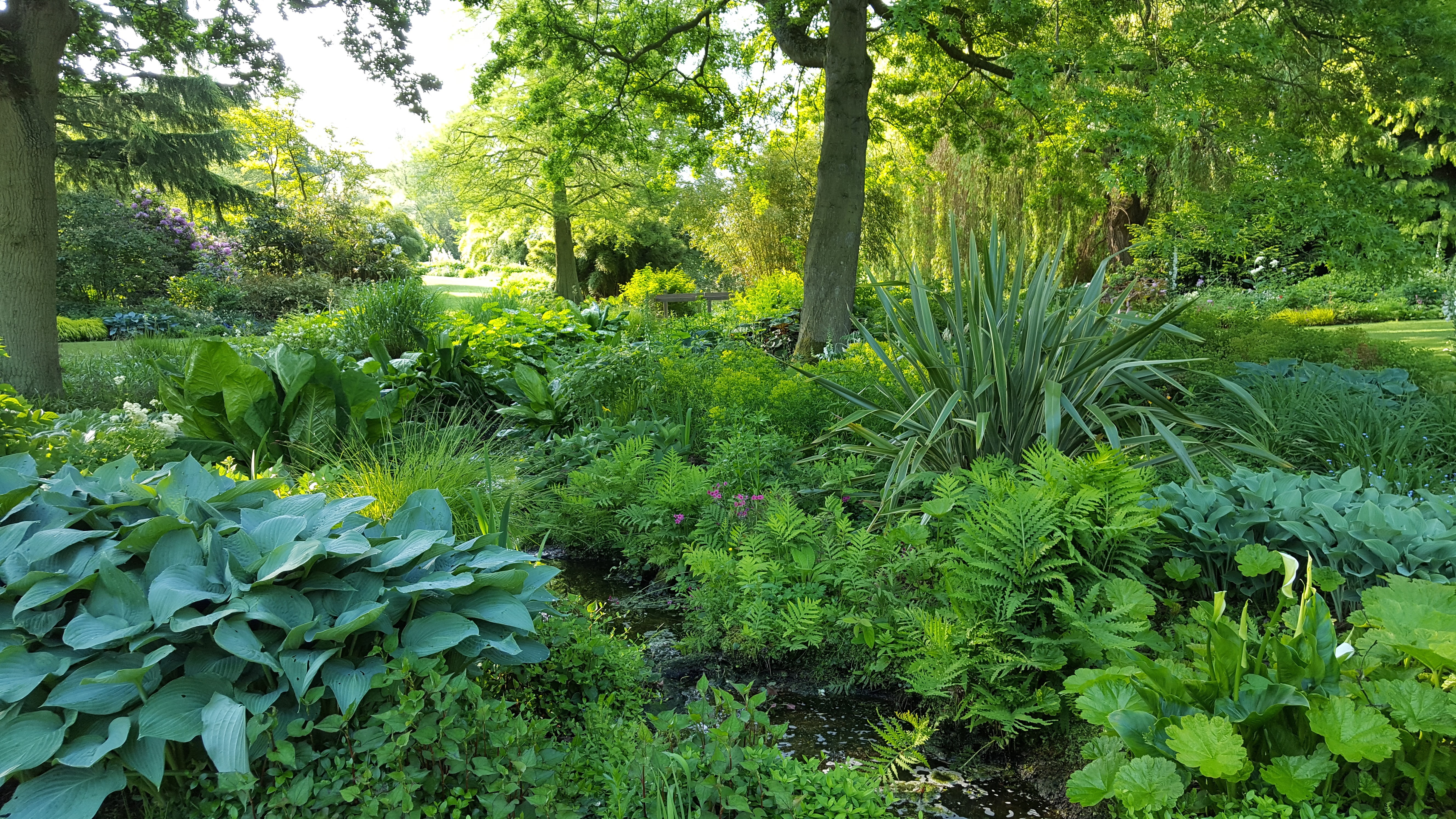
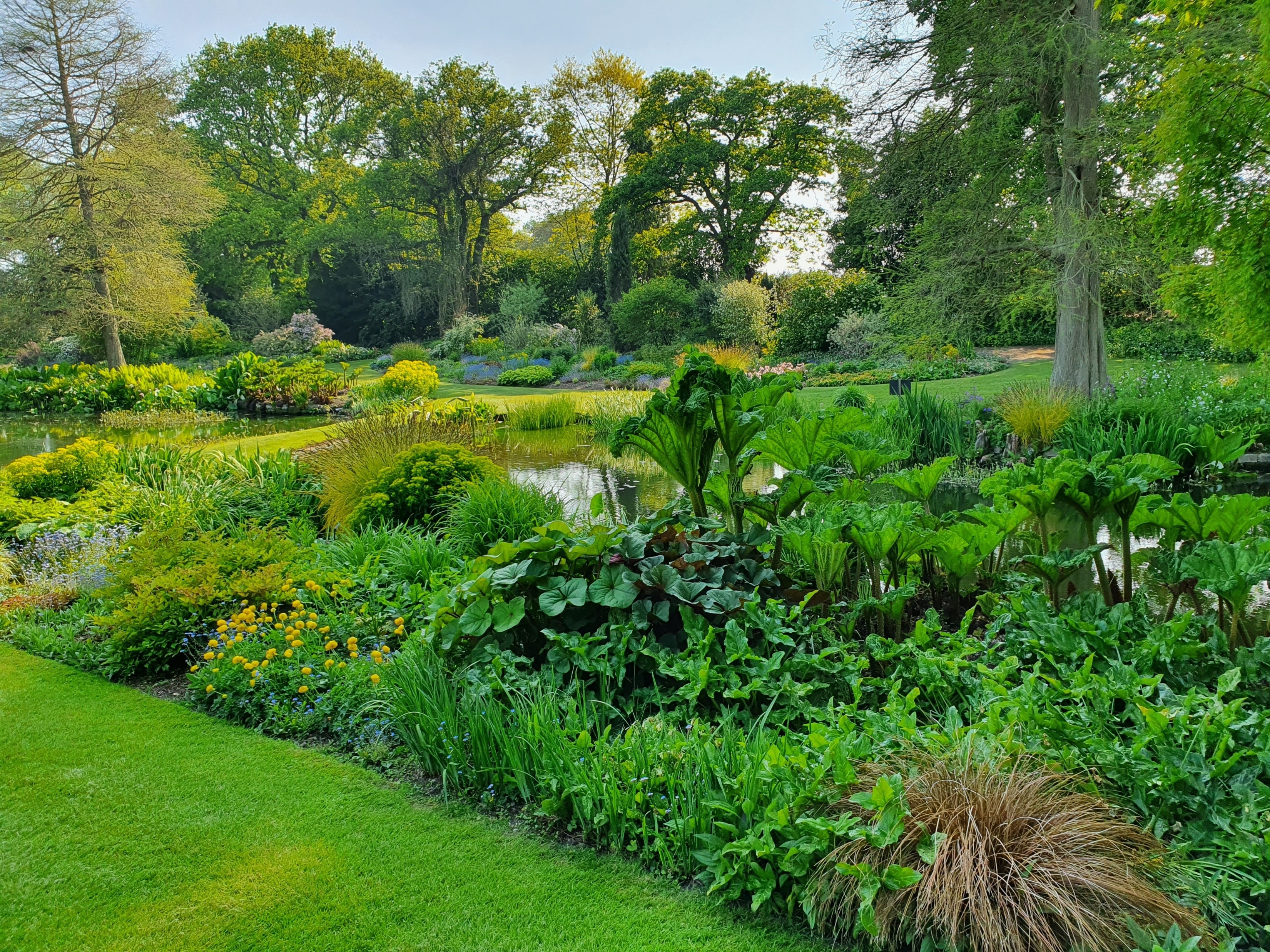
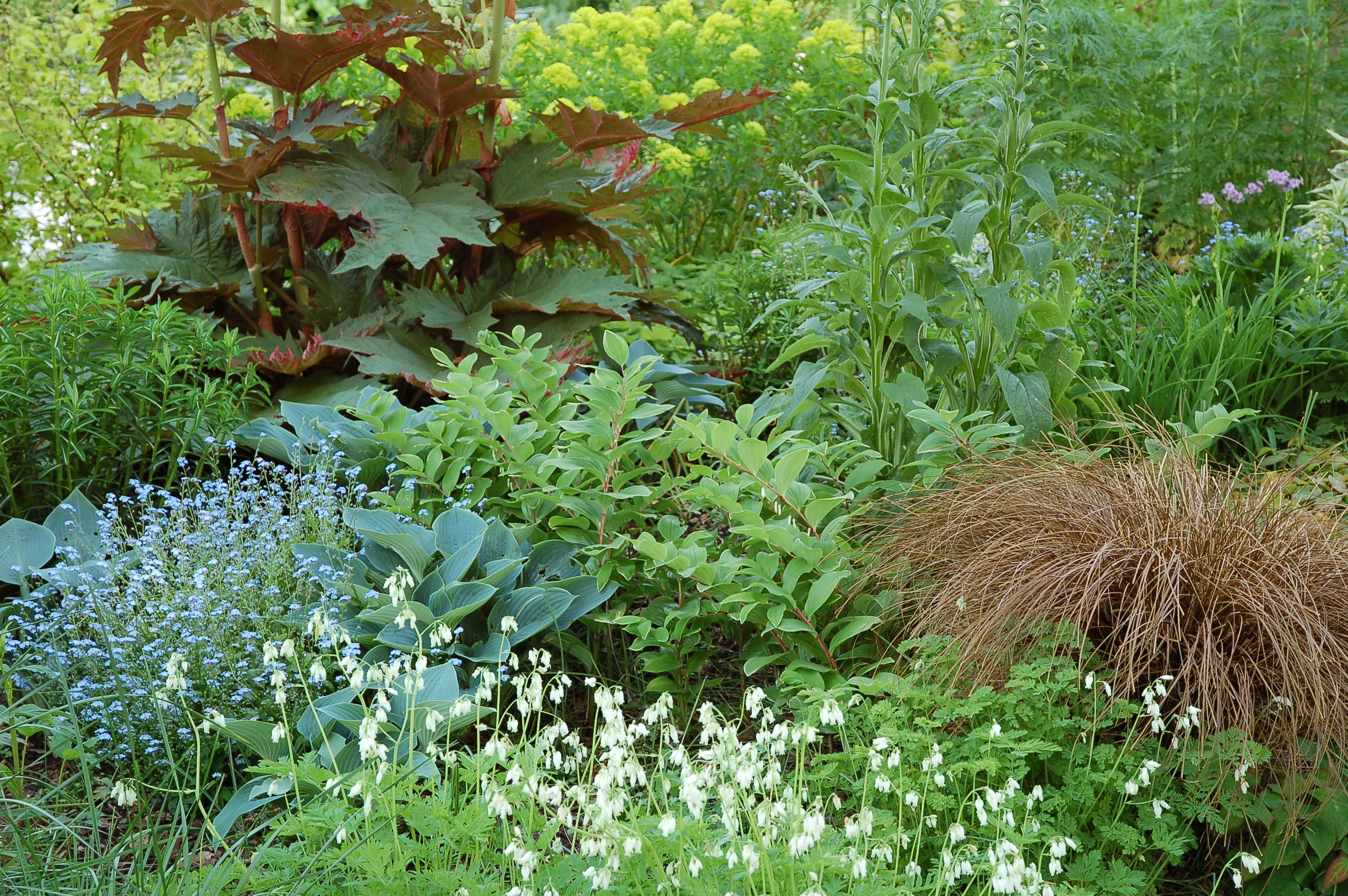
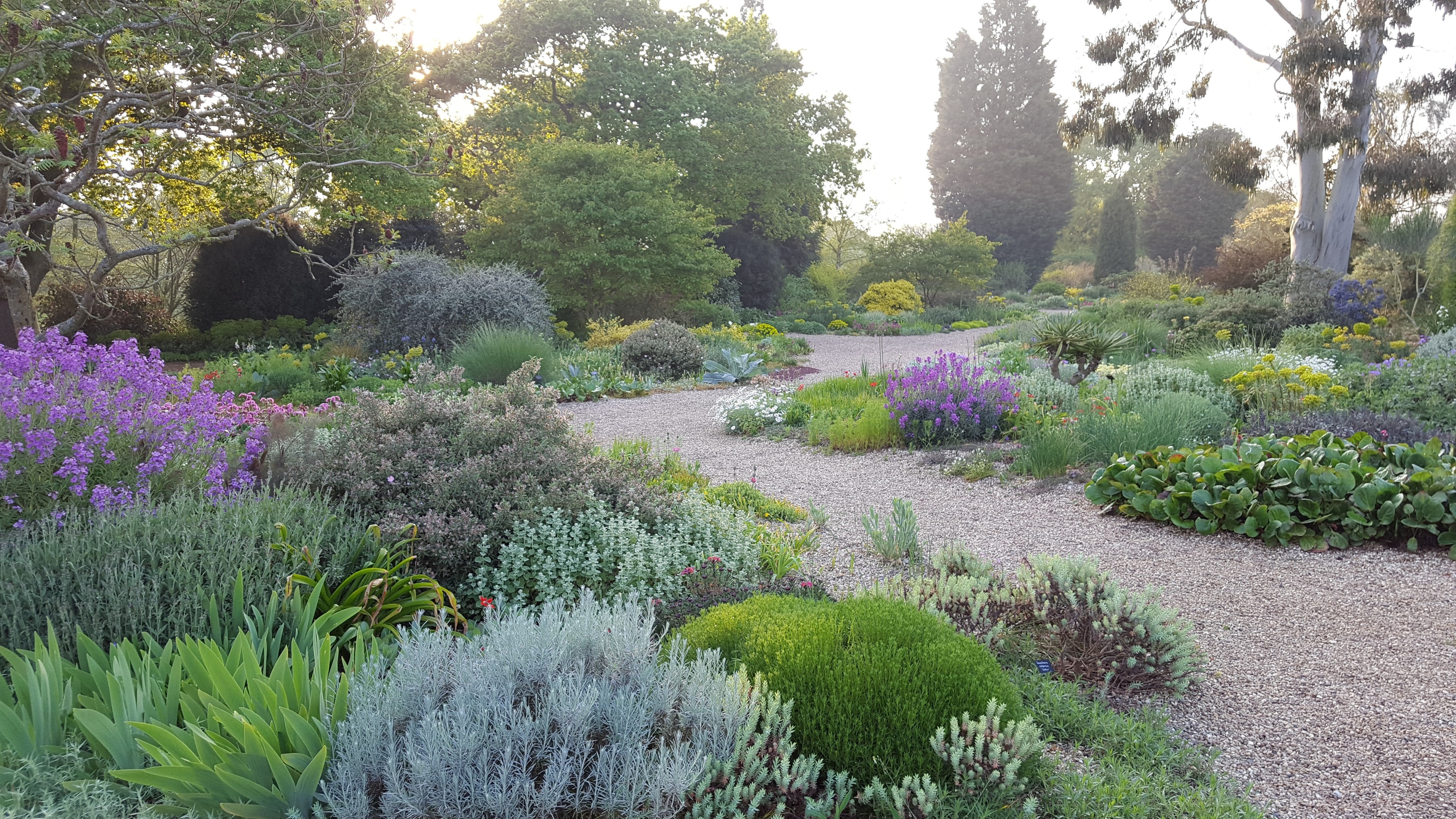
Green, in all its many shades, is one of the most calming colours. When you allow foliage to take centre stage, your garden gains a serenity and depth that flowers alone cannot achieve. This doesn’t mean you should avoid flowers altogether. It simply means shifting the balance. By prioritising foliage - mixing bold, architectural leaves with fine textures, pairing broad shapes with narrow ones, and weaving in colours from blue-green and deep burgundy to chartreuse and gold – you create interest that lasts for months rather than weeks.
In deep shade, where most flowers struggle, foliage becomes essential. Silver, gold or variegated leaves can lift a dim corner, adding light where the space would otherwise feel flat and dull.
Variegated plants deserve far more appreciation than they usually get. It is true that some varieties can look overtly sickly, and if used incorrectly variegated plants can easily overwhelm a border. But when chosen carefully and with intention, they have an extraordinary ability to lift a space. Used sparingly they become the accent that draws the eye, bringing life to a dark, lacklustre corner.
Generally, foliage edged with a contrasting colour, such as the leaves of variegated hostas, appear more elegant and refined, as they tend to integrate more naturally with the surrounding plants compared with the heavily blotched and speckled leaves of for example aucuba, which can veer into garish territory if not handled carefully.
As a general rule of thumb, it’s best to avoid combining yellow-variegated foliage with cream-variegated foliage in the same planting scheme, as the two tones often compete visually, rather than complement each other. Yellow variegation tends to have a warmer tone, appearing more intense, while cream variegation is softer and cooler.
Too many competing foliage colours can make a garden feel busy and chaotic. Choosing one or two dominant tones throughout the garden creates a more harmonious, cohesive look that feels intentional rather than overwhelming.
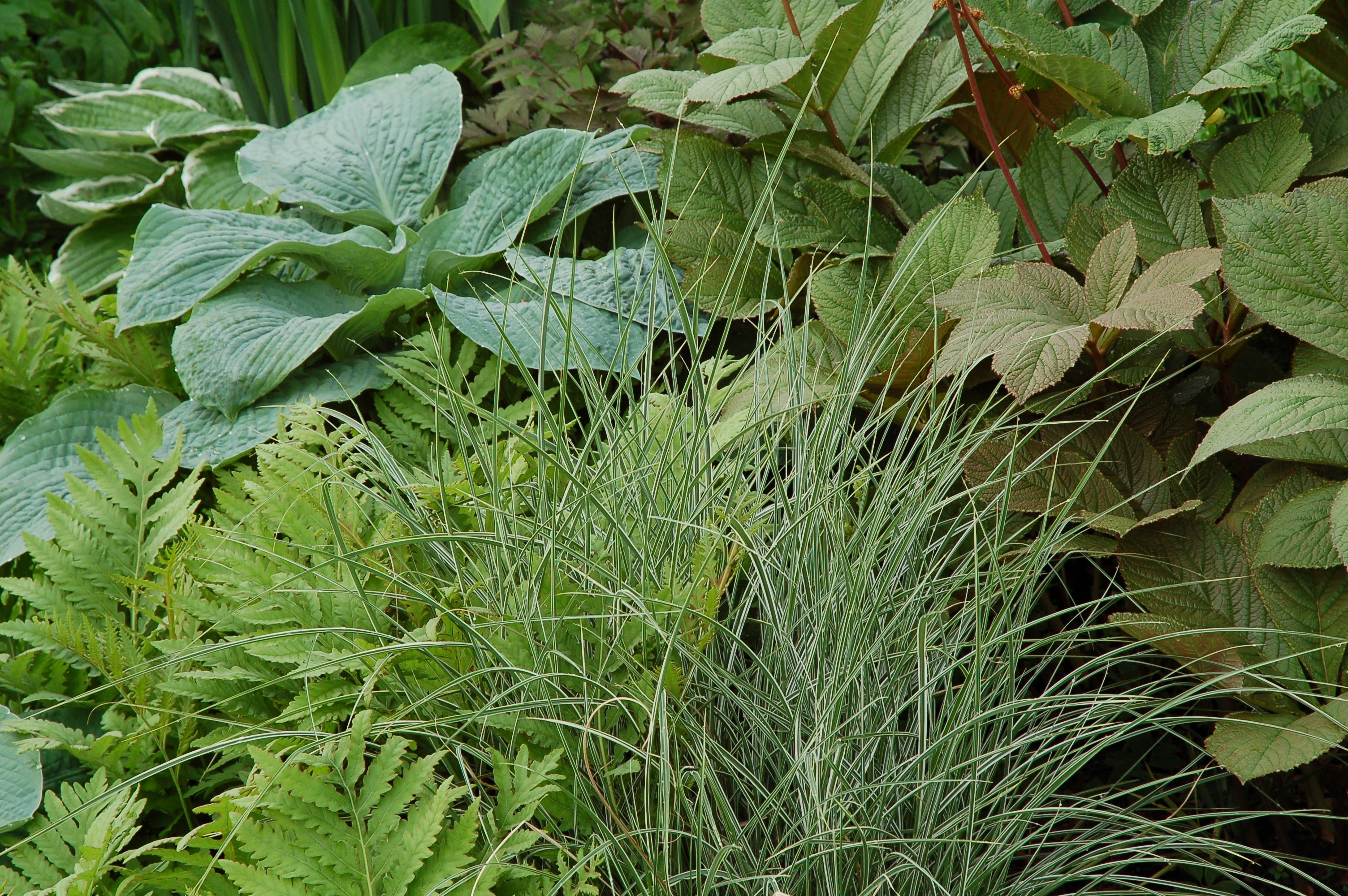
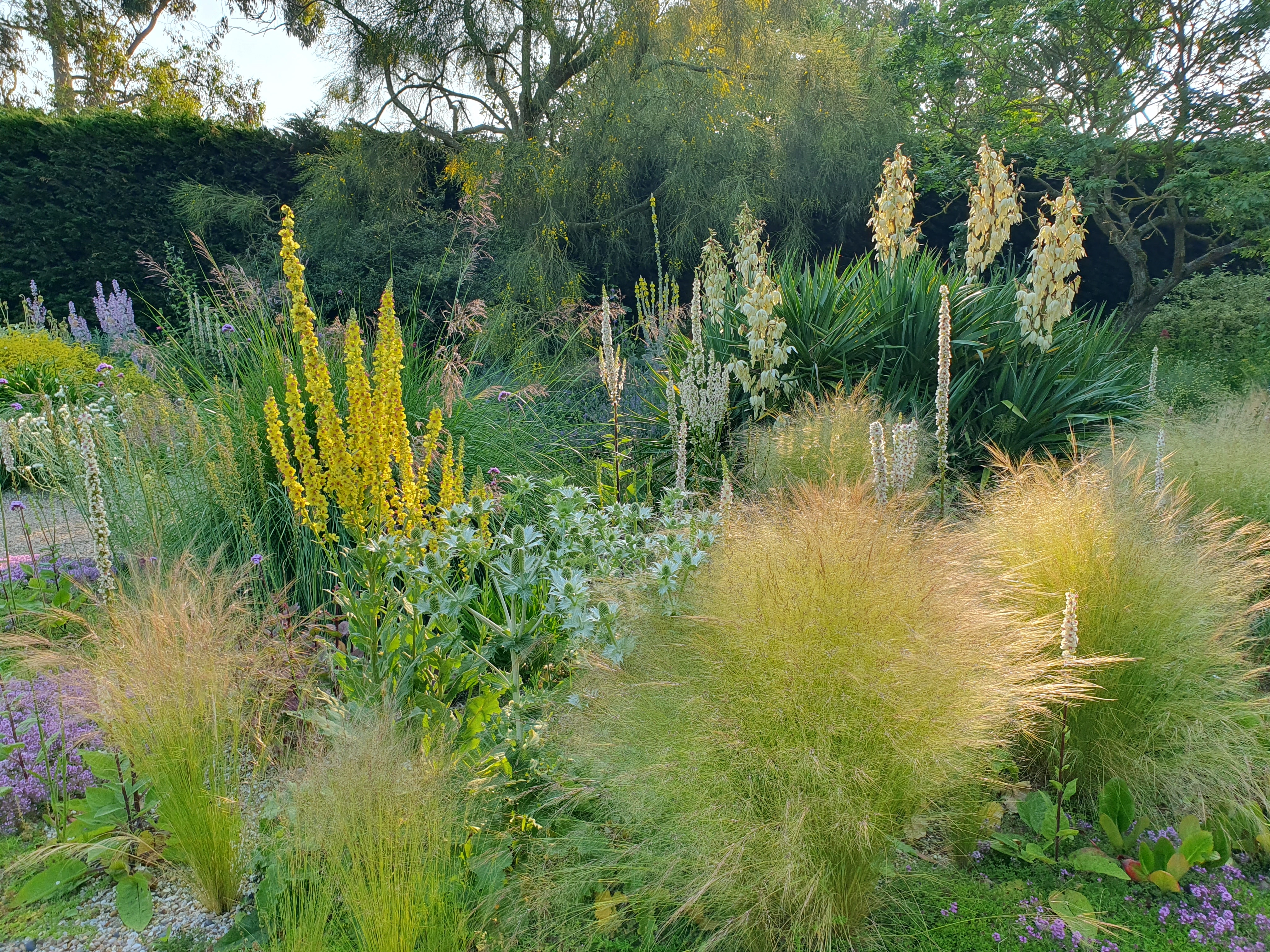
Let bold foliage act as focal points, then soften and elevate those plants by surrounding them with smaller foliage to create contrast and depth. Add plants with narrow, airy textures – fine grasses that move and shimmer in the breeze and feathery ferns that catch the light.
Stipa tenuissima in our Gravel Garden
The contrast in both size and texture prevents the large-leaved plants from feeling visually heavy, creating a layered composition where bold forms stand out while the lighter, finer foliage introduce movement and a sense of airiness.
Some of our favourite foliage plants include:
Stachys byzantina ‘Silver Carpet’, commonly known as lamb’s ears, is an excellent ground cover for dry, sunny areas, forming a dense mat of soft, hairy, silvery leaves.
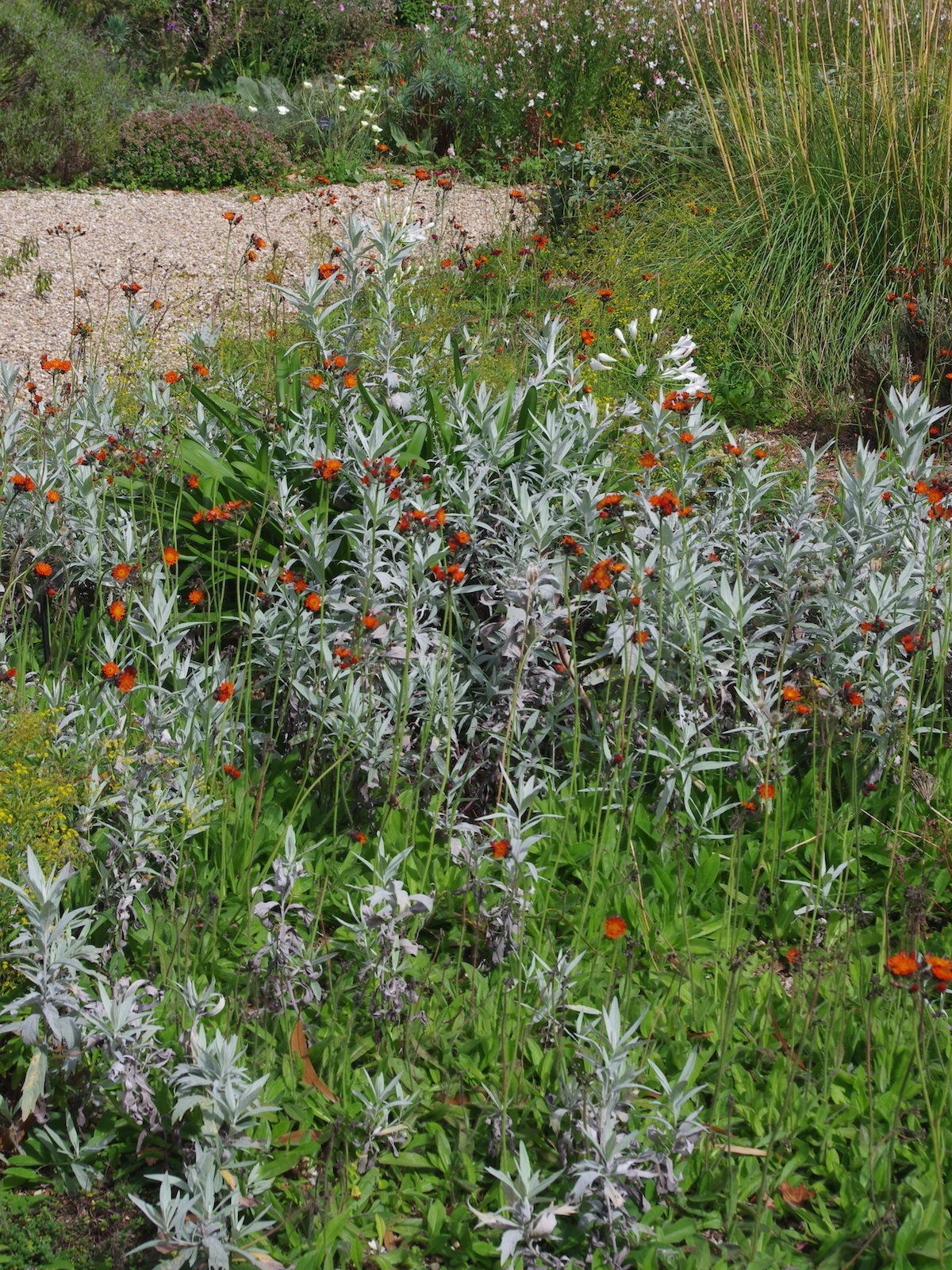
Artemisia ludoviciana ‘Valerie Finnis’ is grown for its striking silver foliage; the plant was given to Beth by Valerie Finnis many years ago and named in her honour. In our Gravel Garden, we allow it to mingle with orange-flowered hawkweed, Pilosella aurantica, cutting back the artemisia straight after flowering to encourage fresh young growth that shows the best colour.
Helichrysum italicum, an evergreen subshrub, adds further texture to a dry and sunny border with its narrow, aromatic silver-grey leaves, which carry a distinctive curry-like scent, and clusters of yellow flowers.
Cynara cardunculus, also known as cardoon, makes a magnificent feature plant – for those who have space to grow it – creating a beautiful mound of boldly-cut, silver-grey foliage.
Foeniculum vulgare ‘Smoky’ brings far more than just a splash of bronze to a planting scheme. Its feathery foliage and airy texture break up heavier planting when threaded between more solid perennials and sub-shrubs.
Amsonias are among my favourite perennials - not just for their delicate, starry flowers and impressive toughness, but for their standout foliage. Amsonia ‘Ernst Pagels’ brings a contrasting texture to the border with its slender, willow-like leaves forming a large mound – a perfect foil for late flowering perennials. In autumn the leaves turn a lovely butter yellow colour.
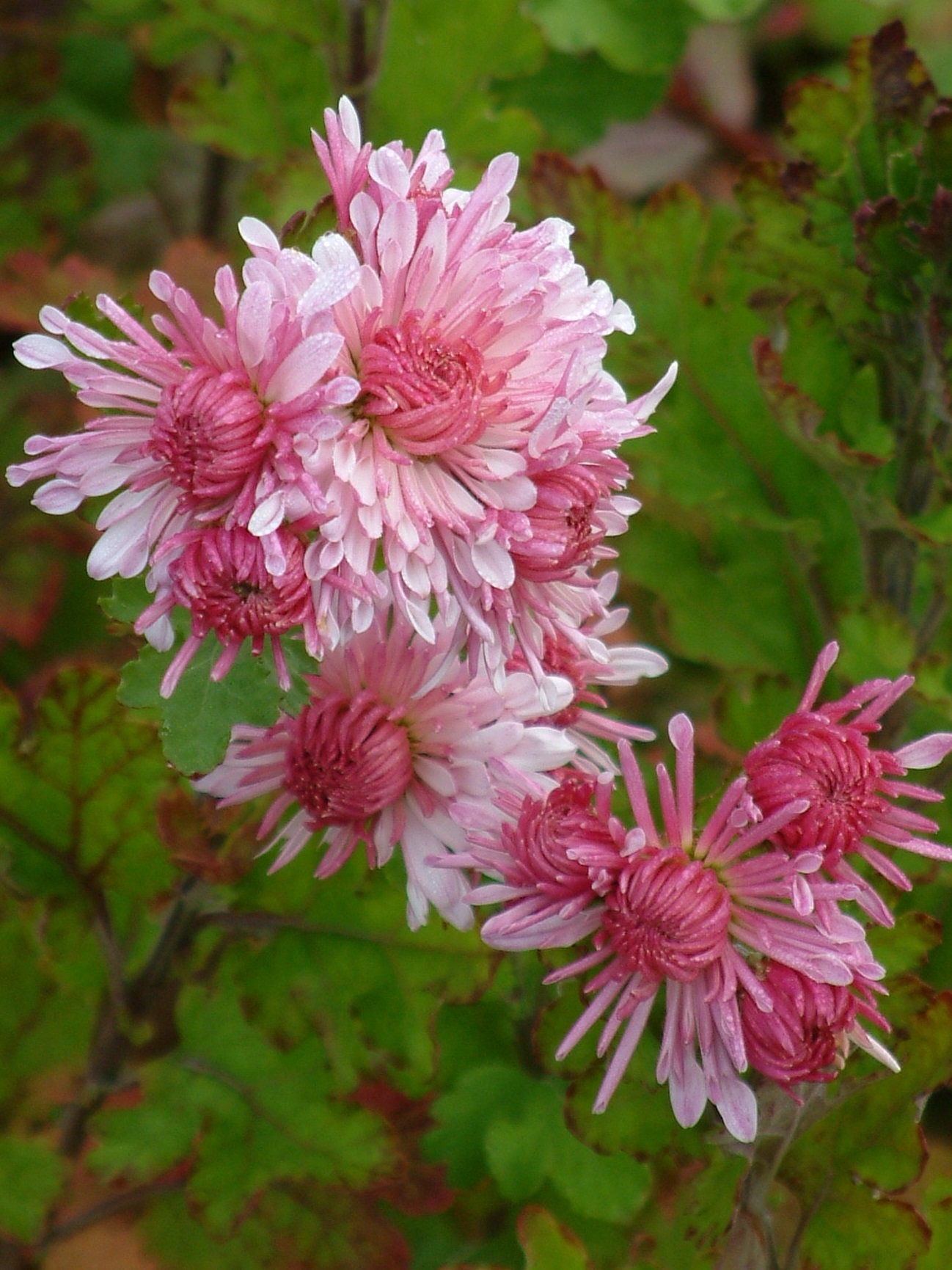
Chrysanthemum ‘Emperor of China’ is an old, beautiful cultivar admired for its double silvery-pink flowers that appear in late summer and autumn. For me, though, its real magic lies in the autumn foliage: as soon as the first frost touches the leaves, they flush and vein with a deep red, complementing the pink flowers.
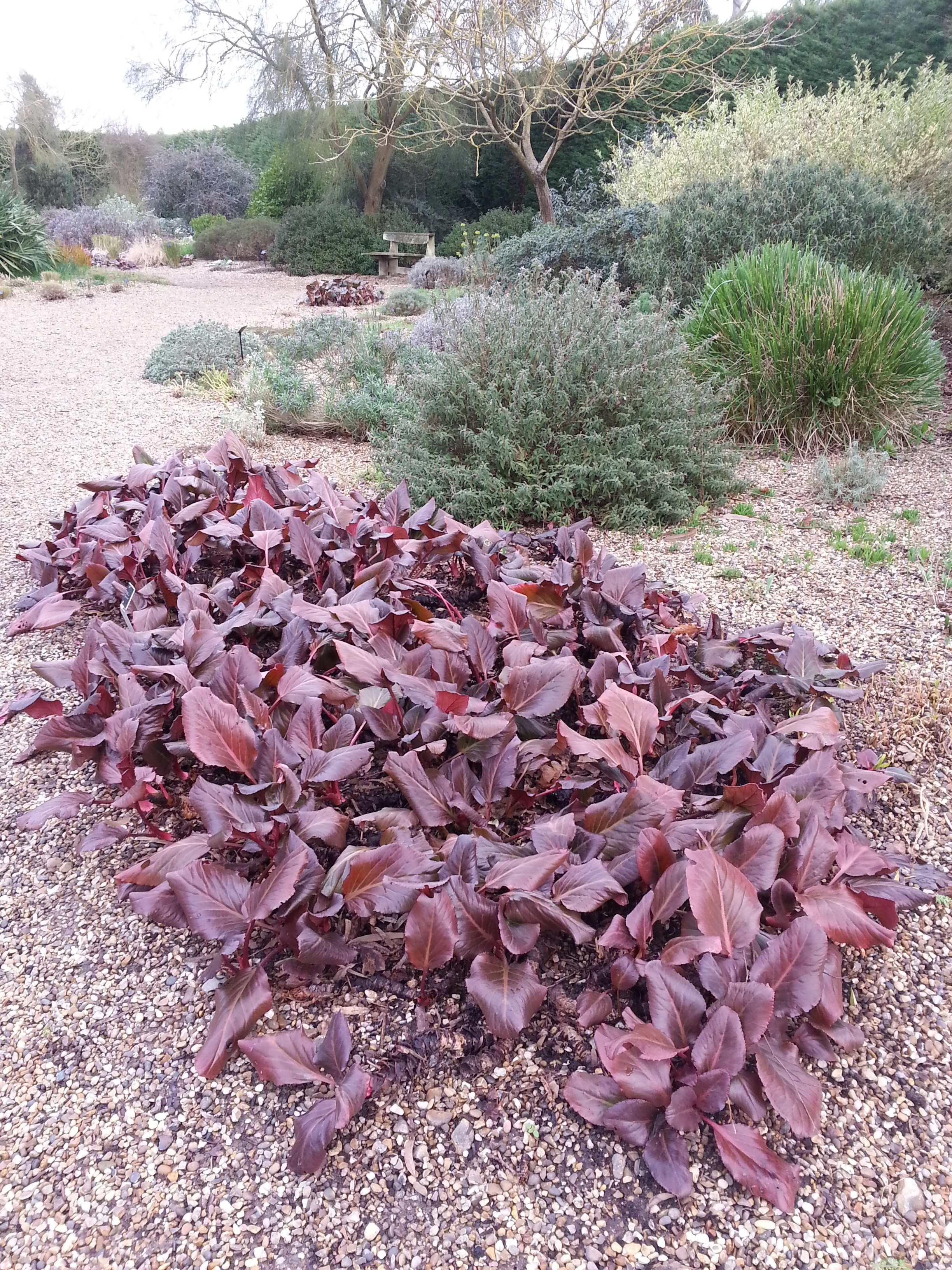
As temperatures drops, the glossy leaves of Elephant’s ears - Bergenia ‘Abendglocken’, the small-leaved B. ‘Irish Crimson’ which was given to Beth by Helen Dillon, the great Irish plantswoman, and many other cultivars – take on a striking deep burgundy hue during the winter months, especially if grown in full sun and free-draining soil.
For shade, if you want a plant that creates bold visual impact and is easy to maintain, Brunnera macrophylla ‘Alexander’s Great’ makes a great choice. Its huge silver leaves, veined with green, brightens any shady area. In spring it adds another layer of charm with sprays of tiny forget-me-not-like flowers that float above the foliage.
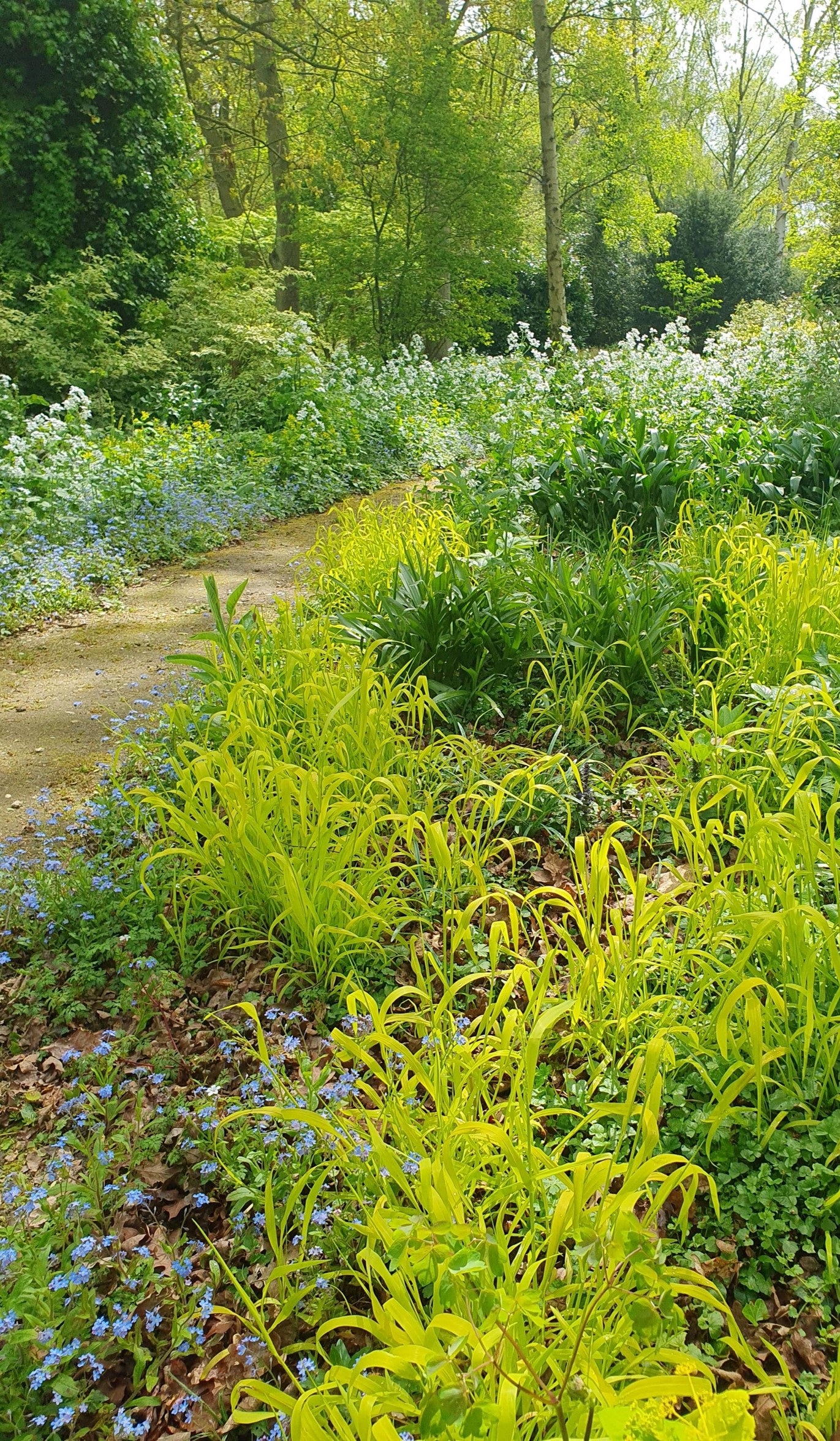
Milium effusum ‘Aureum’ emerges in spring as a vivid splash of bright, lemon-yellow strap-shaped leaves, forming soft, arching clumps that immediately brightens shady corners. As the season advances, the colour mellows to yellow-green.
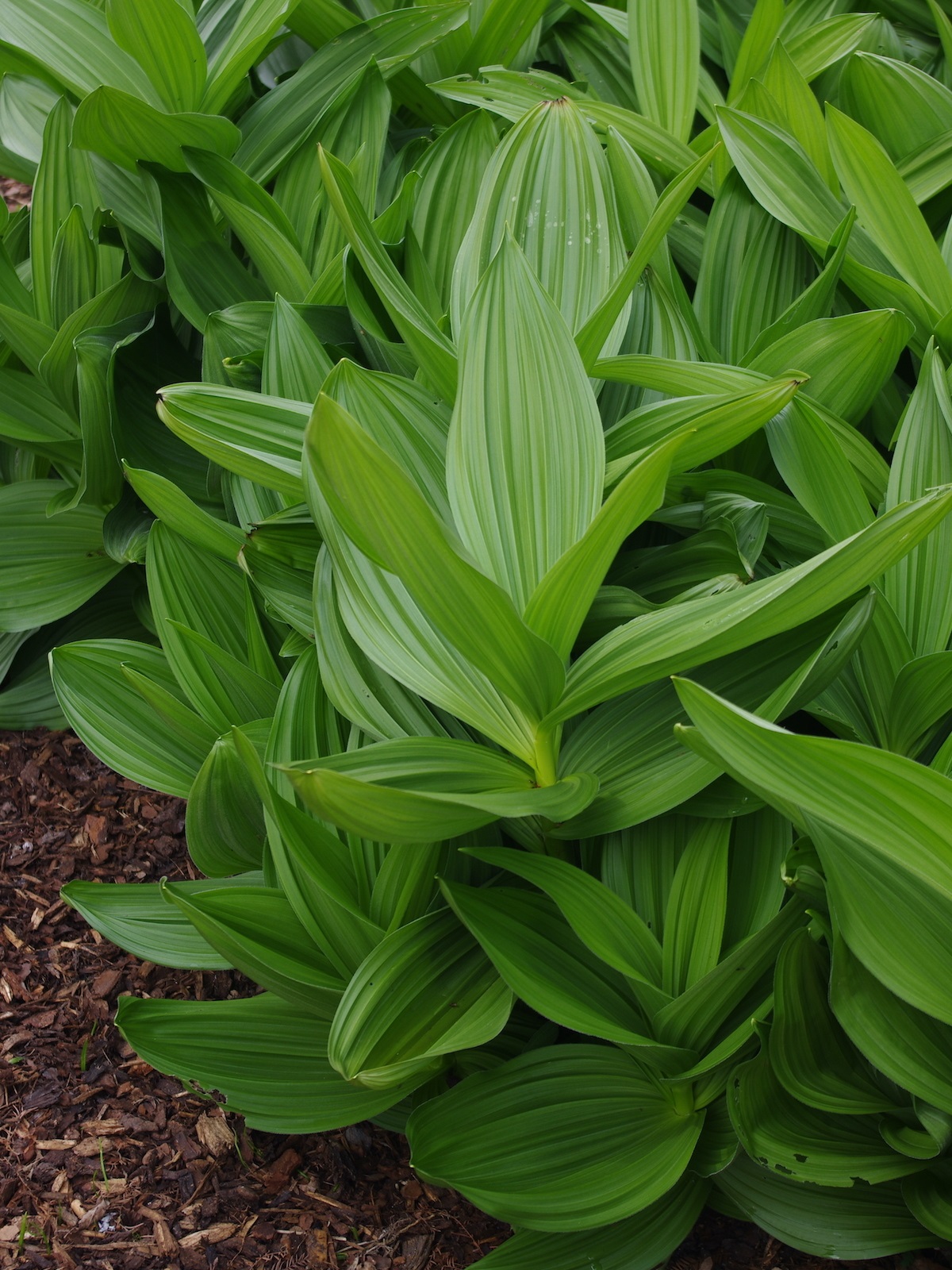
Veratrum is grown as much for its striking architectural foliage as it’s flowers. Its bold hosta-like leaves emerge in spring, beautifully pleated like an elegant green fan. To thrive, it prefers a moisture-retentive, humus-rich soil.
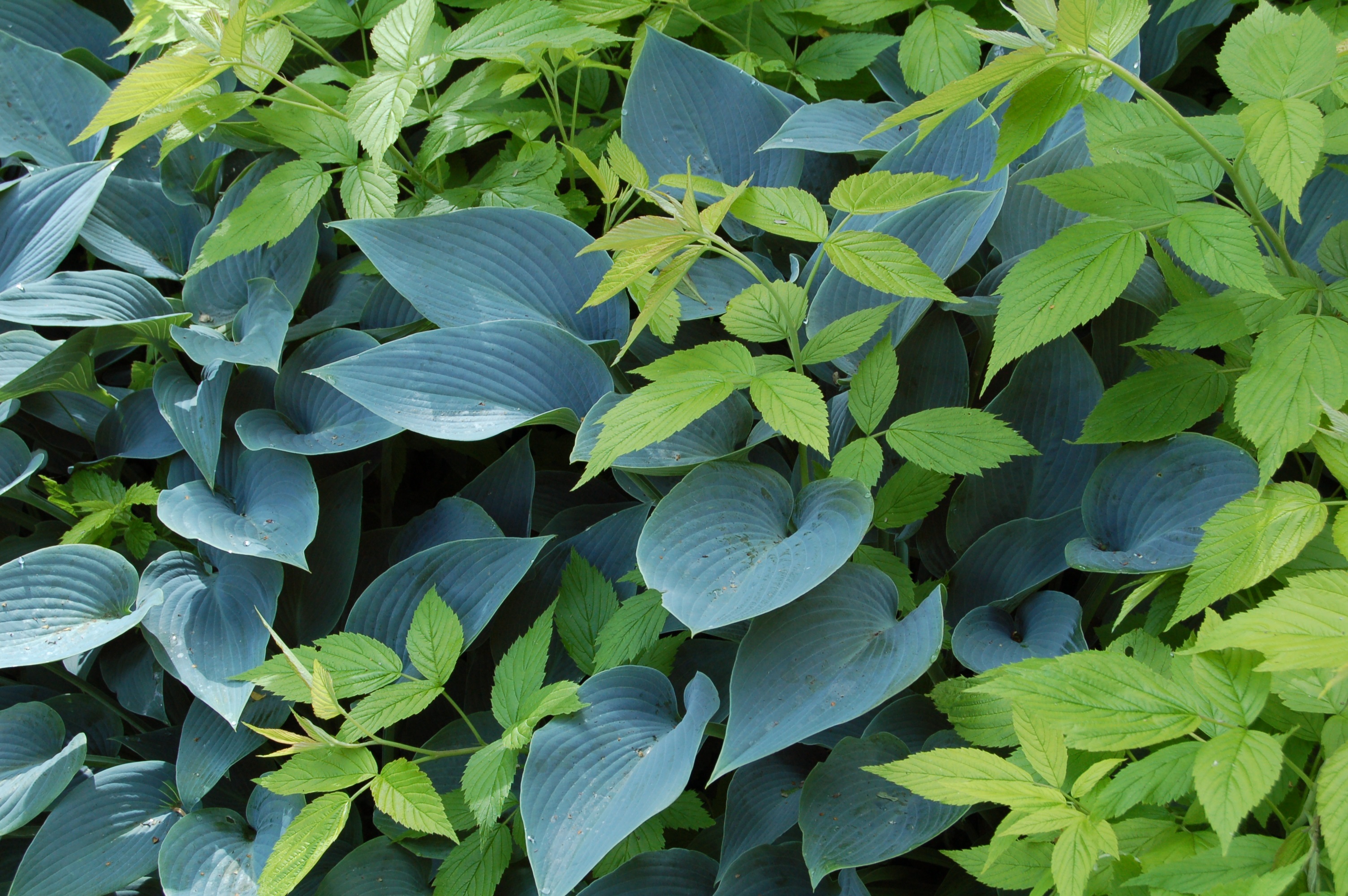
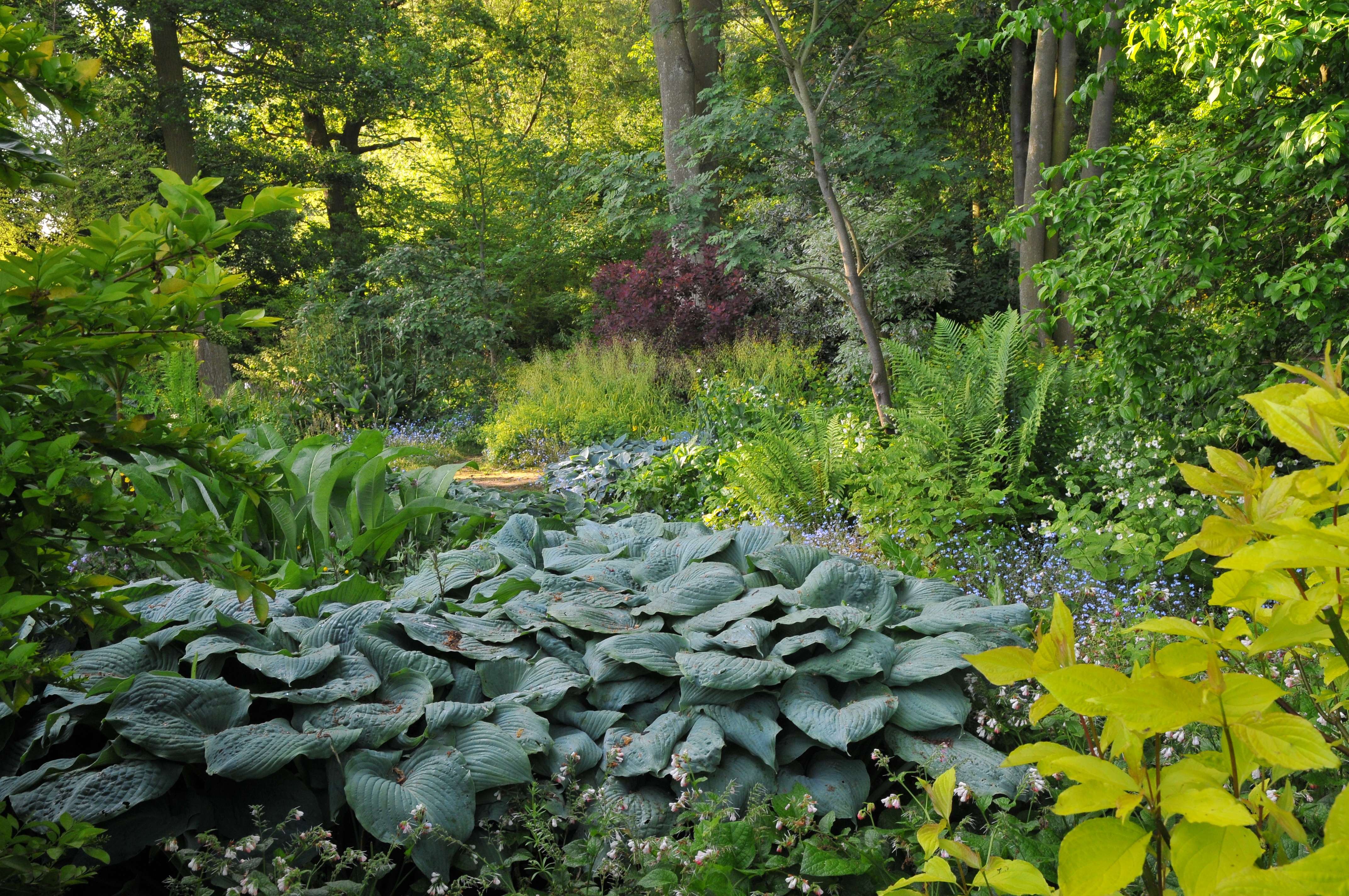
One simply cannot discuss foliage plants without giving hostas their due. Among them, the blue-leaved varieties stand out not only for their sumptuous colour but for their resilience. Their thicker, waxy leaves make them noticeably less appealing to slugs
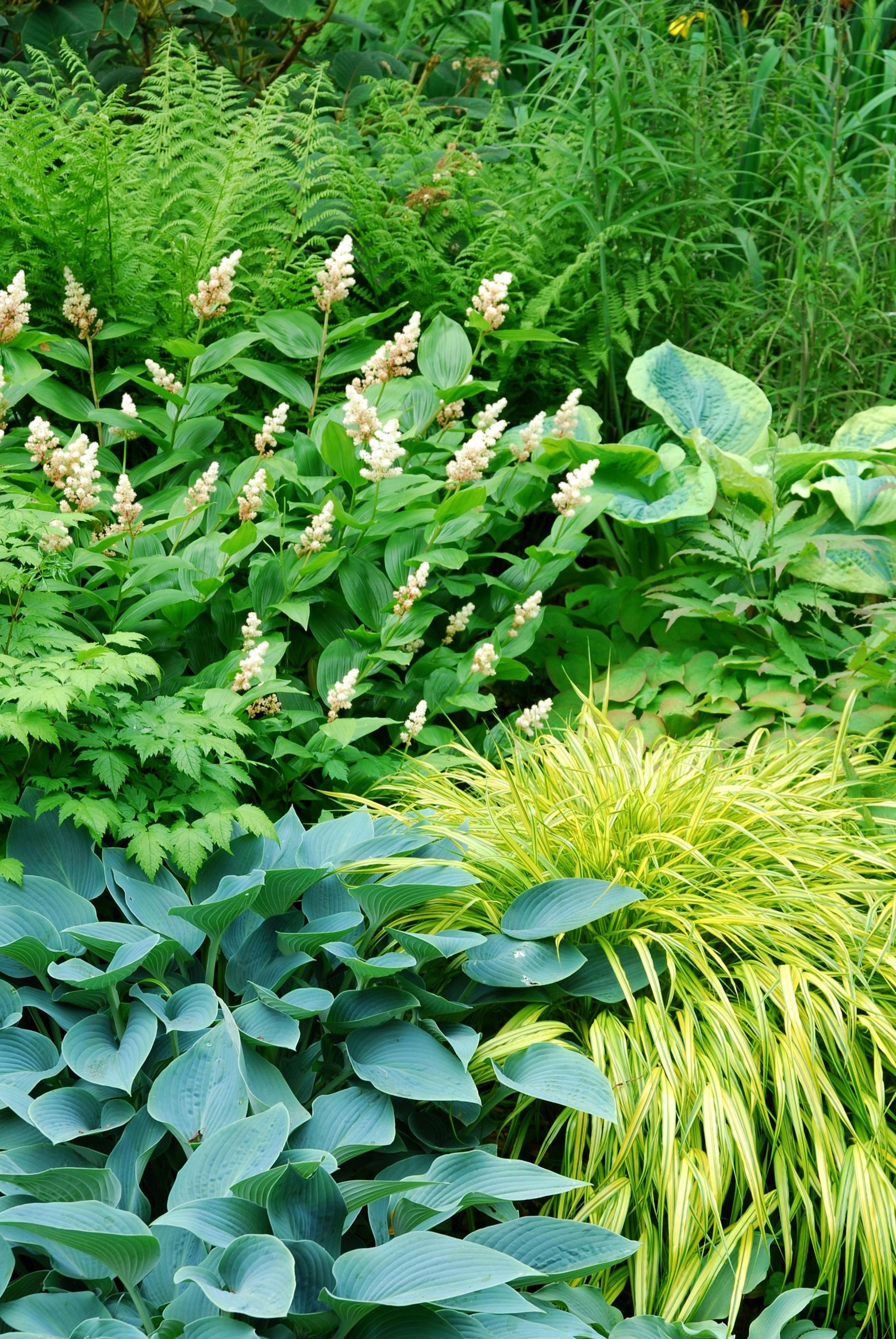
One of my favourite shade-garden pairings is cool, blue heart-shaped leaves of hosta set against the golden sweep of Hakonechloa macra ‘Aureola’. Set together they become a study in contrast - the hosta sits still and contemplative, while the hakonechloa's ribbon-like leaves move in the slightest breeze.
It’s a perfect example of how just a couple of plants can transform even the smallest space into a picture.
By
Åsa, Head Gardener


Kind regards Michèle