
Find out what the propagation and garden teams have been up to this week.
Chattowood and its insects: the first four years
POSTED 12th January 2026

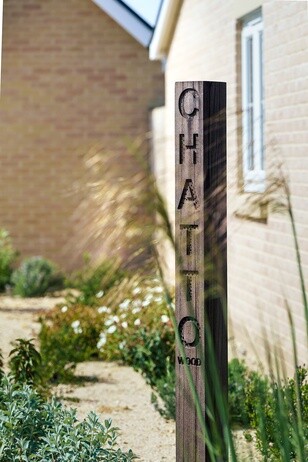
Some of our readers may have seen the Beth Chatto Gardens outreach site Chattowood recently on BBC Gardeners’ World (catch up here). When, some five years ago, a neighbouring developer wanted to use the name ‘Chattowood’ for a new housing estate, Julia (Beth’s granddaughter) agreed on condition that they worked with us on the landscaping for the estate.
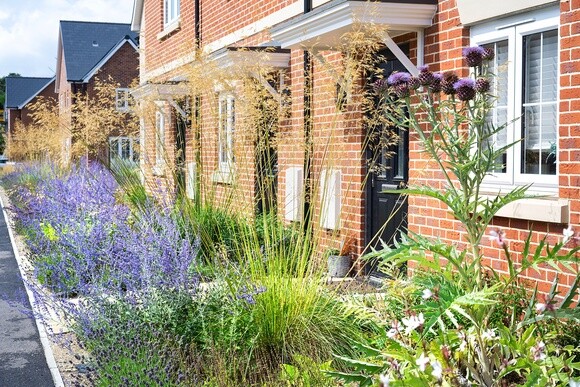
Chattowood sits atop the same ridge of low hills as our garden, so we had a useful model to work towards. In our garden, Beth and Andrew came up with the concept of ‘Right Plant, Right Place’, using plants suited to the soil and climate conditions to minimise the need for further intervention, especially here in the arid south-east the need to avoid having to waste water on droughty soils.
Unfortunately, although lying on the same underlying geology, London Clay with a capping of Thames gravels, the recent agricultural history of the Chattowood site meant it was covered in a veneer of excessively fertile topsoil, really out of character if what you are seeking to something akin to Beth’s revolutionary Gravel Garden.
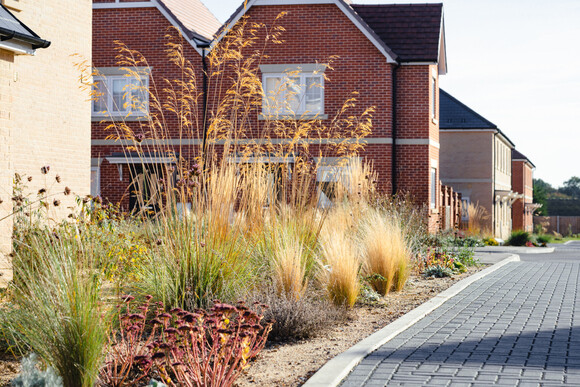
So the first thing was to lose the topsoil, stripping off some 30cm, and replace the same depth with locally quarried sharp sand and gravel, effectively making the place 'right' so that the 'right plants' could be brought in, based upon a palette of those in our Gravel Garden. One key requirement was drought-tolerance, another was attractiveness (to us – these are in effect front gardens) and the final one, benefits to wildlife, especially attractiveness to pollinators and other insects.
All that was needed then was for the garden management to be taken out of the hands and vagaries of individual householders, and Chattowood was born. As the Gardeners’ World piece showed, this is turning out to be broadly popular among the owners, some having even taken to try and replicate this in the back gardens they still control! The gardens look good with flowers throughout the year (see plant list), without any need for watering, even in drought conditions, and so resting lightly on the world in respect of its ecological footprint.
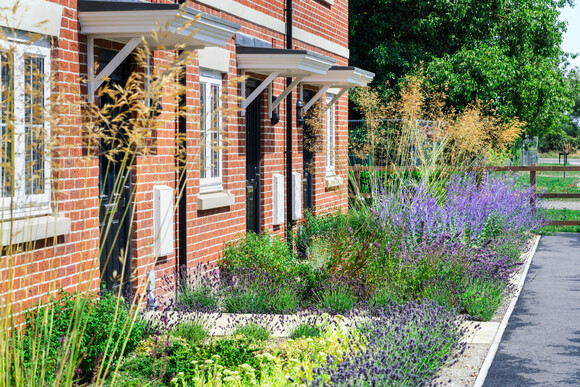
At the outset we realised this could be an important template for future development, at least in similar climate zones, so we set about trying to evaluate the importance of these gardens for wildlife. It just happens that immediately adjacent is a ‘traditional’ estate, all mown grass and lollipop trees, an ideal comparison against which to judge the success (or otherwise) of the Chattowood approach.
Since the first planting I have been monitoring the use of the Chattowood gardens by insects in side-by-side comparison with the next door estate. I spend the same time in each estate, logging everything larger than a ladybird, and identifying it where possible without interrupting the flow of the survey, trying to do each estate in 20 minutes to reduce the degree of double-counting of often very mobile insects.
This is not so much a biodiversity survey (which would have taken much more time to ensure correct identifications) but a bioabundance survey. While everyone is, or should be, concerned about biodiversity loss (ie extinctions), the lower abundance of life we are seeing is just as concerning. Remember that your average Blue Tit won’t mind if it eats one or ten species of aphid, so long as it gets enough to eat! Arguably, it is bioabundance, not biodiversity, that underpins all food chains, including those that support our own species.
A high level overview of the surveys shows most importantly a constant, significant imbalance between the Chatto-style gardens and the adjacent traditional front gardens. It would appear that there are typically ten times as many macroinvertebrates (mostly pollinators) on our side of the divide. I think it may be best not to pay too much heed to the data from 2022 which indicated an even greater imbalance as surveys were undertaken that year only after midsummer.
year | surveys | total number of larger insects in Chattowood | total number on the other side, the traditional estate | ratio Chattowood: traditional |
2022 | 6 (19 Aug-22 Sept) | 120 | 6 | 20:1 |
2023 | 6 (17 Apr – 4 Sept) | 233 | 28 | 8.3:1 |
2024 | 7 (7 Apr - 17 Sept) | 240 | 25 | 9.6:1 |
2025 | 6 (24 Apr – 19 Sept) | 426 | 39 | 10.9:1 |
The message is clear: plant the right plant in the right place and it will reward not just us but also the natural world. And what are the right plants in this context? Clearly this will vary across the country, but here in Essex, salvia, oenothera, verbena, lavandula, buddleja and santolina seem favoured and these should be suitable in most areas provided that free draining ground has been created to avoid the roots becoming waterlogged.
The broad data also show clearly how much better 2025 was across the board than either of the two previous years. On the Chatto side, there were some 75% more, while on the other side of the great divide there were around 50% more, although it must be recognised that sampling effort was not exactly consistent between years. This pattern was widely repeated everywhere, so we cannot claim it as one of the successes of Chattowood!
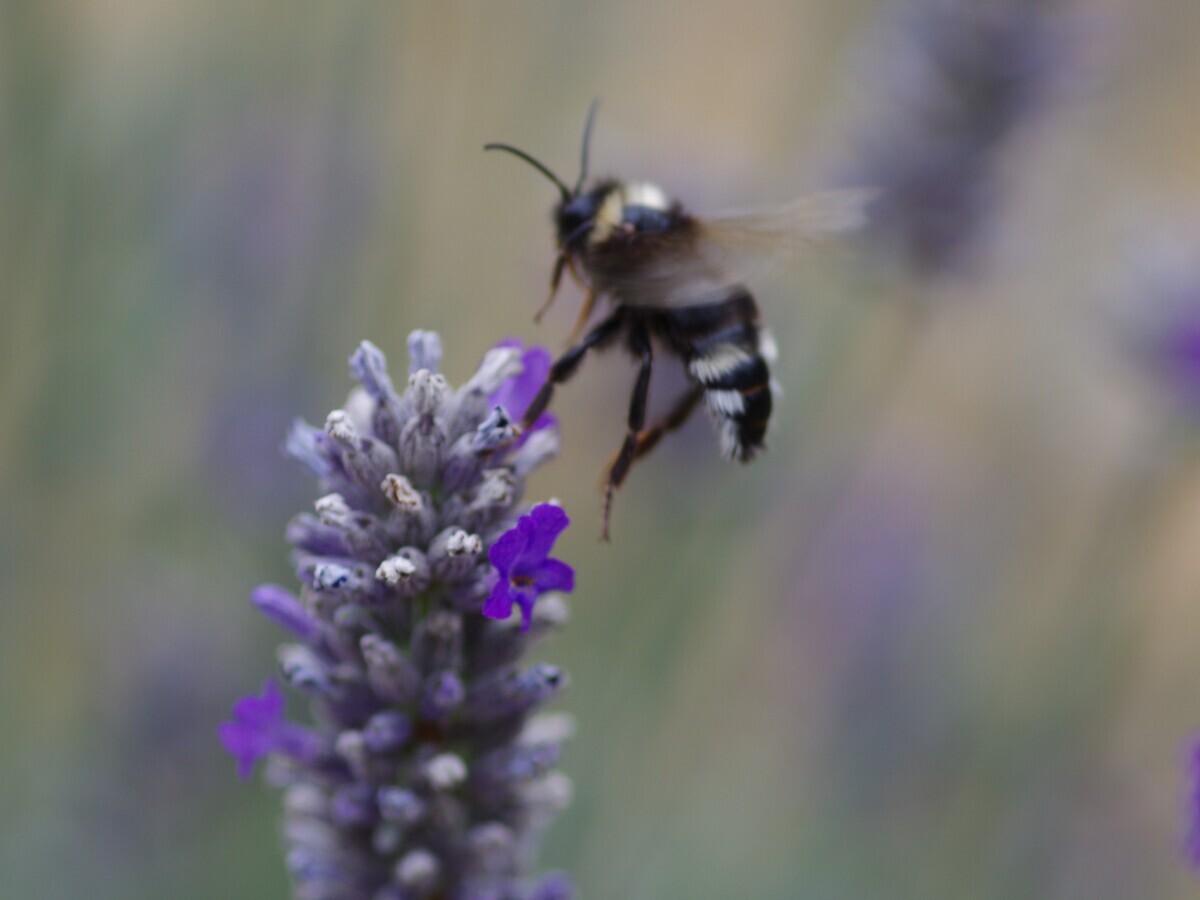
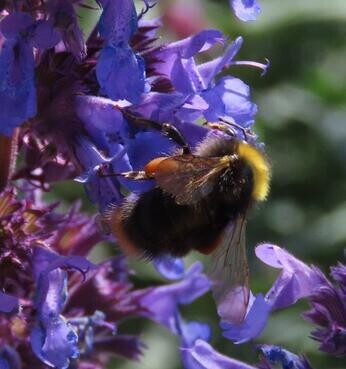
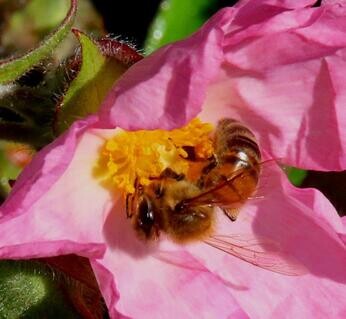
The vast majority of the larger insects attracted to Chattowood were pollinators, species that habitually trawl around the landscape to find flowers with appropriate nectar and/or pollen resources. Just over a half of the thousand or so counted in my surveys were bumblebees, of at least five species. Another 15% were honeybees, with 5% solitary bees.
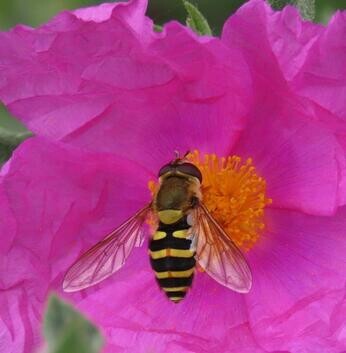
Flies made up about one-tenth of all observations, half of which were hoverflies with the remainder from a range of families.

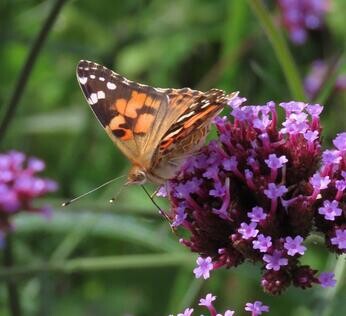
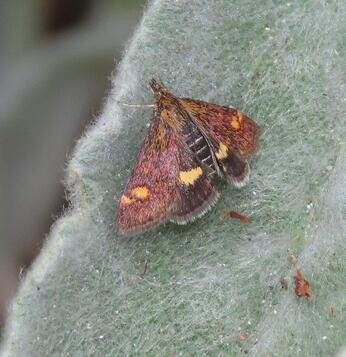
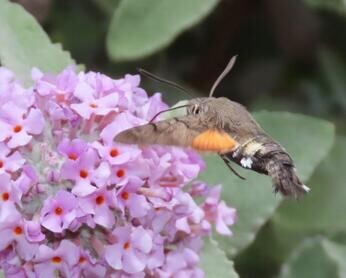
Of course many of the most showy insects are butterflies and moths, whose numbers together made up just 5% of all observations. A total of nine species of butterfly were observed, together with two noticeable day flying moths, hummingbird hawk-moth and mint moth.
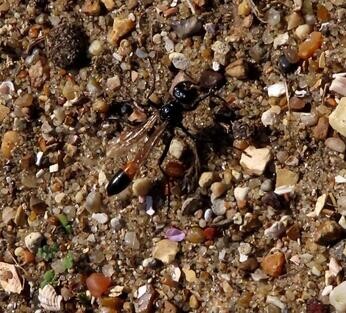
With the passage of time it has been noticeable that the number of ground nesting insects has increased in the older Chattowood plantings: I suspect that as a crust has developed on the surface of the sand nest holes don’t collapse. Three species at least colonized from 2024 onwards: bee-wolf, ivy bee and sand wasp. The first two are not too surprising given that they have undergone significant spread from southern regions in recent decades due to climate change, but the sand wasp is different. It has always been found in appropriately sandy areas, for example along the Suffolk coast and around Tiptree Heath, but is not known in the Beth Chatto Gardens nor anywhere nearer than maybe five kilometres’ radius from Elmstead Market. It just goes to show that these habitat-specific creatures are moving around our landscape, often much more than we imagine, and that if we provide the right habitat, so they will find it.

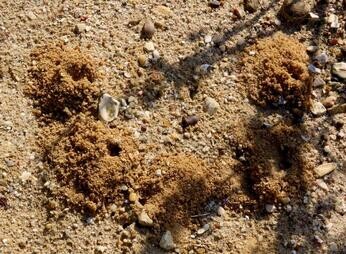
Our garden staff also reported finding earthworm casts on the pure sand in autumn 2025, and fungi growing out of it. Both are significant, indicating that organic matter is collecting in the upper layers, perhaps related to the crust that allows bees and wasps to nest. The bare sand is developing an ecology: what lies beneath the surface is adding complexity and life. The gardens are still changing, and changing for the better for wildlife, and as long as there is something to learn I shall be out there counting!
Chattowood is a tribute to Julia’s vision and persuasiveness, the hard work of the Beth Chatto and Lanswood teams and the forbearance of the householders, and provides a vision of a sustainable future for gardens and housing developments, especially living in the global greenhouse. What an antidote to the sterile, ecopathic trend for ‘plastic grass’ and the like!

Dr Chris Gibson, Beth Chatto Gardens’ Wildlife Advocate
COMMENTS