
Mattie our Trainee reflects on their year spent gardening here at Beth Chatto's Plants & Gardens.
Wild Words from the Ground - June
POSTED 1st July 2026

Welcome to our blogs featuring the photos and sightings of wildlife in the garden (and outreach sites like Chattowood, and the Meanwhile Garden and Albert Roundabout in Colchester) by our staff, whether in the office, shop, tea-room, nursery or garden. The images are curated and commented upon by Dr Chris Gibson, our Wildlife Advocate.
While the photos are not always of the highest quality – our staff are busy doing their main jobs! – they give a real feel of life in the garden, something we are very keen to encourage, as indeed was Beth.
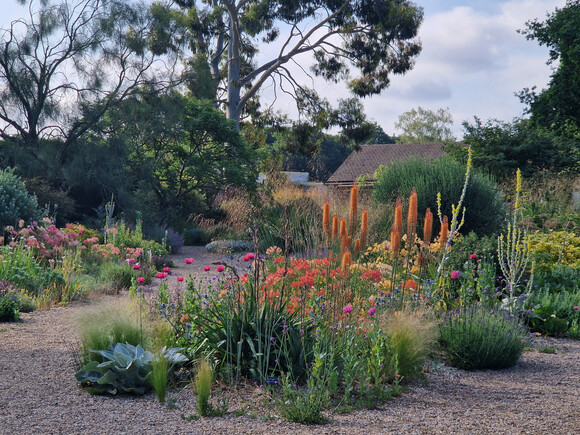
June was a month of two halves. When the May heatwave broke at the end of the month, it ushered in two weeks of wet and rather chilly days. But the next heatwave was waiting in the wings and over the rest of month we were plunged into record-breaking, energy-sapping sunshine. This swing of extremes is increasingly the new normal and we and our descendants will have to learn to live with that, at the same time as taking all possible steps to reverse the climate-disrupting emissions of the last couple of hundred years, since the dawn of the Industrial Age.
We suffer under those extremes, and so does wildlife. So this month's report is rather shorter than would be expected from what is normally peak season: fewer people are out in the garden to see things when it is very wet or very hot, and there are fewer things to see as wildlife seeks refuge from deluge or furnace.
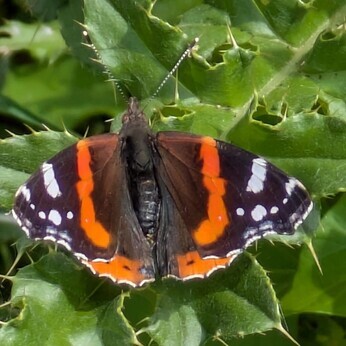
June is never the best of months for butterflies with the ‘June gap’ between the spring emergers and the high summer species making it feel sometimes like the only butterflies around are the ubiquitous Large and Small Whites. But there were as usual a few others to be found: Scott’s photo of a pristine Red Admiral must have been from eggs laid by a female that emerged from hibernation in the dying days of winter.
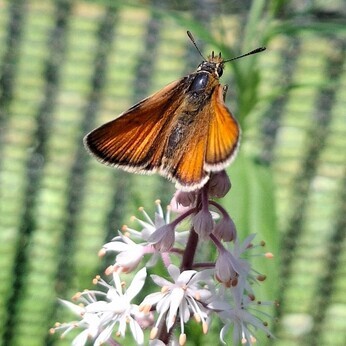
And Rob captured beautifully one of those butterflies that tell you high summer is upon us: an Essex Skipper. This is almost identical to the Small Skipper, but has black rather than orange tips to its antennae: you can just see that on the right-hand side. Remarkably, until this year Essex Skipper has been missing from our garden biolist, until I saw one in the car park field a few days previously.
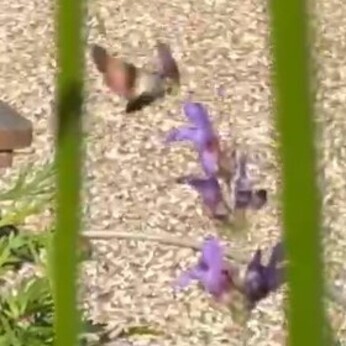
Day-flying moths have also attracted attention. First Emily reported a Hummingbird Hawkmoth, and a few days later Kirsten managed to film one busily working the Salvia (sorry for my inexpert screengrab below!). There have been rather few Hummers thus far this summer, but hopefully numbers will build. And if it remains hot, we might even look out for caterpillars; they do sometimes breed in a warm summer, the larvae eating Rubiaceae such as galium, rubia or phuopsis for example...
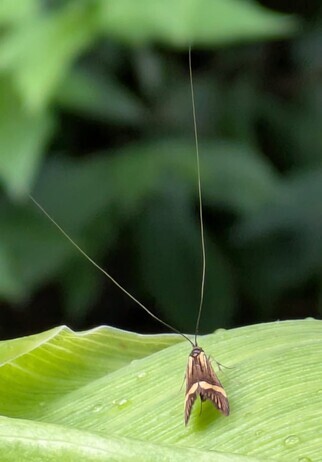
Scott’s photo of a Gold-barred Longhorn may be of a micromoth, but it has one of the longest sets of antennae! This is a male, with horns up to four times as long as its wings. Females have shorter horns, and just sit around on leaves taking their pick of the males which dance around in the air, floating down on their long antennae, like at a silent disco...
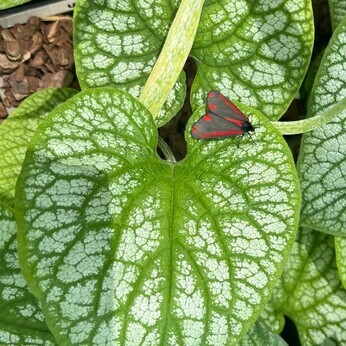
The stunning image from Angela of a Cinnabar Moth contrasting well against its variegated background is very instructive. Cinnabars fly by day and by night, and make no attempt to blend in: they are protected against predation by their red-and-black warning coloration. And for good reason: their yellow-and-black caterpillars eat Ragwort, toxins and all.
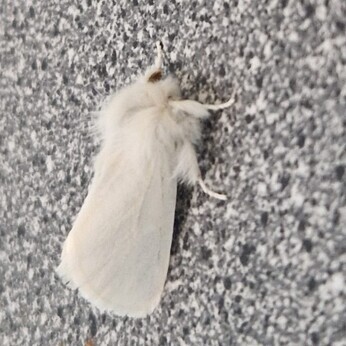
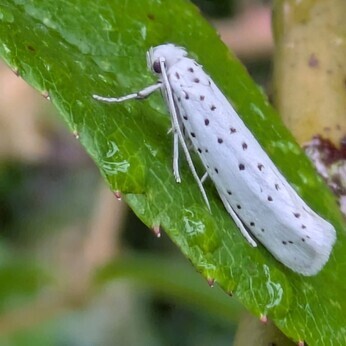
Other moths that usually fly only by night can also be found settled during the day. Leanne found this Brown-tail on the wall of the ladies’ loo, while Scott came across a Spindle Ermine, the adult of the caterpillars that have defoliated some of our Euonymus.
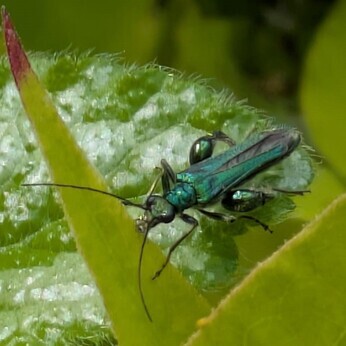
Beetles also made up a good portion of this month’s sightings: with hardened, protective wing-cases, they are somewhat protected against rain and other weather extremes. Scott’s photo of a male Thick-thighed Beetle shows clearly his swollen hind femora, as distinct from the slender thighs of a female.
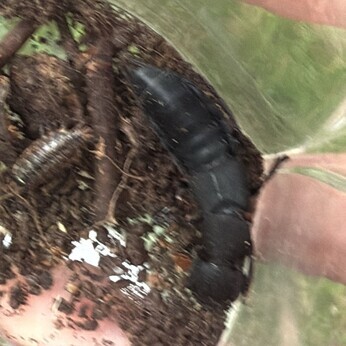
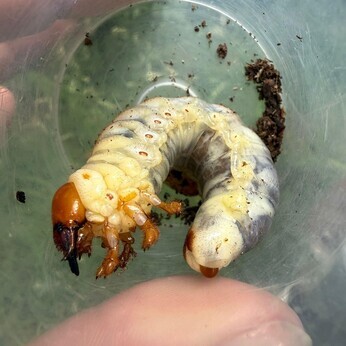
Nicola’s school parties have as always been grubbing out interesting things, here a Devil’s Coach-horse rove-beetle (alongside a Striped Woodlouse) and a stag beetle larva. But which species? The bad news is that morphologically both stags have identical larvae. Lesser Stags tend to be smaller, but they overlap. Lessers also tend to be in rotting wood.
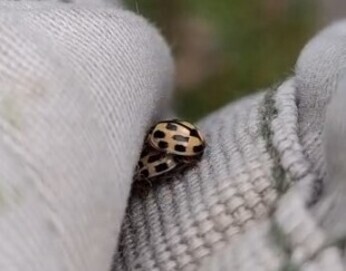
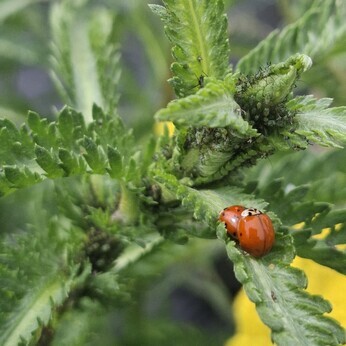
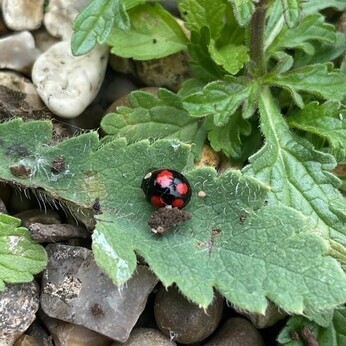
Rob has been among the mating ladybirds, first a pair of 16-spot Ladybirds, one of two common yellow species, and then a couple of Harlequins. Just look at the variation in this very variable species, which is independent of age or sex: here the male is almost spotless, while the female is spottier, but not as spotty as they can be. And Malin photographed one of the other forms of Harlequin Ladybird, form spectabilis (meaning spectacular) which it certainly is! As a species it can have anywhere between zero and 20 spots, black on red or red on black.
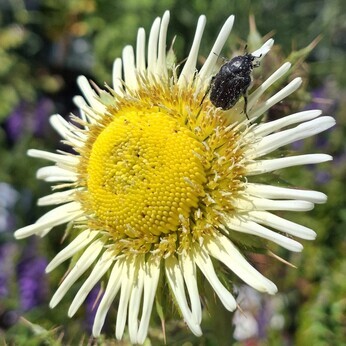
More beetles that caught Rob’s attention included this Spotty Chafer. Probably a different example (in having fewer spots) to the one I found new to the garden last month, Rob’s shows clearly the hairiness of this Mediterranean species which may just be on the cusp of colonising us.
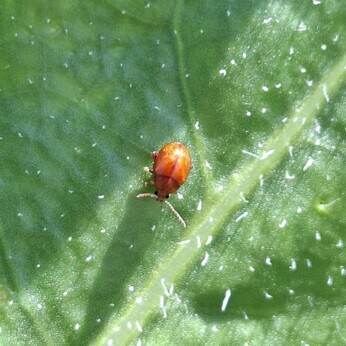
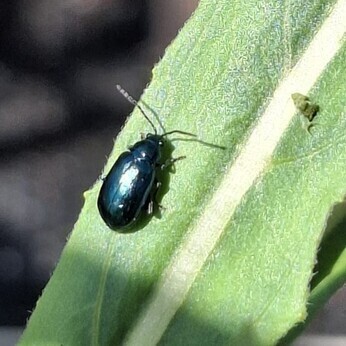
While the chafer is pretty much unmistakeable, many other beetles are not so distinctive. Rob again photographed a couple of types, neither of which identifiable specifically without killing them and chopping them under the microscope, which of course an ethical naturalist would not do! The red one’s a Sphaeroderma leaf beetle, the other an Altica flea beetle.
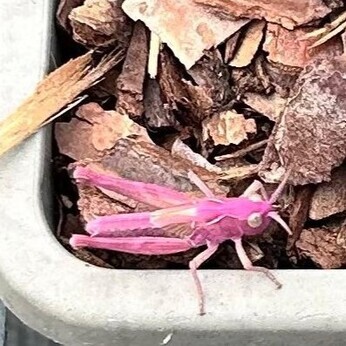
We have discussed pink grasshoppers before in these blogs. Pink in grasshoppers is usually in the early instars, like this, and is a response to high sunlight levels during development: presumably the anthocyanin pigments act as a natural sunscreen as they do in plant leaves. But it is independent of species: this one from Kirsten is a Common Field Grasshopper (told by the sharp angles on its ‘saddle’) unlike the pink Meadow Grasshopper Malin photographed for the last Wild Words blog.
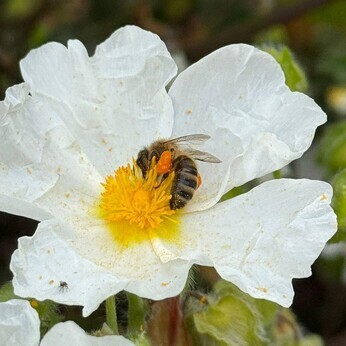
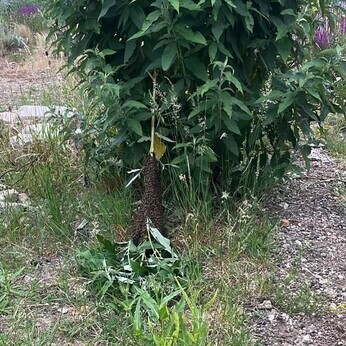
One insect we are seeing rather less of this summer is the Honeybee. And that is deliberate: we have removed the hives. Honeybees take much of the nectar and pollen resource that wild bees need (Honeybees are livestock) and they are not efficient pollinators: they pack collected pollen into their saddlebags, as shown well in Nicola’s photo. We do still have a few Honeybees though, and this month a swarm descended upon the Meanwhile Garden, so heavy that it broke some of the Buddleja branches. David kept an eye on the swarm, and sought help to get it removed by a beekeeper, but it moved on naturally within a few hours.
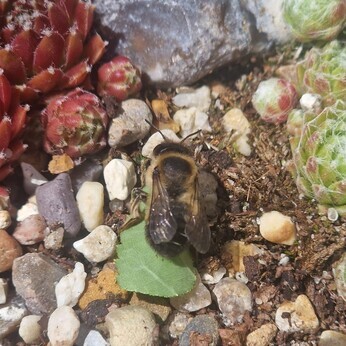
Freed up from the mass harvesting by Honeybees, our pollen and nectar resources are now available to a much larger range of insects, and this summer the increase in the numbers of solitary bees has been marked. Leafcutter bees are one of the beneficiaries, and Leanne was very lucky to see a Willughby’s Leafcutter flying around with her little bit of leaf, on the way perhaps to our bee hotel where she will nest.
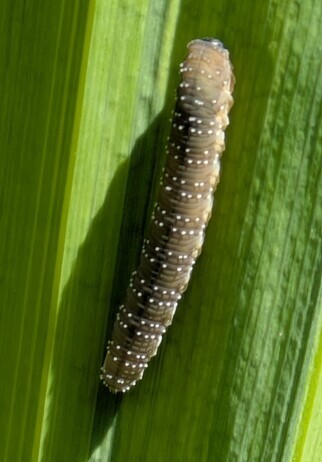
Distantly related to bees and wasps are sawflies, which do not have a ‘wasp-waist’ and whose larvae are often caterpillar-like, munching leaves. Scott provided this excellent picture of the Iris Sawfly caterpillar. The black adult sawfly wasps were all over the iris leaves a month ago, mating and egg-laying. The larvae will shred the iris leaves, but the iris will always return. In the meantime we use the shredded leaves as our badge of honour, telling (subtly) every visitor we are not killing the world in our quest to produce an attractive garden. This sawfly is not widely recorded in Essex, known from maybe a dozen recorded sites, but in reality it is probably present almost wherever there is Yellow Flag iris.
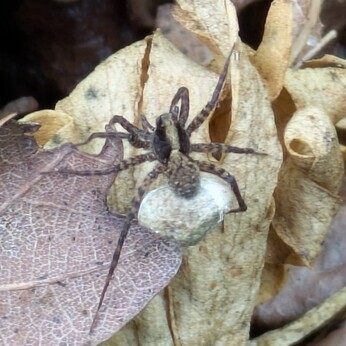
Scott also posted a great picture of a female Wolf Spider carrying her egg sac. This is a Pardosa species but there are several and they can only be definitively identified by microscopic examination. However, all are voracious ground predators that help bring ecological balance to the garden.
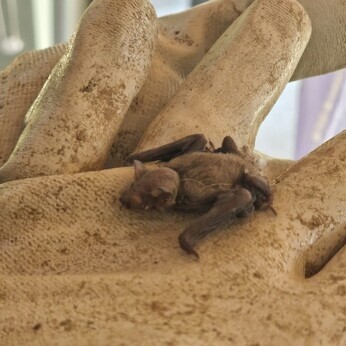
And finally, news of an amazing piece of teamwork. One morning Matt went into the Visitor Information Centre and found a tiny, helpless bat pup. Sometimes in very hot weather female bats do abandon their babies as they need to seek refuge from the heat. Rob stepped up to the mark and kept the pup hydrated all day, when Jo took over and transferred it to a Rescue Centre. That lucky pup at least now has a chance of survival, thanks to the efforts of all concerned. And that is important: bats can produce only one youngster a year. It is also proof we have bats breeding, and will hopefully lead to a targeted search by the Bat Group to find out where they are so we can make sure we look after them.
For a different perspective on this month’s wildlife, have a look at my personal blogs, one of which reported the results of a night’s moth-trapping.
Midsummer Moths 2026 at Beth Chatto Gardens | Chris Gibson Wildlife
The Wild Side of Beth Chatto Gardens: June 2026 – deluge and furnace… | Chris Gibson Wildlife
If the weather allows, the month to come should see the peak period for wildlife in our gardens. Birds will be feeding their hungry broods, summer butterflies will be adding their mobile adornment to every flowery border, and dragonflies will be ceaselessly patrolling the ponds. Let’s hope for some clement weather so we can all enjoy them!
I