
Find out what the propagation and garden teams have been up to this week.
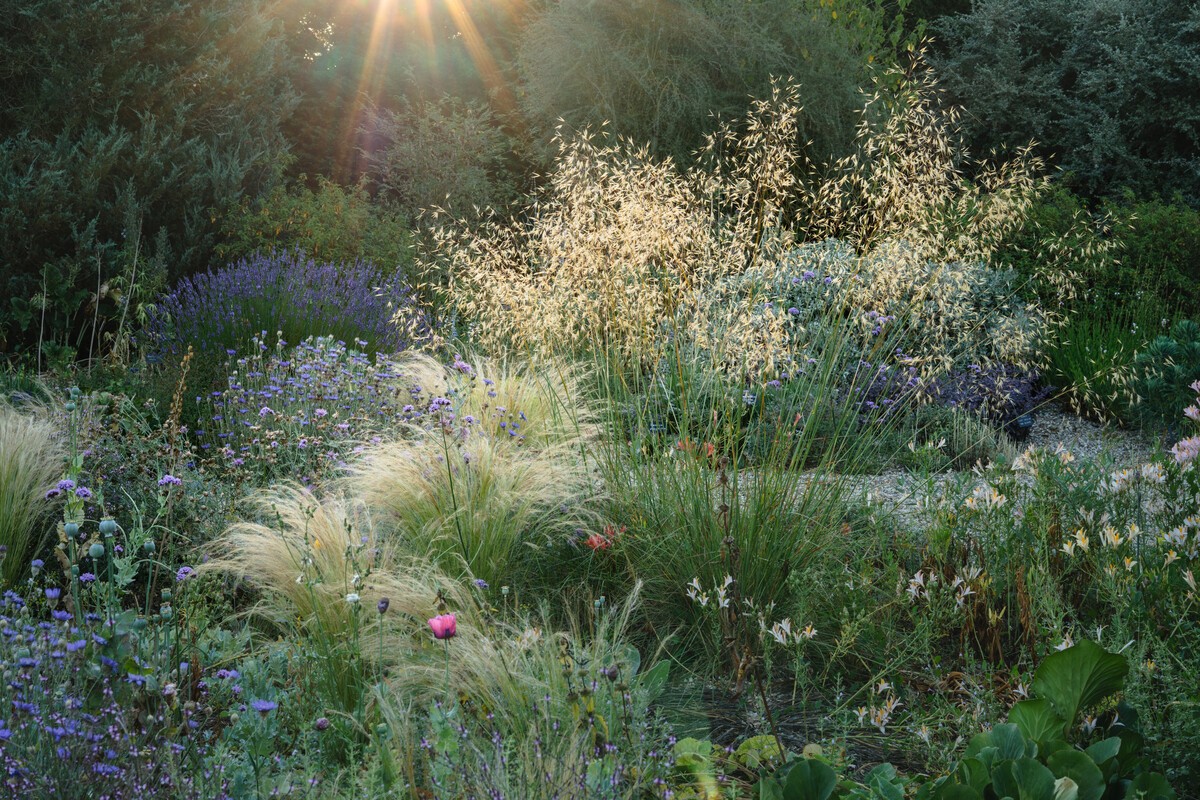
Listening to the Garden
POSTED 6th October 2026

As we move into October, day temperatures are still unseasonably high, and it feels more like August than autumn. And yet, it’s been both interesting and reassuring to see how well the plants in the garden have responded to the little rain we’ve had.
Over the last few weeks, plants that shrivelled and turned brown during the relentless summer heat are beginning to perk up. Beneath those brown, crispy flowerheads and stalks, fresh new growth is suddenly appearing. It is a useful reminder not to write a plant off – or reach for the secateurs – too quickly.
Those dry, brown stalks and flowerheads may have looked a little untidy, but they were deliberately left in place, helping to protect the plant’s crown and roots from the sun.
Having spent the weekend at Great Dixter’s fabulous Autumn Plant Fair, chatting to customers at our plant stall, it’s been really lovely to hear so many people talking about what’s actually survived - and even thrived - this summer. Many of you seemed reluctant to make rushed or drastic changes, preferring to give your gardens time to recover and see what emerges.
That’s very much the approach we’re taking here at Beth Chatto’s too: taking the time to observe, seeing what has survived and resisting the temptation to make changes too quickly.
Perhaps the answer isn’t always to find different plants, but to understand our gardens a little better and learn to work with what we already have.
Instead of rushing to replace everything that has struggled this year, perhaps it’s worth asking what we can do to help the plants we already have cope with future hot summers and increasingly unpredictable weather.
If we are going to experience long and more frequent heatwaves, shrubs and trees will play an increasingly important role in our gardens. They can help create layers of planting and, just as importantly, a cooler microclimate. In a small garden, where space is limited, a large shrub can be shaped into a small tree by removing the lower branches. A pergola covered with a deciduous climber can serve a similar purpose, allowing light through in winter, while providing shade during the warmer months.
By planting more densely and avoiding too much bare ground, we can create different layers using ground-covering plants and herbaceous perennials. Allowing plants to shade one another also helps protect the soil and the roots beneath the surface from the fierce heat of the sun.
Mulching is another simple but effective way to help our gardens cope with hot, dry weather. A good layer of mulch helps hold moisture in the soil, slowing down evaporation and keeping the ground cooler. It protects plant roots from extreme heat during the day and reduces rapid changes in soil temperatures.
Of course, there are times when we need to rethink our plant choices, but sometimes simply moving a struggling plant a few meters can make all the difference. It’s worth paying much closer attention to the subtle microclimates within our gardens. Where are the damper pockets? Which areas drain quickly? Where does the morning sun reach, and where does the afternoon sun linger, holding on to the heat of the day? These small differences can have a surprisingly big impact on how well a plant copes.
For example, we noticed a patch of groundcovers that was badly scorched at one end, while the rest remained perfectly fine. Presumably, that exposed edge took the brunt of the heat. But if we simply removed the part that struggled, are we likely to see the same thing happen again? Perhaps a better approach would be to introduce a resilient grass or perennial that can cope with those conditions and offer a little protecting to its neighbours?
This doesn’t mean that every part of the garden needs to be densely planted. Bearded irises, for example, do not like being crowded by other plants and need to have their rhizomes exposed to the sun. The point is not to follow a formula, but to understand what each plant needs and to arrange the garden accordingly.
You never stop learning as a gardener. Patience, close observation and curiosity – questioning how we garden and wondering whether there might be a better way - are just as important as having an eye for composition and a good understanding of the plants we grow. And, of course, every now and then, gardening also requires a little courage to make what can feel like ruthless decisions when something simply isn’t working.
Gardening is, after all, a continual conversation between plants, weather, soil and gardener. The more closely we observe, the better we become at listening to what the garden and its plants are telling us. Sometimes the wises response is simply to wait, watch and give plants to the time to recover.
And sometimes, of course, we need to be brave to try something different.
COMMENTS