
Few plants make quite such a dramatic statement in the garden as eremurus, commonly known as foxtail lilies or desert candles. Their towering flower spikes bring height, colour and a real sense of theatre to the border. In this week's feature we highlight two of our of our favourites.
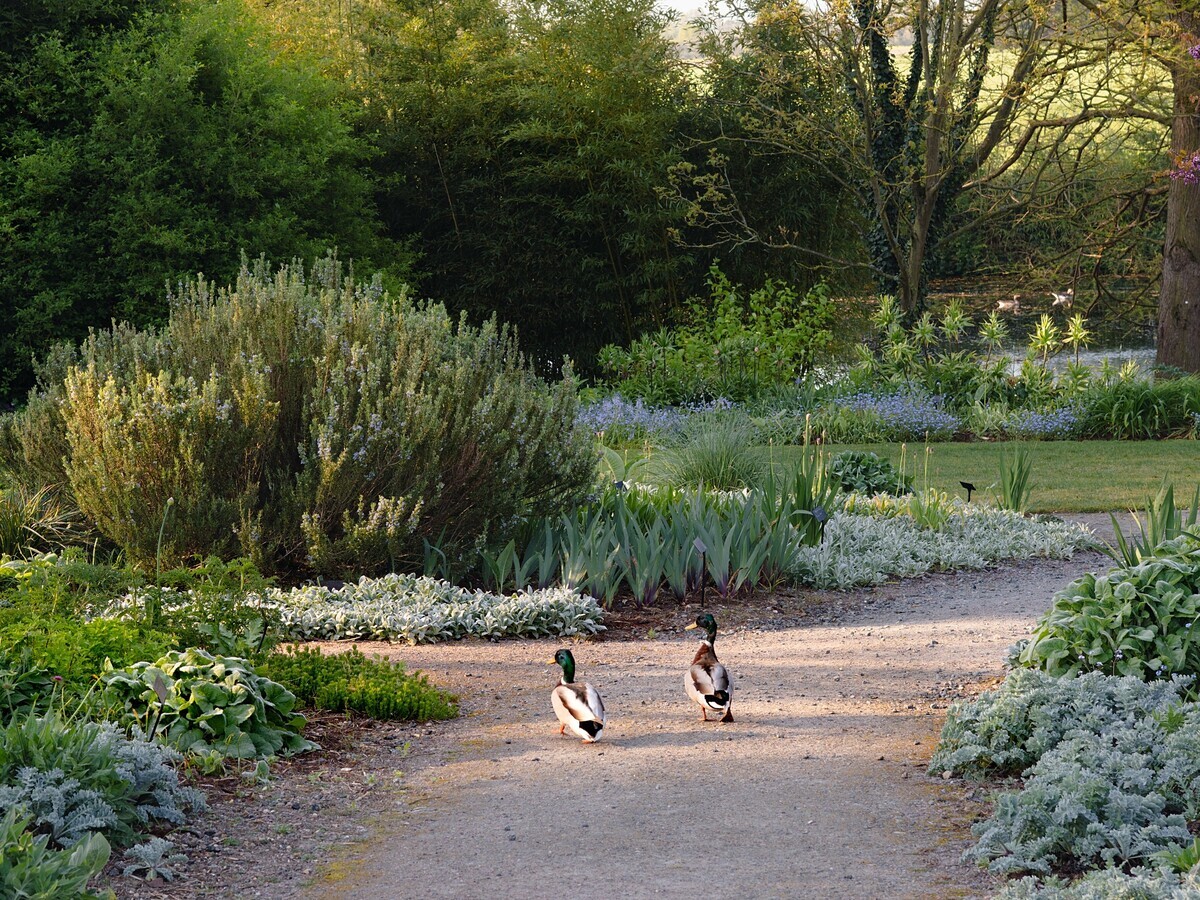
Wild Words from the Ground - May
POSTED 1st June 2026

Welcome to our blogs featuring the photos and sightings of wildlife in the garden (and outreach sites like Chattowood, and the Meanwhile Garden and Albert Roundabout in Colchester) by our staff, whether in the office, shop, tea-room, nursery or garden. The images are curated and commented upon by Dr Chris Gibson, our Wildlife Advocate.
While the photos are not always of the highest quality – our staff are busy doing their main jobs! – they give a real feel of life in the garden, something we are very keen to encourage, as indeed was Beth.
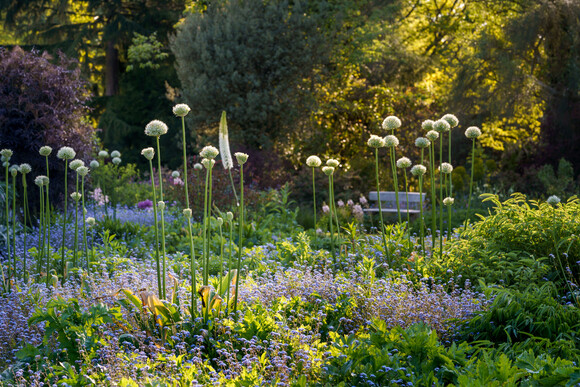
May may have been a bit of an uncertain month weatherwise (for those who can think back past the sweltering extremes of the last week or so!), but the gardens have looked beautiful, freshened up by a little much-needed rain – until the record-breaking (not in a good way) heatwave took over. And the wildlife in the garden has been wonderful and exciting. My own blogs have detailed the finds of all manner of new creatures to the garden list, many of them from the walks I have led around the site.
The Wild Side of Beth Chatto Gardens: all change on the insect front! | Chris Gibson Wildlife
The Wild Side of Beth Chatto Gardens: late-May delights | Chris Gibson Wildlife
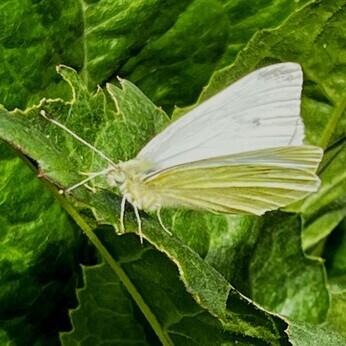
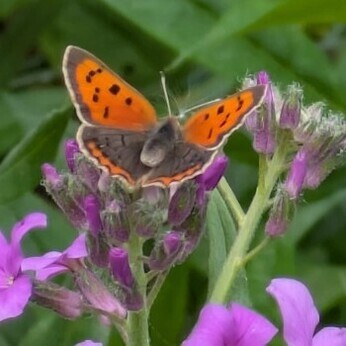
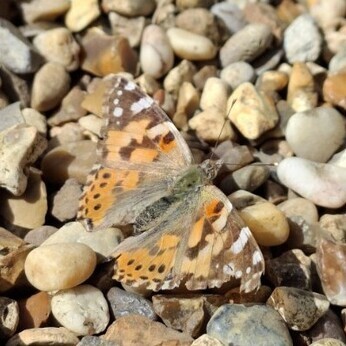
But as always the staff have played a huge role in keeping an eye on the natural world. After all, they are around a lot more than I am! And their sightings and photos have been so numerous that for the first time I have had to be a little selective! The overwintering butterflies have now all but gone, and whites (like this Small White from Cathy) have taken their place. The first high summer species are now coming out, such as Scott’s pristine Small Copper, and we have seen Painted Ladies all month. At first they were rather few and tattered (like that photographed by Rob), ones from the immigration event in late April but by the end of the month, they were everywhere, and fresh: possibly a new migration episode, or perhaps more likely the offspring of the first wave of migrants.
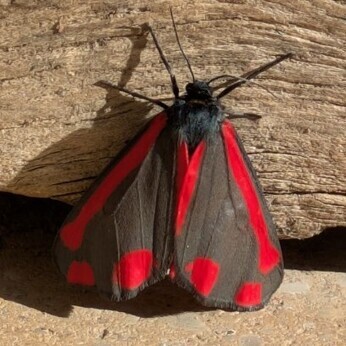
Moths are usually less obvious, especially those that fly by night, but the Cinnabar (from Scott) breaks all the rules. It flies as much by day as by night, and it attracts attention wherever it goes. Its stripy caterpillars demolish Ragwort, sequestering toxins from their food to make themselves distasteful, and then hand them on through metamorphosis to the adult. Red-and-black (adults) and yellow-and-black (larva): the two warning colour combinations in nature shouting to potential predators ‘don’t bother, it’s not worth it!’
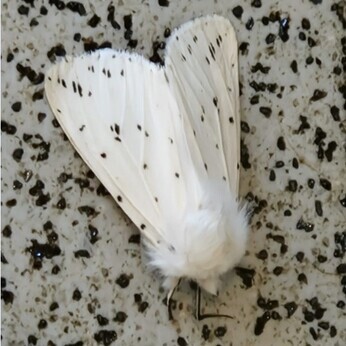
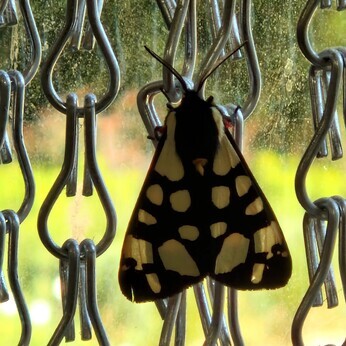
Matt found a couple of normally nocturnal moths at rest in the tearoom: White Ermine and Cream-spot Tiger. And it struck me how these both seem to have a self-awareness of their own markings and are able to rest right on the place where they are likely to be most camouflaged, and avoid being eaten that way…
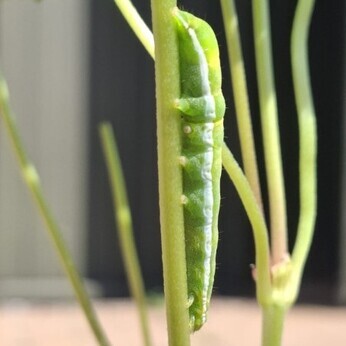
Caterpillars, too, need defences, indeed arguably more so as they are not capable of flying away. There are lots of vaguely ‘grassy’ species and they make themselves less visible by their alignment along a leaf-blade: this one from Rob is probably a Hebrew Character, but there are a goodly number that have this coloration.
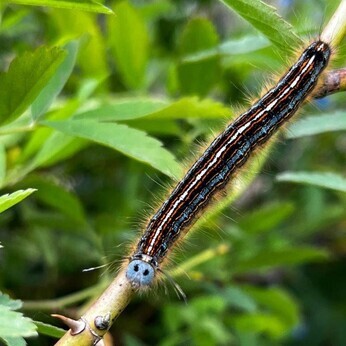
Then there are the ‘hairies’: all hairy caterpillars have the ability to cause skin irritation, but those that are solitary such as this beautiful Lackey from Cathy are less of a problem than gregarious species. Lackey caterpillars can grow quite long, to 5cm or more, but the moth is surprisingly small, a body length of only some 2cm.
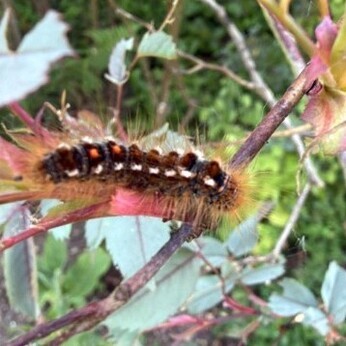
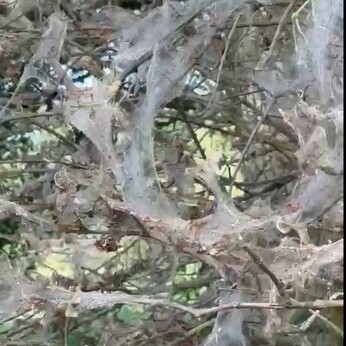
The most notorious of gregarious irritant moths is the Brown-tail and these have been with us in large numbers, albeit rarely in aggregations this year, although Nicola did find a Rosa glauca demolished by a group. But in terms of defoliation, nothing compares with the Spindle Ermine that strips the leaves and drapes the bones of the bush in a silken shroud, as Sean photographed. Defoliation might look dramatic, but need not be terminal for the host if it is in good condition; after all, it would be an unwise specialist herbivore that devoured all its food before it can complete its development.
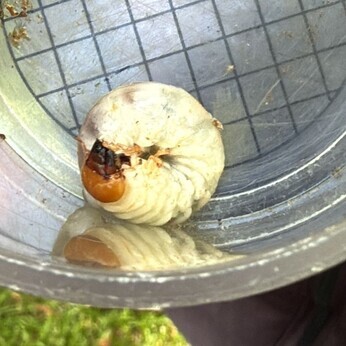
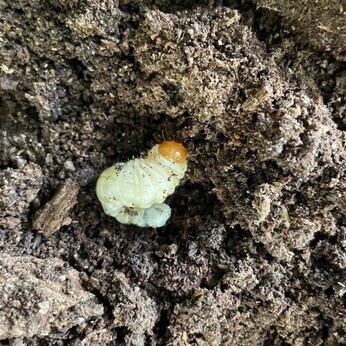
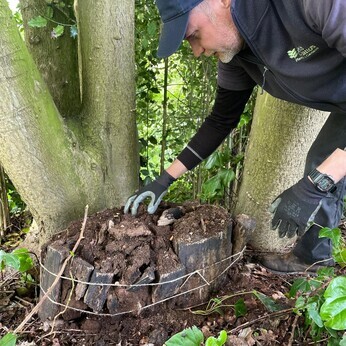
One other insect group that has caterpillar-like larvae are the beetles, although many of these feed internally in dead wood, so they lack much in the way of colour or form and are usually dismissed as ‘grubs’. One of Nicola’s kids’ groups found one under a rotting log, and the garden team dozens in a rotten stump. In a wonderful example of heartwarming eco-action, Malin and Scott straight away set about reconstructing the latter feeding place, away as much as possible from feet and birds. These all seem to be a stag-beetle species, but probably (from the habitat) Lesser Stag-beetles. We have yet to conclusively find Greater Stag-beetles in the Gardens, despite the hotspot of Wivenhoe just down the road.
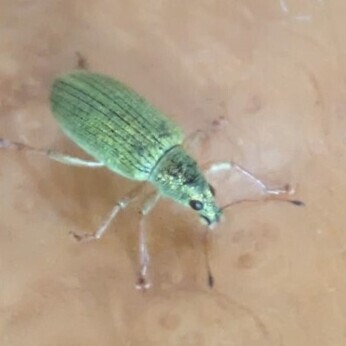
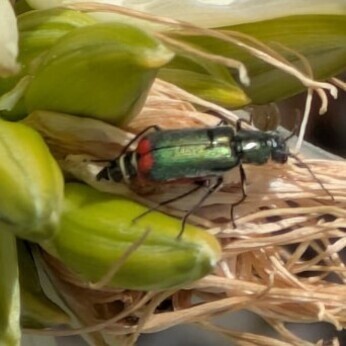
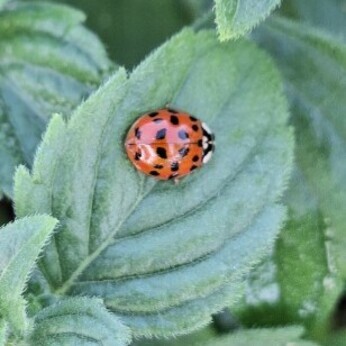
The accompanying cast of beetles included some brightly coloured ones: the weevil Polydrusus formosus first found in Essex only 20 or so years ago and the beautiful Two-spotted Malachite-beetle (both by Scott) and one of the many colour forms of Harlequin Ladybird (Rob)….
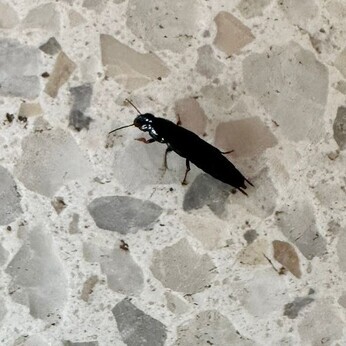
… whereas Sharon snapped a rove-beetle, of which there are squillions, mostly black (this is probably a Quedius species). Rove-beetles as a group are distinguished by having short wing cases that cover the folded membranous hindwings but are much shorter than the abdomen.
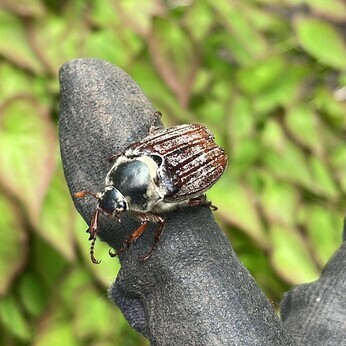
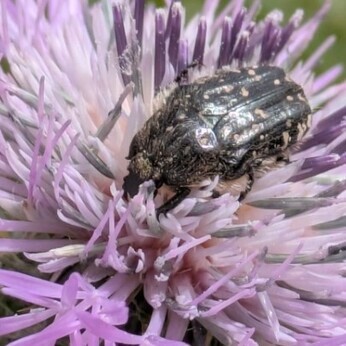
One of the families of often big, bumbly beetles is the chafers. In May the Cockchafer aka Billywitch aka Maybug is often common, and appeared several times on our Whatsapp group, this one from Malin. If we were around at dusk, there will probably have been large numbers flying around, a great food resource for big bats like Noctules. But another chafer, photographed by Scott, was even more special: the Spotted Flower Chafer, a species I am very familiar with on my Mediterranean travels, often as here sitting in a Galactites flower. I've never before seen one in Britain. There have been sporadic records from London area and south coast over the last decade and it may now be established in places. I may have chosen to no longer lead trips to the Mediterranean, because of the carbon cost of flying and out of respect for my granddaughter’s future, but it seems the Mediterranean magic is coming to me!
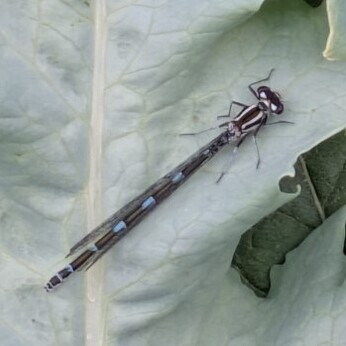
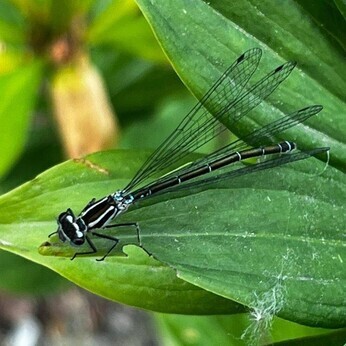
Nothing speaks of summer more than dragonflies and damselflies flitting around the ponds and grasshoppers and bush-crickets singing from the fields and bushes. This month was the peak time for damselflies, and both Scott and Cathy photographed the same species, Azure Damselfly. Both are of females, but as seen here even within one sex, there is considerable variation.
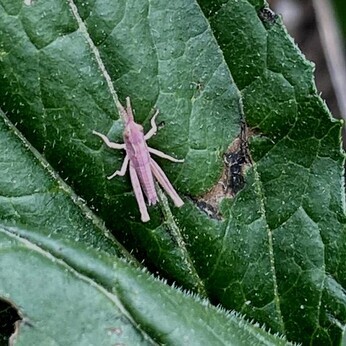
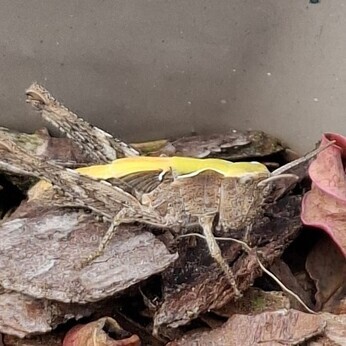
The first grasshoppers have also emerged, at the start very small as in Malin’s sumptuous pink find of a first instar (ie not long out of the egg) Meadow Grasshopper, a species that is usually greenish to help it camouflage itself in grass. It is sometimes supposed pink ones are found when it is hot, but I think more likely it is when its development has occurred in high sunlight conditions. Anthocyanin pigments, at least in plant leaves, seem to be a natural protective sunscreen, so they would probably help a grasshopper nymph in the same way. A couple of weeks later Rob found an instar 3 or 4 (of 5) Common Field Grasshopper. Their daily chirping when adult, and their wings have grown, will soon be with us!
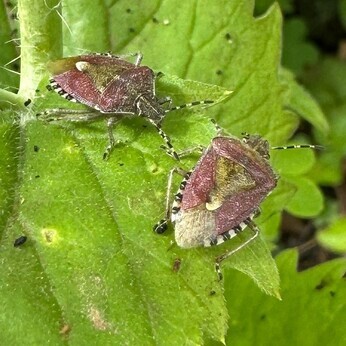
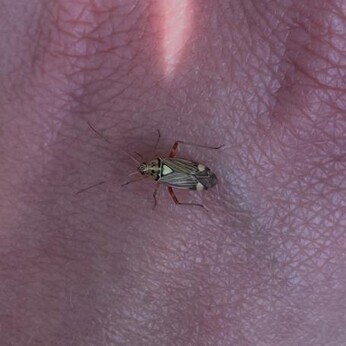
Moving on to the true bugs, Sharon took a super picture of Hairy Shieldbugs, while Malin snapped the more secretive Rhabdomiris striatellus or Striped Oak Bug.
Diptera, the two-winged flies, is a group of insects that seems to conjure up fear or revulsion (in humans) in equal measure. But they do not deserve that bad reputation. Some may bite, or spread disease, or decimate crops, but many more play a huge role in nature, feeding birds and predatory insects, pollinating flowers, digesting and decaying dead stuff to recycle nutrients.
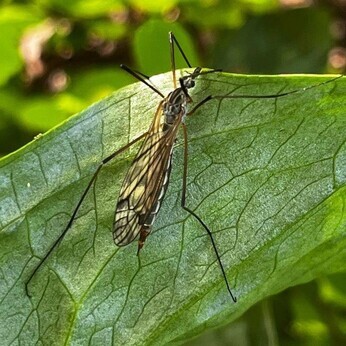
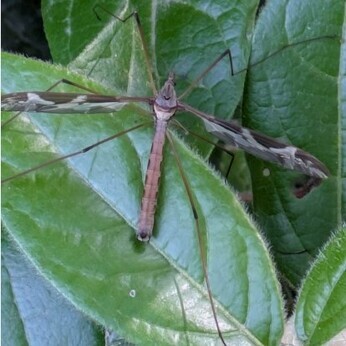
And they are, without exception, fascinating. Cathy and Scott both recorded new craneflies for the garden list, Tipula varipennis and Tipula maxima respectively. The latter is one of the most recognisable species, with dark markings on the wings. Unlike many craneflies, it is partly aquatic: a female lays eggs in mud under shallow water, then the larva lives freely in the water for a while before heading for waterlogged plant litter where it completes its development.
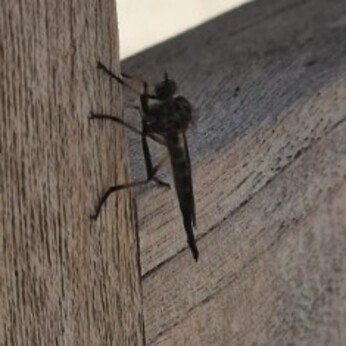
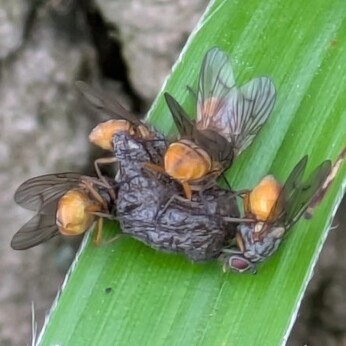
Matt also scored a new fly for the list when it landed on him. The Common Awl Robberfly is a very voracious predator, but only of the flies and wasps it eats, not the staff! And Scott photographed a flock of Phaonia subventa, tackling a ‘tasty’ morsel, coining a handy name ‘Orange-bottom Fly’ in the process…
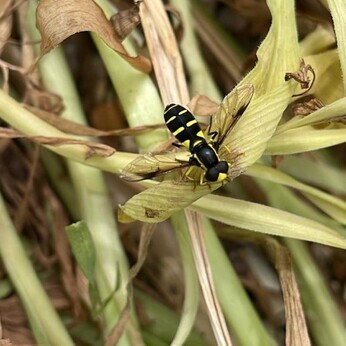
But Malin takes the prize for her photo of the hoverfly Xanthogramma pedissequum aka the Superb Dayglower! Yes, flies and their names ARE beautiful!
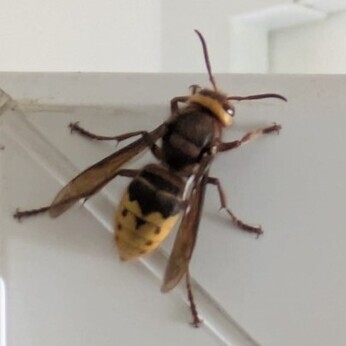
Also feared, irrationally, is the Hornet. While they can sting, you do have to work hard to get stung – they are really rather unaggressive. And they are important pollinators as well as predators bringing balance to the garden ecosystem. So Scott did well to rescue this one from the office!
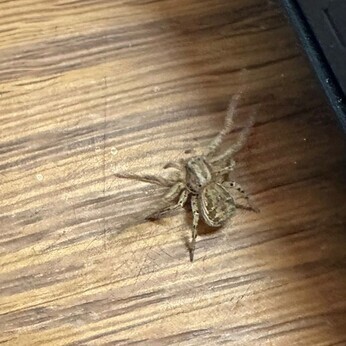
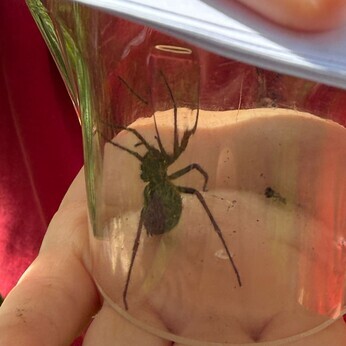
There is however a lot more to garden wildlife than insects. Sharon photographed one of the Xysticus crab-spiders, but it is not possible to be certain which species without microscopic examination. And Nicola’s kids had a fantastic learning experience, with a safely contained Large House Spider!
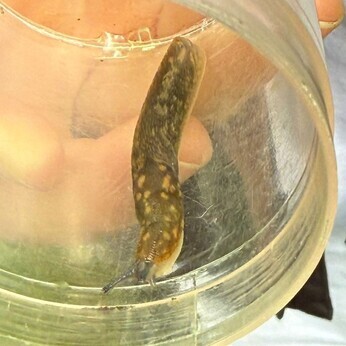
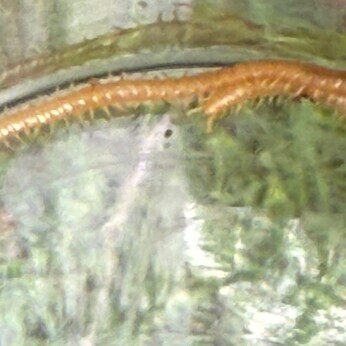
Some of their other ‘creepy-crawly’ finds included a Yellow Slug and the centipede Stigmatogaster subterranea, a species new to the garden biolist, with almost no spots in East Essex on the Essex Field Club map https://www.essexfieldclub.org.uk/portal.php/p/Species+account/s/Stigmatogaster+subterranea?b=.
Birds don’t always lend themselves to photography, but some are of course unmistakable. None more so than Kingfisher: Matt saw one fly through the garden on 7 May. This is really an unusual time of year to see one here: they should be at breeding sites by now, and I don't think there are any suitable sites for them around us. But who knows...? And Scott reported Swallows taking an active interest in the piggy wallows, a vital source of mud for nest building in such a dry season.
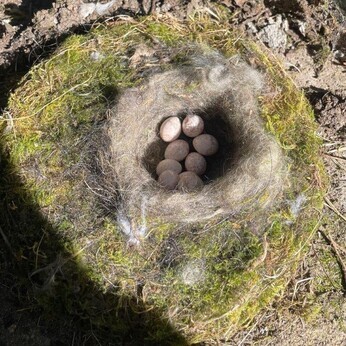
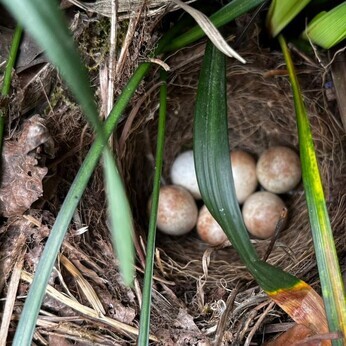
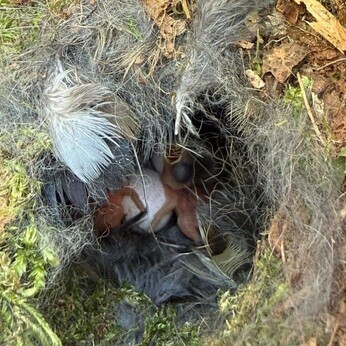
A few bird’s nests were inadvertently found as part of the day-to-day work, and of course they were secured and left undisturbed subsequently. Malin found a nest probably of Great or Blue Tits under a traffic cone, the birds gaining access through the hole at the top; Cathy came upon a Robin’s nest at ground level (which must make it very vulnerable to predation); and Nicola’s youngsters kept a watchful eye on the Robins, now hatched, in a woodpile.
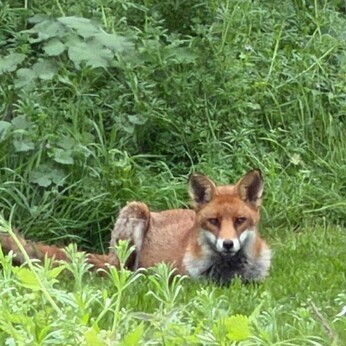
And finally in the main garden, as if to prove that EVERYONE, bottom to top, is invested in the essential wildness of our space, Julia (Beth’s granddaughter) photographed this lovely Fox one evening. And better still, when I checked the biolist spreadsheet, I found it wasn’t recorded. I am sure they are in the garden regularly, especially at night when no one is there. And I think I remember seeing droppings. But a new one for the list!
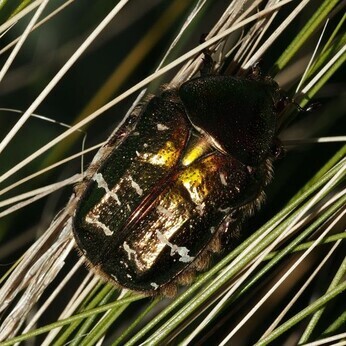
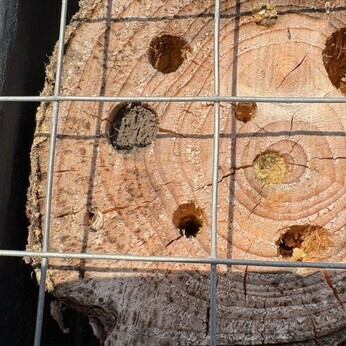
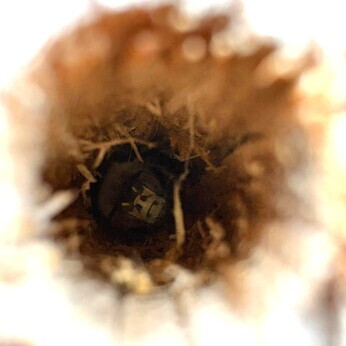
A final diversion into Colchester. David at the Meanwhile Garden was thrilled to see another type of chafer, the metallic-green Rose Chafer, for which the Colchester area seems to be something of a national hotspot. And then in the bug hotel, he was privileged to come face-to- face with the distinctive face-pattern of a Four-banded Flower-bee, a nationally scarce species, while many other holes are now sealed, hiding their inhabitants.
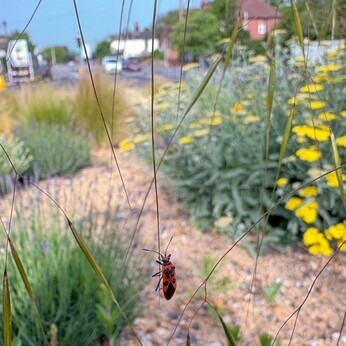
Our other Colchester site, the Albert Roundabout, doesn’t often get a mention in these reports. Partly because we don’t want to encourage people over there at risk to their lives, but also perhaps we might not expect nature to get there running the gauntlet of the infernal combustion engine. But David does get there to keep an eye on it and tidy up, and on one of his visits he reported a Painted Lady (which was riskier, crossing the road or crossing the Channel?), as well as this Cinnamon Bug, a shining beacon on one of the area’s least likely nature reserves!
Now summer is here. The flurry of spring is over so perhaps that is a sign to get out in the garden, your garden, our garden, any garden and let your mind slow down. Relax. And enjoy it and all that it attracts.
COMMENTS