This summer has certainly put plants to the test. Long periods of heat, very little rain and one heatwave following another have made for challenging conditions, particularly on our lighter, free-draining soils. Yet, as ever, there have been plenty of plants that have not only survived but continued to look remarkably good.
Some have flowered for months, others have held onto good foliage despite the heat and dryness, while a few have surprised us by producing a second flush of flowers after being cut back. It is always interesting to see which plants really earn their place in the garden when conditions become challenging.
Now, as we head towards the end of September, with daytime temperatures still reaching above 20ºC, we have been reflecting on the summer and revisiting our list of plants that have coped particularly well.
These are some of the plants that have stood out this summer, bringing colour, texture, and good foliage to the garden, with many continuing to give plenty of interest well into autumn.
There are of course so many more wonderfully tough plants out there, that took a beating from the summer heat, but are now bouncing back again.
As always, when choosing plants, it is important to consider your local climate, aspect and soil type.
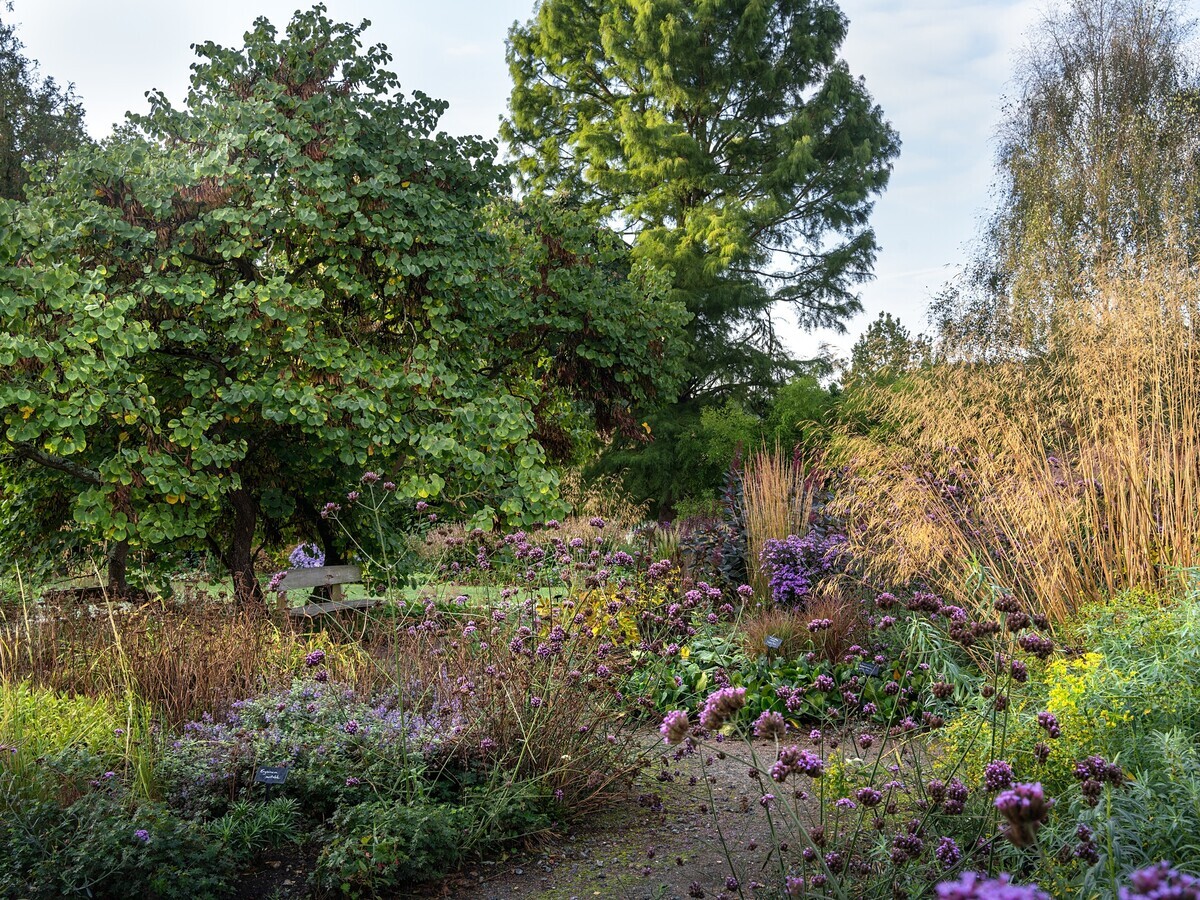
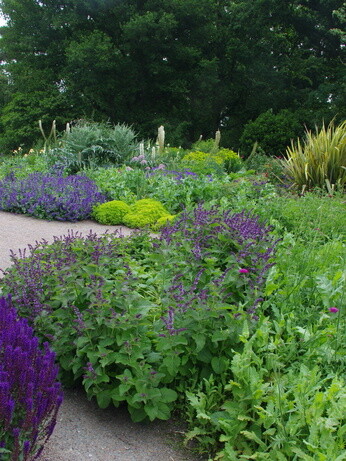
In our Reservoir Garden the soil is heavier, with some clay, yet becomes very dry in the summer months
This year’s best performers include
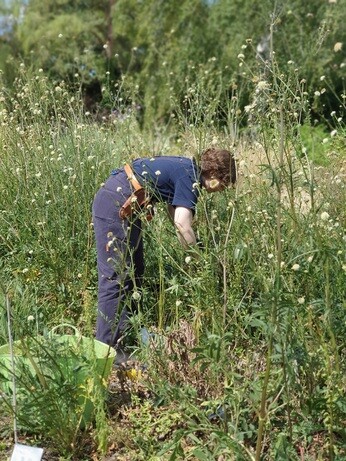
Cephalaria balansae - A robust perennial with an elegant air, towering above the border, though not as tall as C. gigantea. Despite its height its very airy, carrying masses of greenish-yellow, scabios-like flowers on branching stems. Even as the flowers fade, the brown seedheads remain attractive well into autumn and winter.
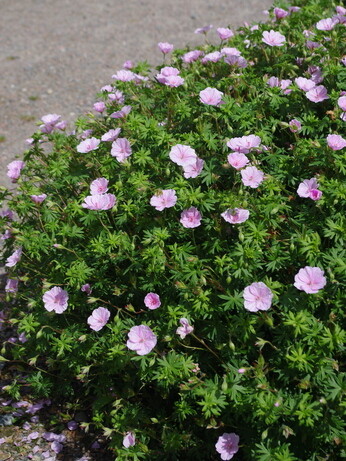
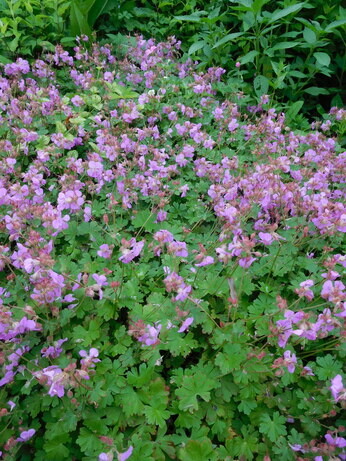
Geranium sanguineum and Geranium x cantabrigiense While some hardy geraniums struggled in the scorching sun these twoheld up incredibly well through the heatwaves. They both form neat hummocks of foliage and produce a succession of flowers throughout the summer, in colours ranging from white and pale pink to vibrant magenta.
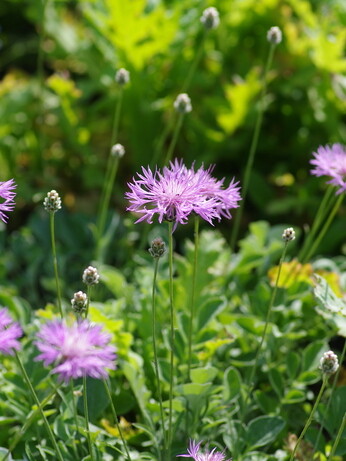
Centaurea bella is a relatively new acquaintance, but has quickly become a firm favourite, not least for its excellent tolerance. It makes an ideal edging plant towards the front of the border, forming an attractive low mound of silver-green foliage. Best of all, its rose-pink flowers can be enjoyed over a long period throughout summer.
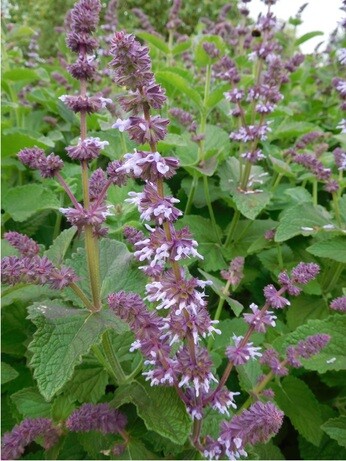
While a hard cutback of Salvia nemorosa and Salvia x sylvestris after the first flush of flowers would probably have done more harm than good, putting the plants under unnecessary stress, Salvia verticillata ‘Purple Rain’ and S. v. ‘Hannay’s Blue’ proved remarkably resilient. Despite the heat, we decided to give them a trim, removing the spent flowers stems, and were quickly rewarded with a fresh mound of foliage, followed by a second flush of flowers. Their deep roots no doubt help to make them particularly drought resilient.
Perennials
Amsonia 'Blue Ice'
Amsonia 'Ernst Pagels'
Amsonia hubrichtii
Aster x frikartii ‘Mönch’
Centaurea bella
Cephalaria balansae
Eryngium planum ‘Blaukappe’
Euphorbia cornigera
Geranium sanguineum
Geranium x cantabrigiense
Glycyrrhiza yunnanensis
Iris – bearded
Salvia verticillata 'Purple Rain' and 'Hannay’s Blue’
Scabiosa columbaria subsp. ochroleuca
Symphyotrichum ‘Prairie Purple’
Grasses
Calamagrostis x acutiflora ‘Karl Foerster’
Miscanthus ‘Morning Light’
Shrubs
Bupleurum fruticosum
Cotinus
Eleagnus x ebbingei
Euonymus carnosus ‘Red Wine’
Phillyrea angustifolia f. rosmarinifolia
Physocarpus 'Lady in Red'
Sambucus nigra f. porphylla 'Eva' (syn. Sambucus ‘Black Lace’)
Roses - Rosa spinosissima in poorer soil
Climbers
Climbing plants can play an important role in helping to regulate building temperatures, functioning as a layer of living insulation.
Deciduous climbers are an excellent investment for a climate resilient garden. During the hotter months their foliage provide much-needed shade over seating areas and pergolas. Because they’re deciduous, they naturally drop their leaves in autumn, allowing maximum light to shine through during the darker winter months when you need it most.
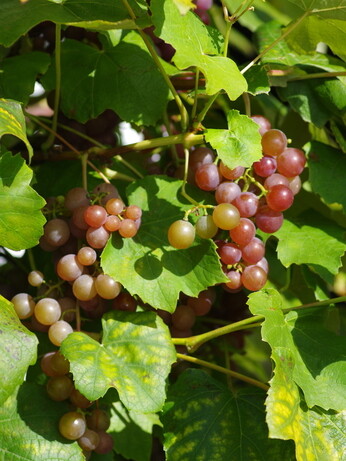
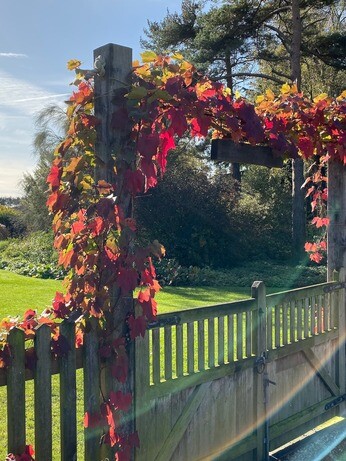
It’s been a good year for grape vines, we hear. We grow the strawberry vine, Vitis fragola, outside the shop and Vitis vinifera ‘Spetchley Red’ along the nursery fence. The latter is a vigorous, non-clinging vine which colours beautifully in autumn, turning shades of glowing red. Its small black fruits are highly ornamental, though better suited for wine making than eating. The strawberry vine, on the other hand, produces aromatic fruit that has a hint of wild strawberry flavour.
Climbers
Buddleja crispa
Campsis
Jasminum officinalis
Pileostegia viburoides
Roses
Trachelospermum jasminoides
Vitis
What this summer has shown us
There is always something to learn from a difficult season. A hot, dry summer can reveal strengths that are less obvious in easier years, showing us which plants are genuinely well suited to the conditions in which we ask them to grow.
With our climate changing, we also need to be willing to adapt. A plant we always considered suitable for dry shade, for example, may struggle if summers become hotter and drier. Gardening is a constant process of observation and learning, so it’s important to keep an open mind, experiment and learn from each other’s experiences.
We would love to hear from you in the comments below – which plants have been your best performers, and what type of soil are you growing them in?


COMMENTS