
Find out what the propagation and garden teams have been up to this week.
Plant Strategies in the Stock Beds
POSTED 27th February 2026

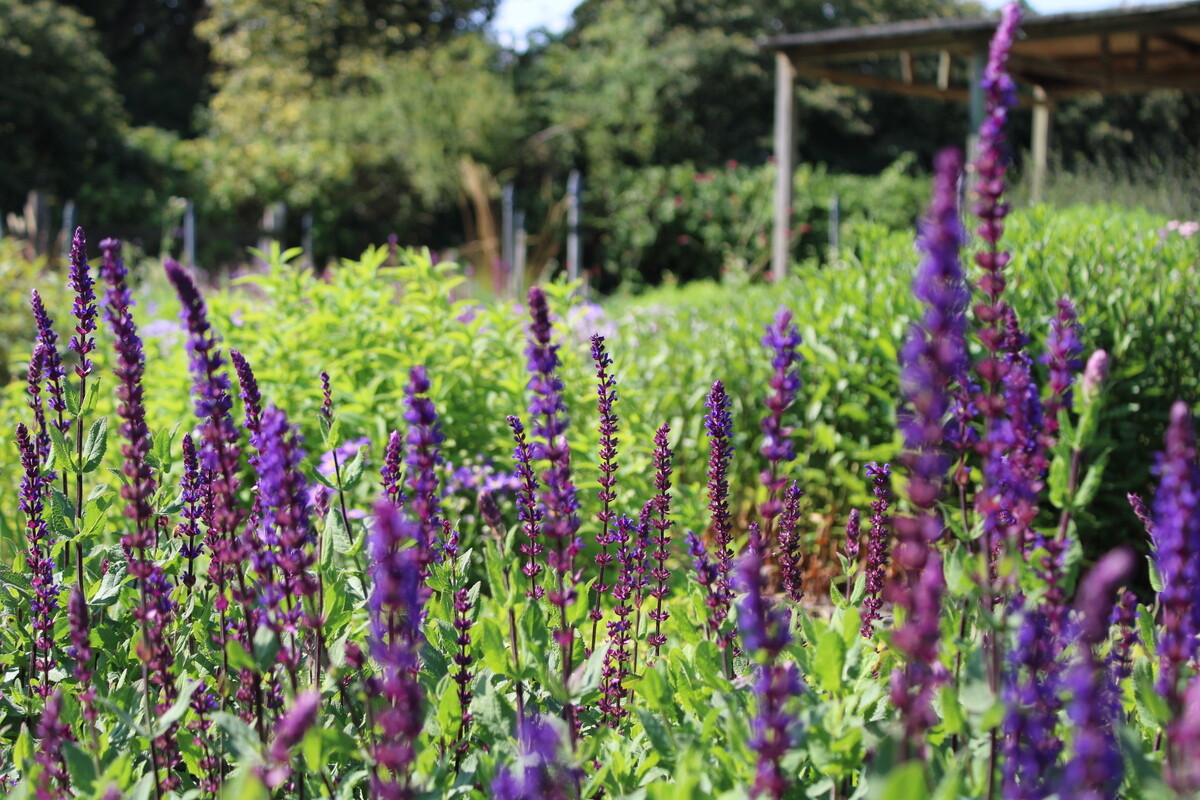
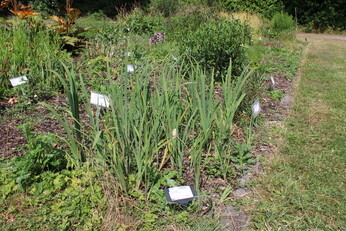
Over the past year, researchers from the University of Essex have been working in the Beth Chatto stock beds to better understand how different plant species function. The project focuses on a simple question: why do some plants thrive in certain conditions while others struggle?
To explore this, the team is using a well-established ecological framework known as CSR.
What is CSR?
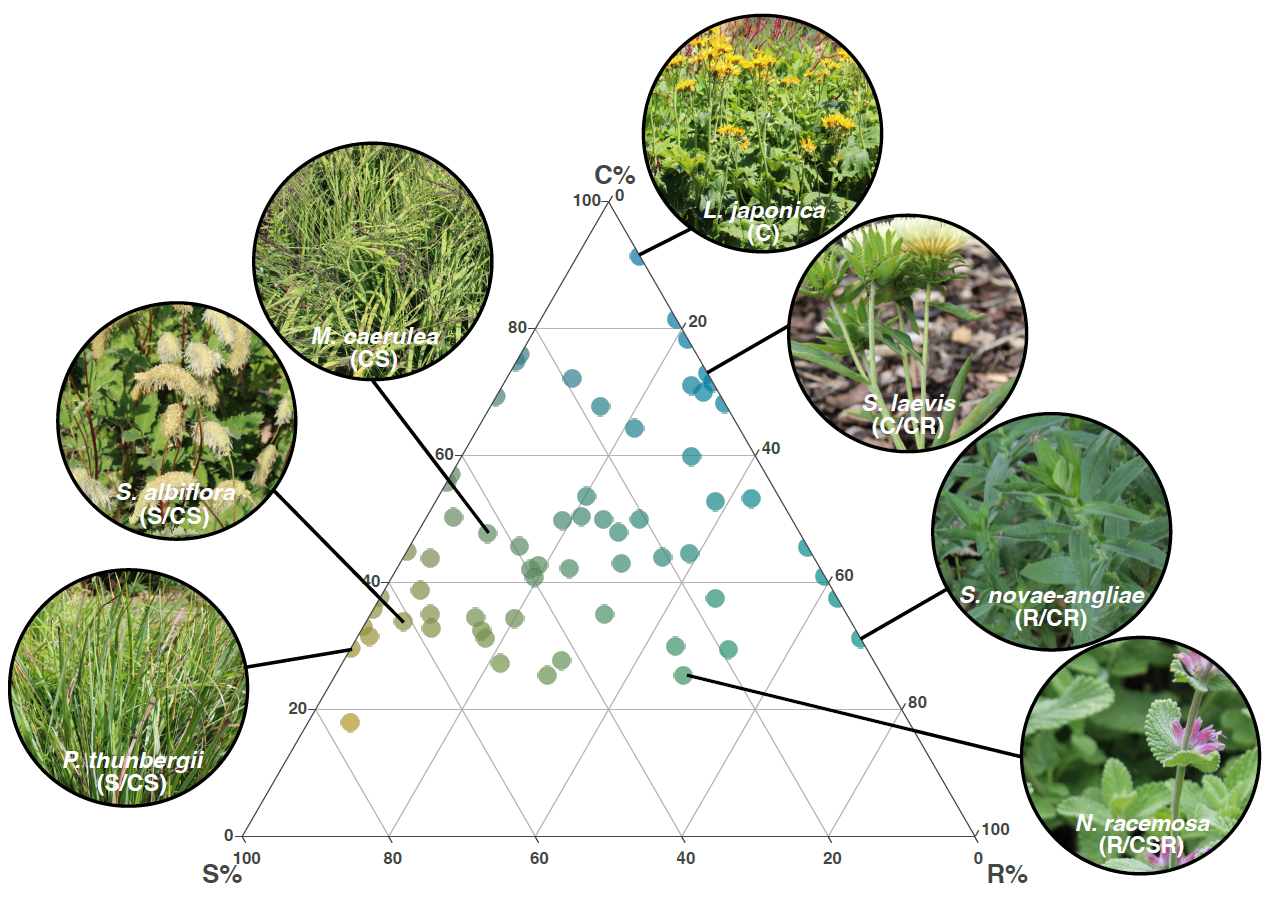
CSR is a way of describing plant “strategies” for survival. It groups plants into three broad types:
- Competitors (C) – species that grow quickly and perform best where resources such as light, water and nutrients are plentiful.
- Stress-tolerators (S) – plants adapted to challenging environments, such as dry soils or low fertility, often with tougher, longer-lived leaves.
- Ruderals (R) – opportunistic species that grow rapidly, reproduce quickly and are well adapted to disturbance.
Most plants sit somewhere between these categories. The CSR framework helps ecologists understand how plants allocate resources — whether they invest in rapid growth, durability, or speed of reproduction.
Measuring leaves
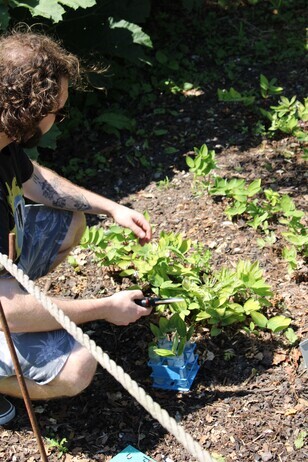
During summer 2025, leaves were collected from selected species in the stock beds. In the lab, each leaf was scanned, weighed fresh, dried, and weighed again. From these measurements, traits such as:
- Specific leaf area (how much leaf surface area a plant produces for the material it invests), and
- Leaf dry matter content (how dense or robust the leaf tissue is)
can be calculated.
These traits allow researchers to position each species within CSR space. In practical terms, they help explain whether a plant is geared towards fast growth, long-term resilience, or rapid turnover.
Using light to read plant function
Alongside traditional trait measurements, each leaf was also measured in the garden using a handheld hyperspectral sensor. This device records how a leaf reflects light across hundreds of wavelengths. Because reflectance is influenced by features such as water content, chlorophyll concentration and internal structure, each leaf produces a distinctive spectral signature.
The next stage of the project is to test whether these spectral signatures can be used to predict CSR strategy directly. If successful, this would provide a rapid, non-destructive way of assessing plant function.
Why study this in a garden?
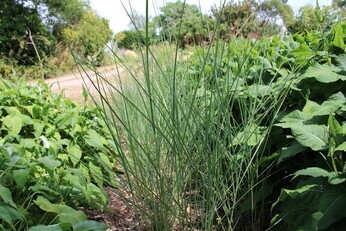
The Beth Chatto Gardens offer a valuable setting for this type of research. Plants are grown in well-documented, managed conditions, which reduces environmental noise and allows clearer comparisons between species. This makes it easier to focus on biological differences rather than site variation.
The University of Essex team will return this summer to continue sampling and expand the dataset. As the work develops, it will contribute to a better understanding of how plant strategy links to garden performance — particularly under conditions such as drought or low inputs.
We’ll share further updates as the research progresses.
If your balcony plants are doing well under confined space and maybe shade - I would hazard a guess that they are C-S strategists...