
Find out what the propagation and garden teams have been up to this week.
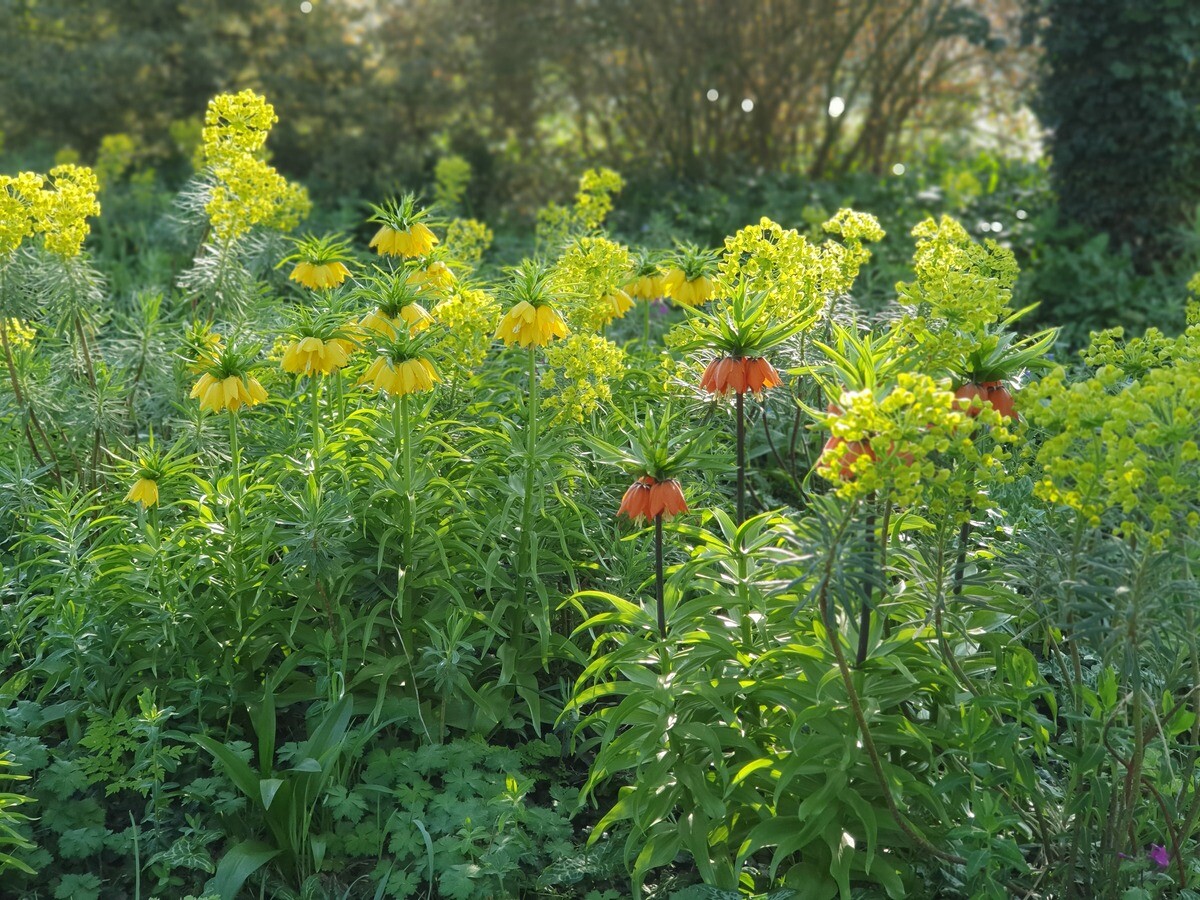
Luminous euphorbias
POSTED 8th April 2026

I've always been fond of spurges; there's one for almost every situation, whatever soil or aspect. See our blog HERE for how to grow them.
Euphorbia characias subsp. wulfenii is a particular favourite, illuminating the borders in the Gravel Garden with its zingy acid-yellow flowers right through spring. Once the flowers fade, we gather the seed for the nursery, then cut the spent stems back to the base, taking care not to damage the fresh, new shoots that will carry next year’s display. Throughout the year, their architectural form and glaucous foliage provide structure and create a handsome backdrop to perennials and grasses that emerge later in the season.
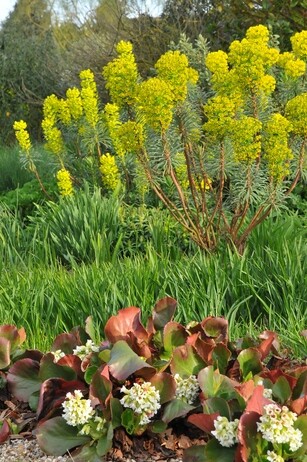
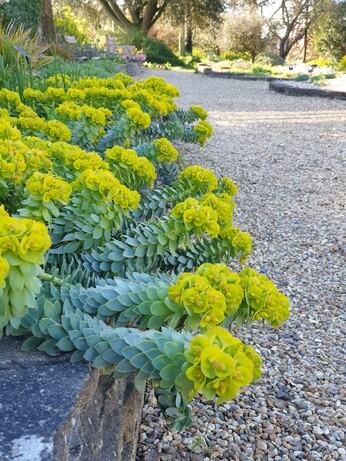
Euphorbia epithymoides and the low, sprawling E. myrsinites also flourish in well-drained soil. Both are excellent choices for smaller gardens or the front of the border, the latter looking superb spilling over the edge of low wall or trough.
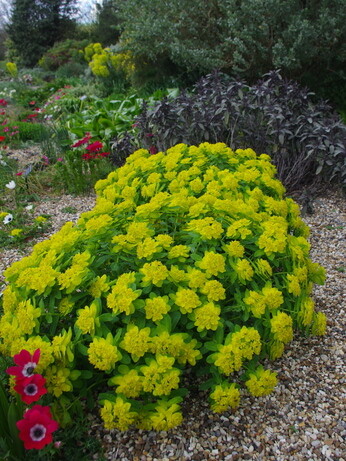
Euphorbia palustris ‘Walenburg’s Glorie’ is noticeably brighter and slightly warmer in colour than the species E. palustris. We grow it near the ponds in the Water Garden, where it thrives. It prefers sun and a soil that retains some moisture, though it will also tolerate a shadier position and can cope with heavier soils.
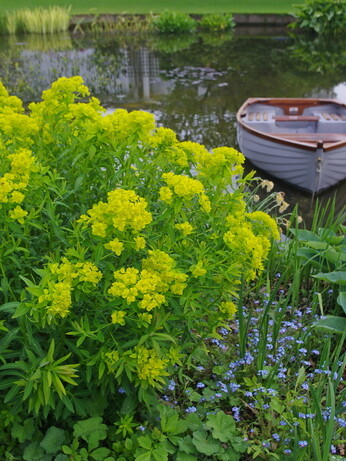
E. palustris 'Walenburg's Glorie'

Beth on her 80th birthday next to E. palustris 'Walenburg's Glorie'
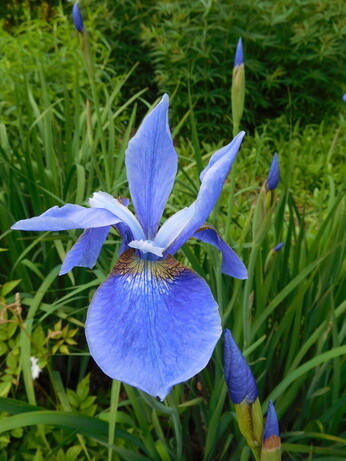
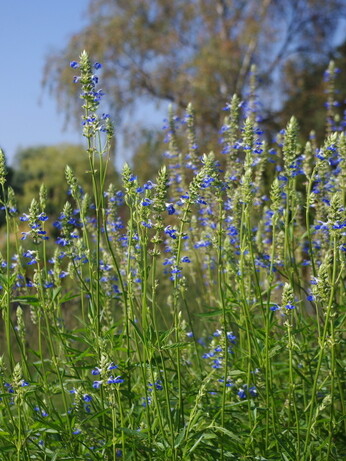
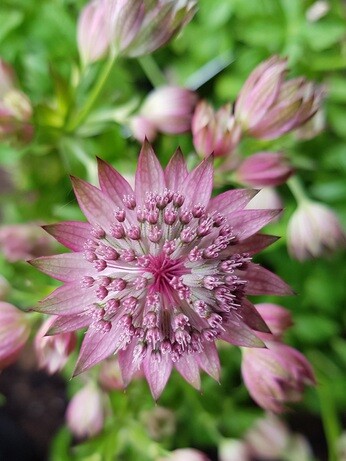
Good companions include the candelabra primulas, who’s tiers of colour sit beautifully alongside the cool blues of Iris sibirica. Astilbe, Alchemilla mollis, blue-leaved hosta and astrantia, all enjoy similar conditions. Later in the season the slender flower spikes of Bistorta amplexicaulis and tall blue wands of bog sage, Salvia uliginosa continue to bring colour and interest to the border.
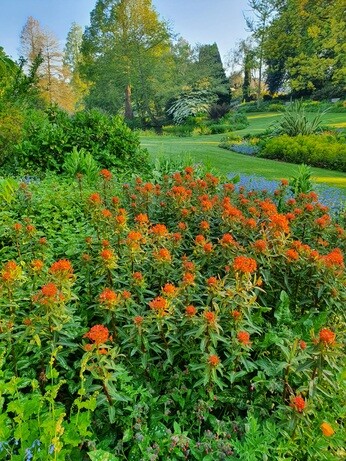
Euphorbia griffithii ‘Fireglow’ is a vigorous, spreading perennial, eventually forming a thicket of erect stems. The striking orange colour is best balanced by a generous planting of fresh, leafy greens around it.
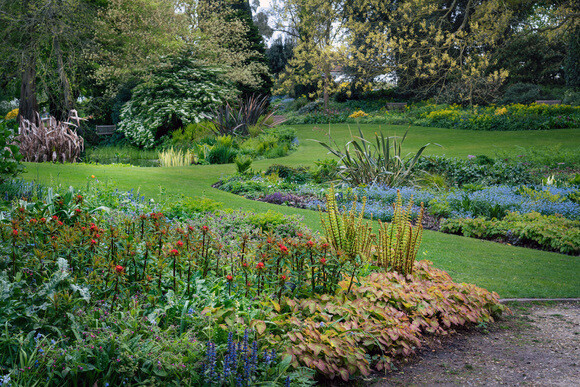
Euphorbia amygdaloides var. robbiae is ideal for woodland gardens, shaded borders or under trees, where it will run to form a useful groundcover.
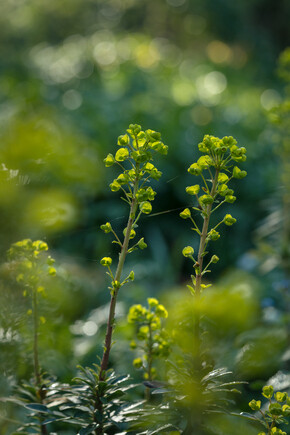
Spurges produce a milky latex-like sap that can irritate skin and eye so it’s important to wear gloves – don’t rub your face - and protecting exposed skin whenever you’re pruning or handling the plant.
By Åsa, Head Gardener

COMMENTS