
Find out what the propagation and garden teams have been up to this week.
Gardening Dilemmas - Part 3
POSTED 21st July 2026

Welcome to the third in our new series where Head Gardener Åsa and Head of Horticulture Steve share their expert advice on tackling your gardening and garden design dilemmas.
'Hoping you can help with this one. I live on the north Cornish coast where the salt winds can be fierce but worse than that I am invaded by rabbits who eat everything it seems. I’ve tried using spiky plants such as Berberis, and scented plants such as Lavender and Nepeta but they seem to eat the lot.
Suggestions for rabbit proof plants that will tolerate a strong salt wind would be great!'
– Jilayne
This may be one of the toughest gardening challenges there is! Salt-laden winds and hungry rabbits together rule out a huge number of otherwise reliable garden plants.
The bad news is that there are very few plants that are genuinely "rabbit proof." A hungry rabbit, particularly on the coast where food can be scarce, will sample almost anything. The aim is really to find plants they tend to leave alone rather than ones they never touch.
For an exposed north Cornish garden, I'd suggest looking at plants that combine tough, leathery or aromatic foliage with proven coastal resilience.
Shrubs
- Atriplex halimus – thrives in salt winds
- Olearia – often called the New Zealand daisy bush; excellent in exposed coastal sites.
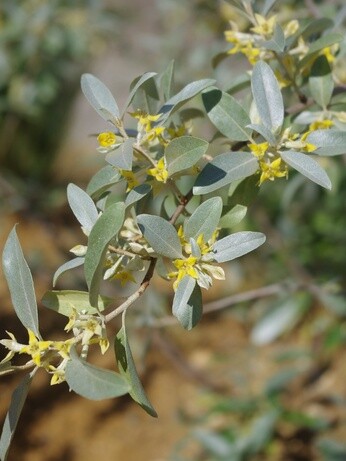
- Elaeagnus– extremely wind tolerant with silvery foliage.
- Pittosporum tenuifolium – surprisingly resilient in coastal gardens and usually avoided.
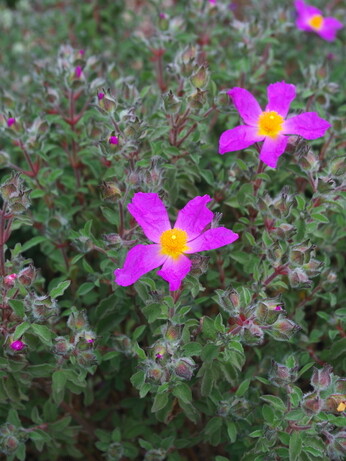
- Cistus creticus and C. skanbergii - love poor, sunny coastal conditions and is rarely troubled
Perennials
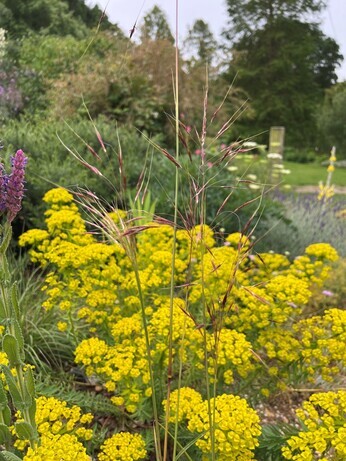
- Euphorbias (their milky sap is a good deterrent)
- Sea holly (eryngium)
- Globe thistle (echinops)
- Yarrow (achillea)
- Santolina
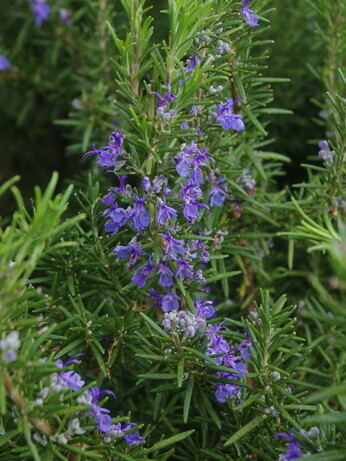
- Rosemary
- Hardy geraniums (some are grazed, but many recover well)
- Verbascum
- Sea thrift (Armeria maritima)
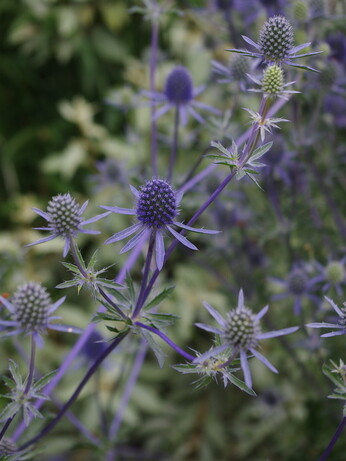
Sea holly (eryngium)
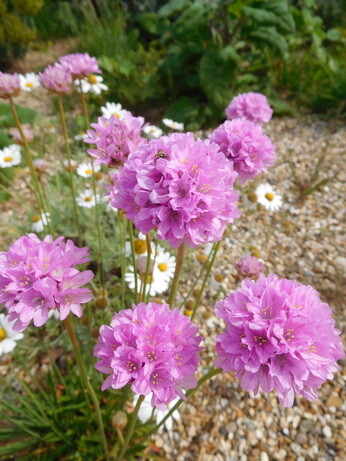
Sea thrift (Armeria maritima)
Grasses
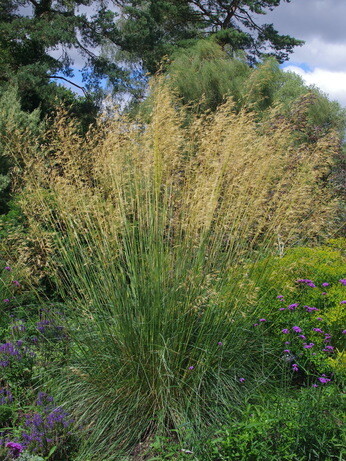
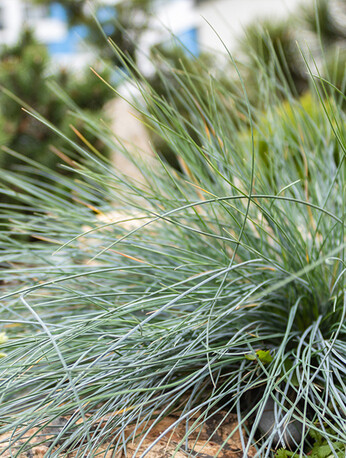
Rabbits generally leave ornamental grasses alone.
- Stipa gigantea
- Calamagrostis
- Festuca glauca
- Miscanthus (if you have room)
- Muhlenbergia rigens, M. lindheimeri, M. capillaris
- Chrysopogon gryllus
One thing that caught my eye in your message is that they're eating berberis, lavender and nepeta. That's a sign you have a particularly determined rabbit population! In many gardens these would be fairly safe, but coastal rabbits can become much less selective.
In that situation, I'd also think about protecting plants during their first year. Rabbits are most damaging when plants are young and tender. A simple cylinder of wire mesh around new shrubs, or temporary wire netting around a newly planted border, often allows plants to get beyond the vulnerable stage. Once shrubs have become woody, they're much better able to withstand the occasional nibble.
If you enjoy a naturalistic look, I'd also recommend planting densely. A mixed planting of grasses, euphorbias, sea hollies and shrubs gives rabbits fewer easy targets than isolated specimens, while also standing up beautifully to coastal weather.
Be the first to hear about our next Gardening Dilemma invitation by subscribing to our newsletter HERE

Head of horticulture Steve
COMMENTS