Welcome to our blogs featuring the photos and sightings of wildlife in the garden (and outreach sites like Chattowood and the Meanwhile Garden) by our staff, whether in the office, shop, tea-room, nursery or garden. The images are curated and commented upon by Dr Chris Gibson, our Wildlife Advocate.
While the photos are not always of the highest quality – our staff are busy doing their main jobs! – they give a real feel of life in the garden, something we are very keen to encourage, as indeed was Beth.
After what was rather a damp winter, everything changed in April: the tap was turned off. Barely any rain fell, and some sunny, breezy weather dried the garden rapidly, such that by mid-month all was looking rather droughted. But as always, the staff found some exciting things…
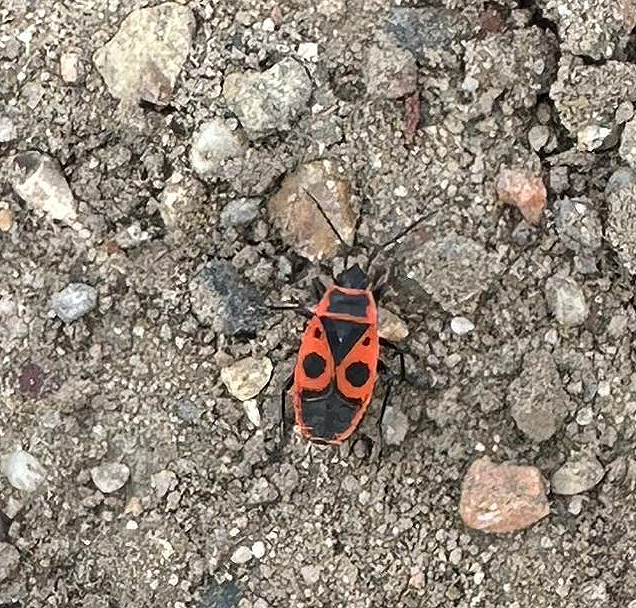
None more so than on 1st April when Sharon posted a picture of a Firebug she found crawling across the staff car park, our first record of this very distinctive creature. At first I wondered whether she was playing an April Fool joke on me, but no, it was genuine!
In fact, I have been expecting the arrival of Firebugs for some time. Although widespread and common on the near-Continent, there were only sporadic UK records on the UK mainland until early in the pandemic when my 4-year-old granddaughter found the first breeding aggregations, in Dovercourt. Since then they have spread westwards and inland, including Colchester, and now in the Meanwhile Garden. The spread clearly continues – but how? The insects are mostly wingless, so are they hitching rides. Or is a warming, weirding climate leading to an increase in fully winged individuals?
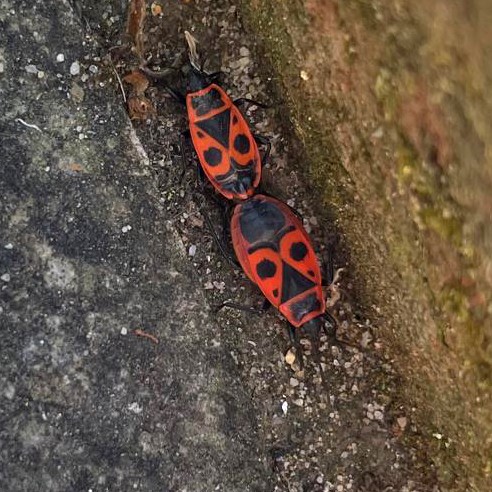
And now they are with us, they are probably here to stay. Certainly there was a flurry of records in the garden this month. Following Sharon’s record, Debs reported seeing one in the gravel garden the day previously, and at the month’s end Malin found the first mating pair, suggesting it will not be long before they are a permanent feature. And not one to be concerned about: Firebugs feed only on the seeds of lime trees and mallows (including hollyhocks). This may seem an unusual combination, until one reads that, on the basis DNA sequencing, the apparently disparate lime and mallow families should all be lumped into one family. Who knew? Well, it seems the Firebugs did!
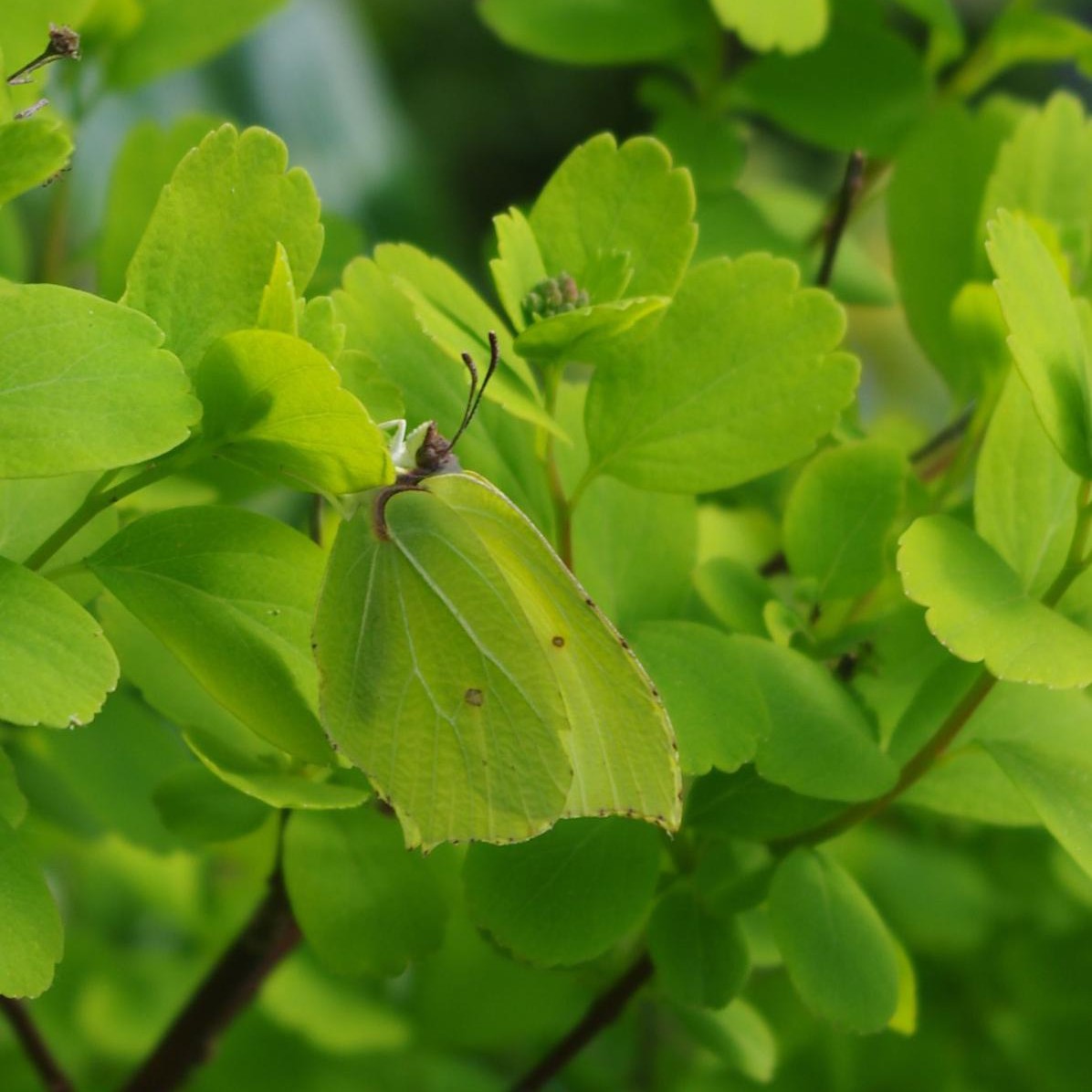
Some insects are so bright they attract attention wherever they are. The Firebug is one of those and Brimstone butterfly is another. Sharon reported one, but it was too quick for a photo. But Steve was very lucky to get this shot of one at rest, showing how the vivid yellow can, on the right background and in the right light, prove to be very effective camouflage.
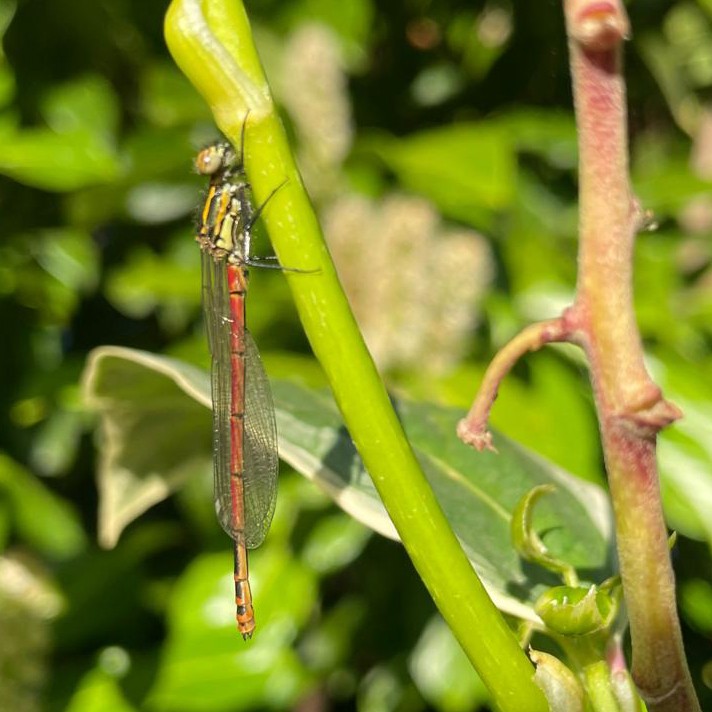
April is a month of spring emergences. And this year those appearances have generally been a little on the early side. On the 14th Malin found the first damselfly of the season, a male Large Red Damselfly, a week or so ahead of what we have come to expect. From now on, an increasing number and diversity of these waterside jewels will be on the wing for the whole summer.
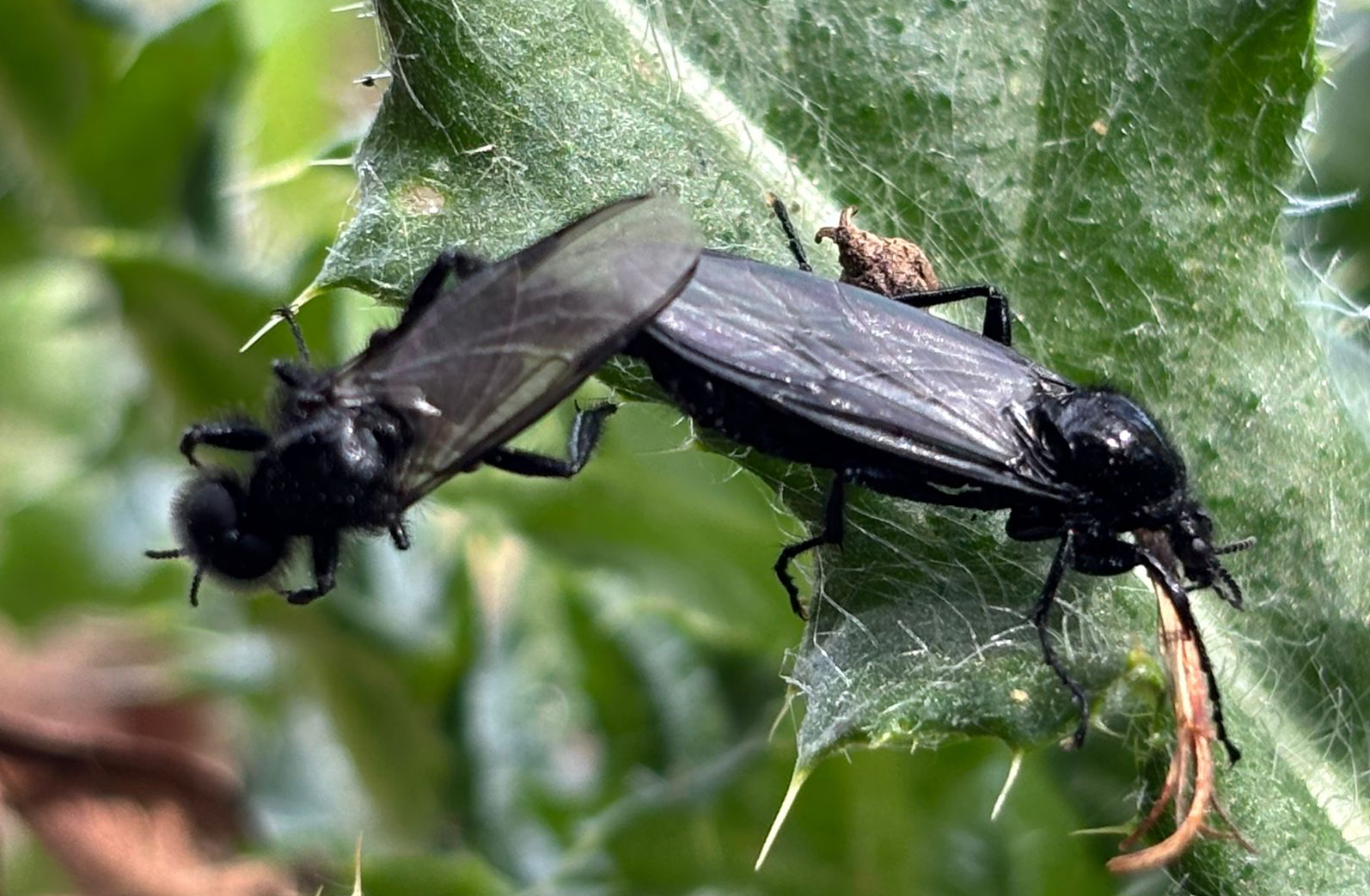
The following day Sean photographed the first couple of St Mark’s Flies, whose name comes from their typical emergence date, St Mark’s Day (April 25th), so these were a good ten days early. They may look fearsome but they are quite harmless, and great Swallow food! Over the following two weeks, numbers peaked and faded rapidly, probably as a result of the incipient drought.
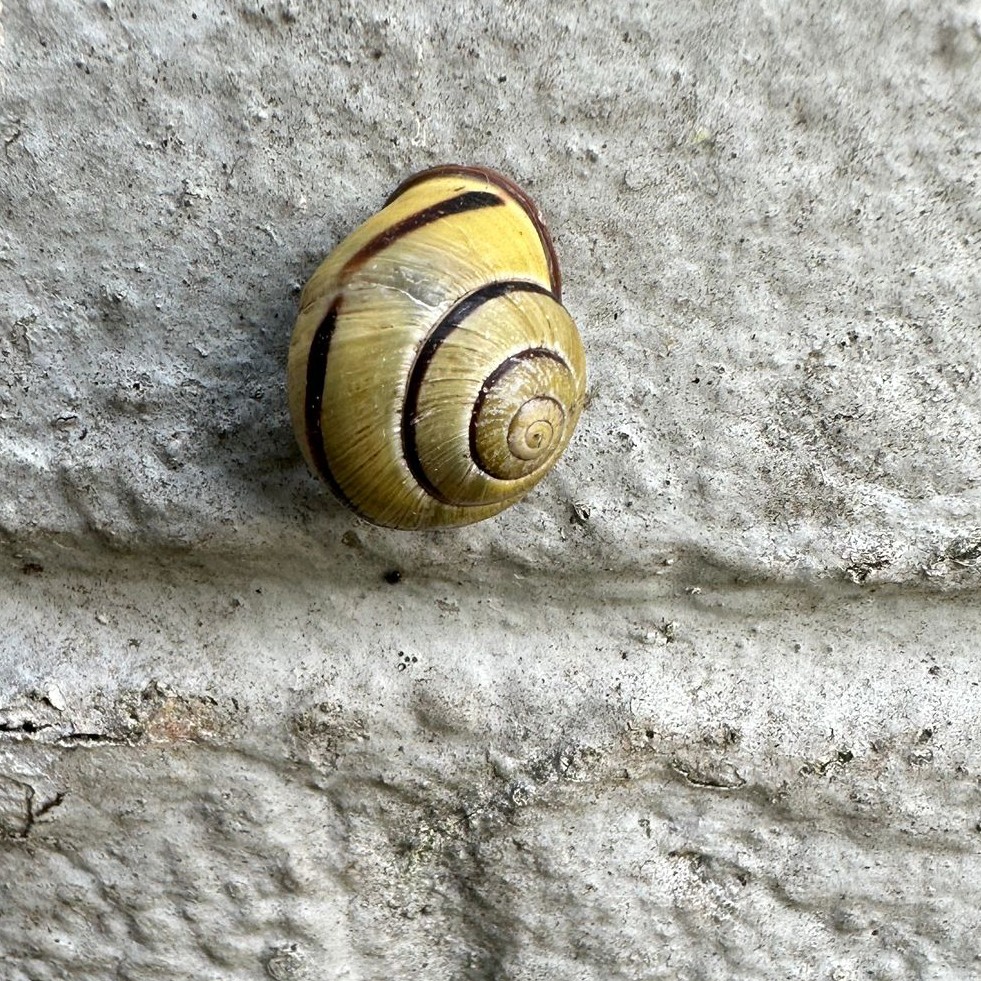
On to another couple of photos from Sharon. First, a Brown-lipped Banded Snail, a pretty descriptive name that does what it says on the tin. It is fascinating species that comes in yellow, pink and brown, with between zero and five dark brown stripes along the whorls. The darker they are, the more they select shady cool microhabitats as they would fry in full sun!
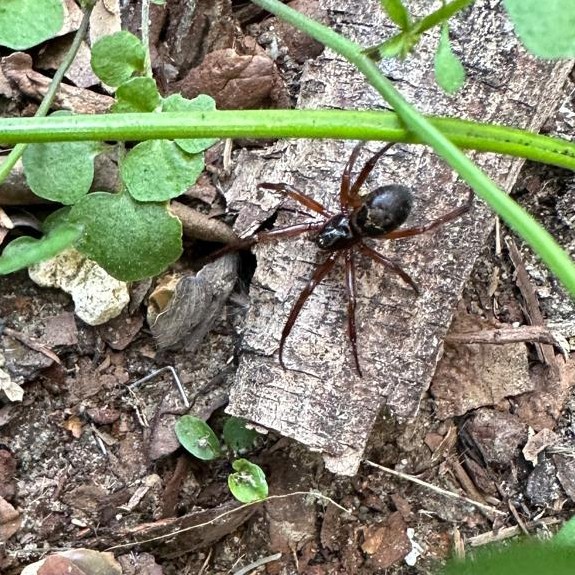
And next a Noble False Widow spider, the one that is everywhere but causes mayhem because people wrongly equate it with the deadly Black Widow. In reality, while it can bite, you have to really annoy it, and if it does bite, it is generally no worse than a wasp sting. In very rare cases, for those who are sensitive, it can cause a more painful reaction, but the same is true for all stings and bites in nature.
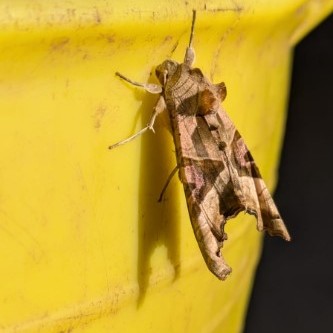
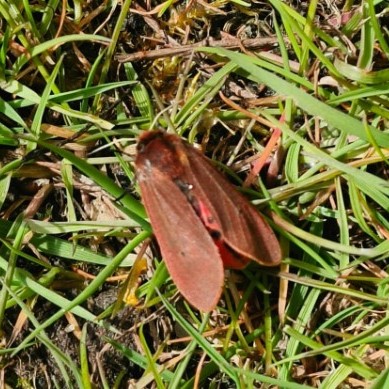
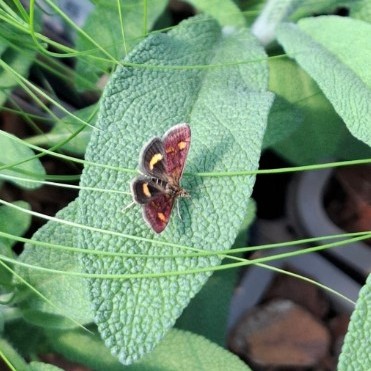
As well as butterflies, several moths have been snapped. Malin found a lovely Angle Shades, one that is fantastically camouflaged among dead, crispy leaves, although not so much on a yellow bucket! Mattie came upon a Ruby Tiger, a rather early example of a species normally on the wing from May, but then again, what’s normal nowadays?! And Rob snapped a Mint Moth sitting on an appropriate leaf from the correct family. Good to see this with wings wide open so that it can be definitively identified as that rather than a closely related species.
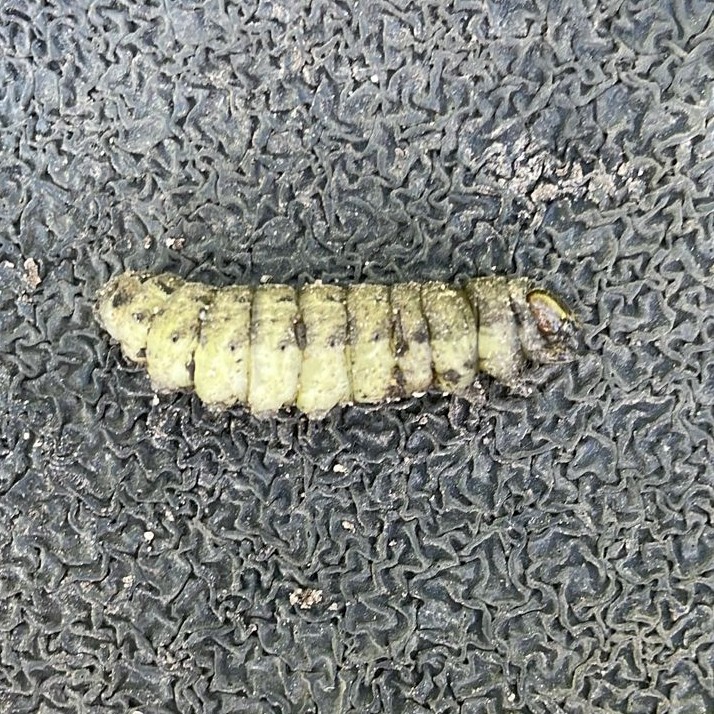
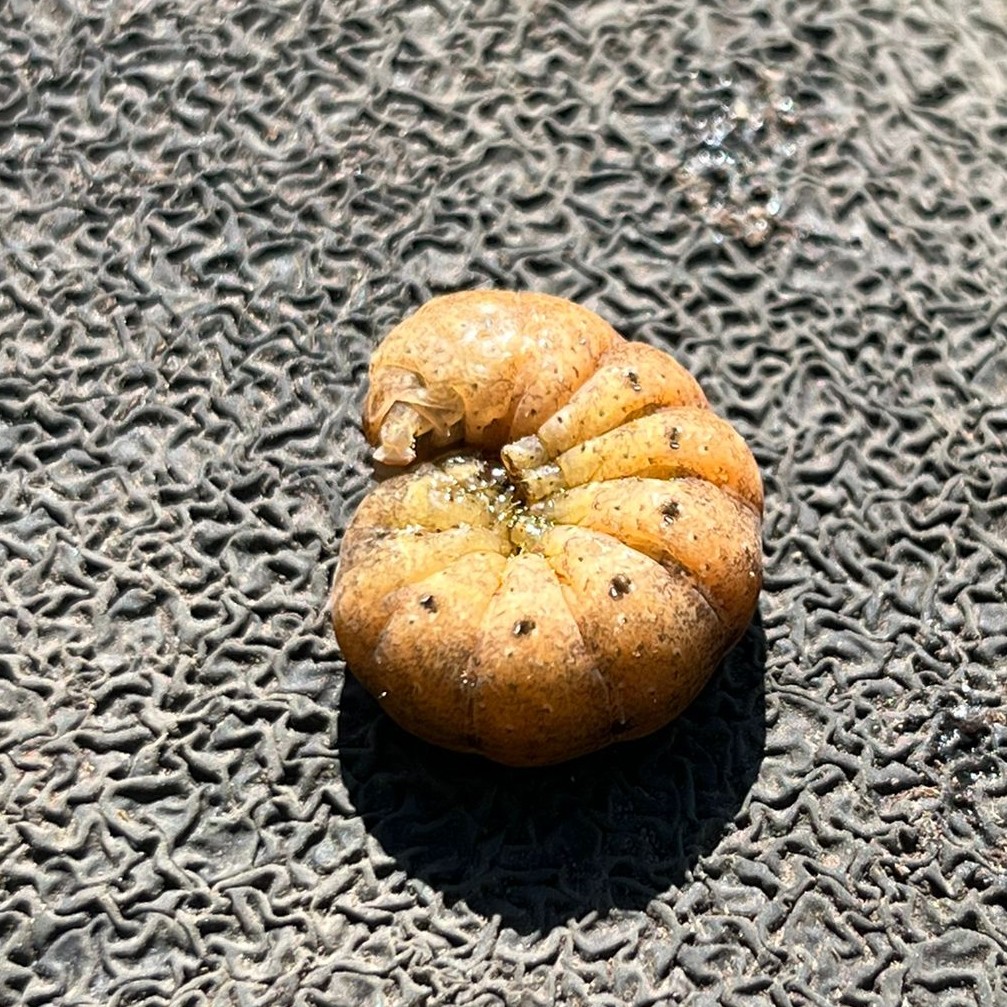
Caterpillars too have been found, these two by garden intern Gordon. Unfortunately many caterpillars are quite difficult to identify with certainty, but the first may be a Large Yellow Underwing while the second is a Broad-bordered Yellow Underwing.
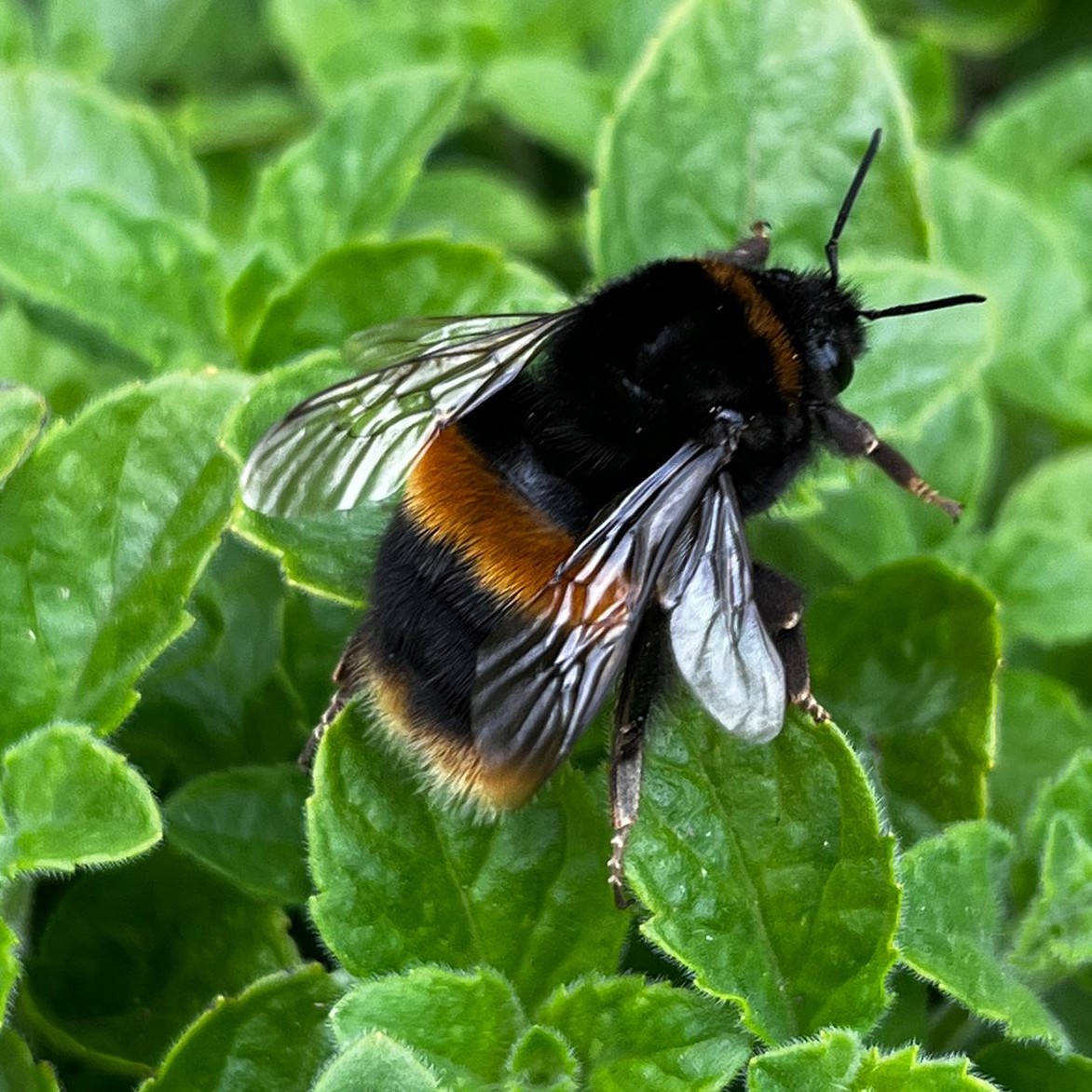
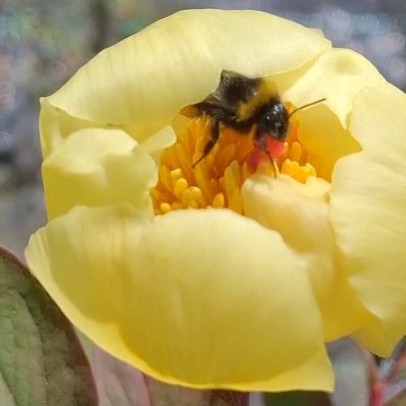
Bumblebees have been very active throughout the month. Cathy took a lovely photo of a Buff-tailed Bumblebee resting on foliage, while Rob caught one of the same species emerging from the floral bowl of ‘Molly the Witch’ Peony, almost licking its lips following the meal it had just eaten!
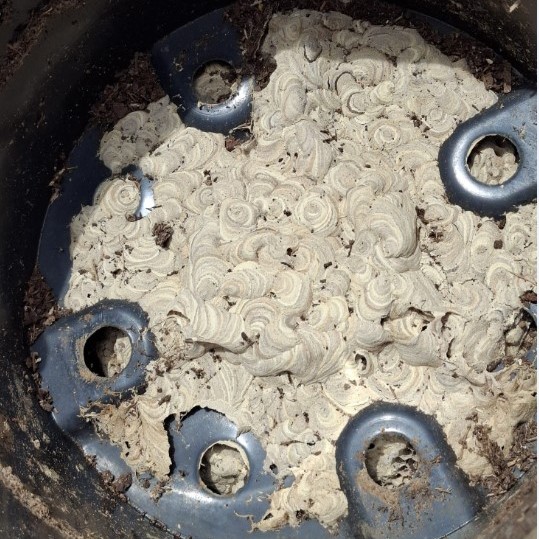
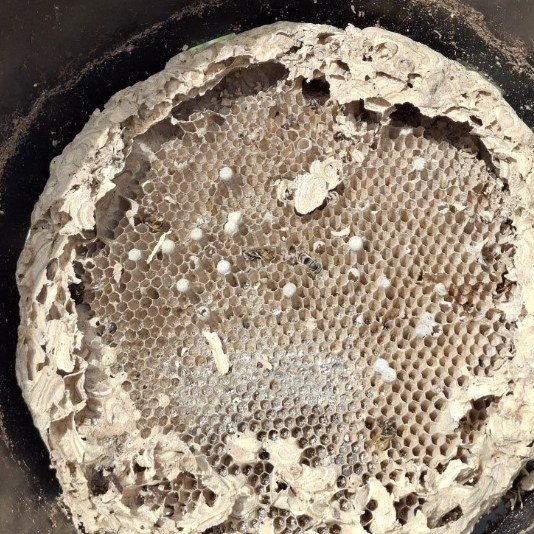
Breeding behaviour is under way: Sean filmed a swarm of Honeybees, although stills from the video proved not to show the moving bees, while Ned found signs of last summer’s nesting in the form of wasp nests in the bottom of some large pots. Such beautiful papery constructions deserve to be seen!
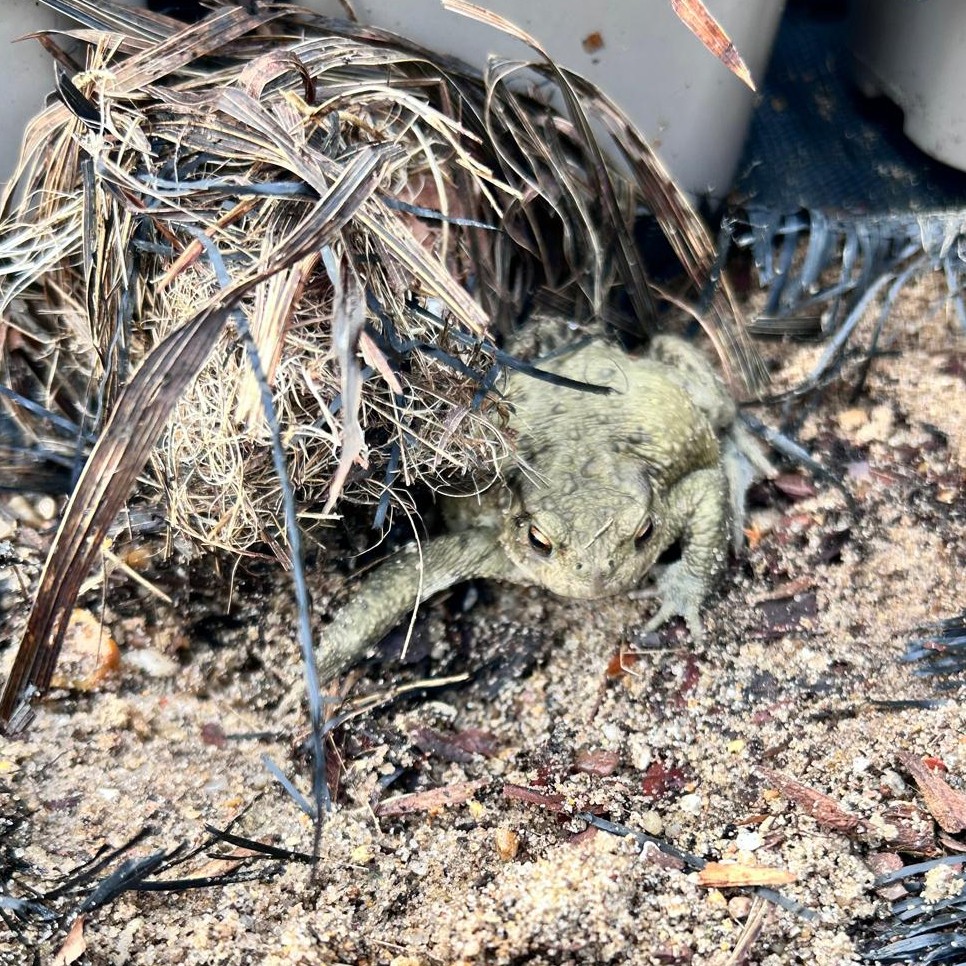
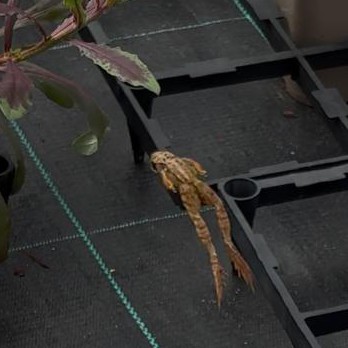
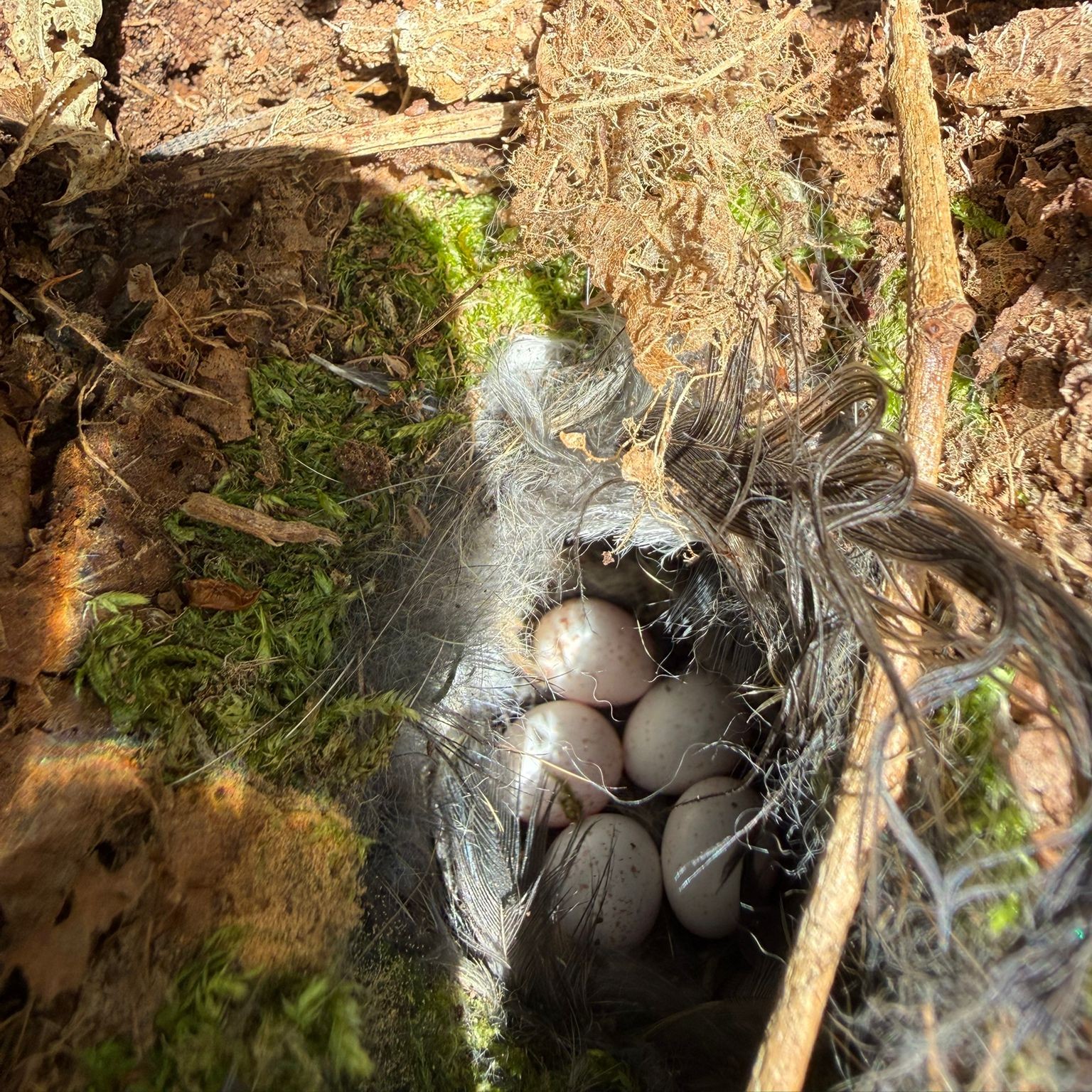
And finally we move on to a selection of vertebrates. Scott was excited to have a Grass Snake slither over his foot on its way to the pond; Kirsten found a Common Toad sitting happily in an old mouse nest; Jack photographed a Common Frog acrobatically leaping around behind the scenes (hopefully after having gobbled up a few slugs); and Nicola and her schoolkids found a lovely bird’s nest in a woodpile. It probably belongs to a Robin; Great Tit eggs are rather similar, buffish and speckly, but its nest would normally be in a definite hole rather than at least partly in the open.
For a different perspective, see my personal blog from this month:
The Wild Side of Beth Chatto Gardens: Spring in full flight | Chris Gibson Wildlife
And so we reach that most lovely of months, May, when the weather is (usually) more reliable, insects abound, and every moment spent in the gardens is filled with natural delights. Watch this space!


COMMENTS