
Find out what the propagation and garden teams have been up to this week.
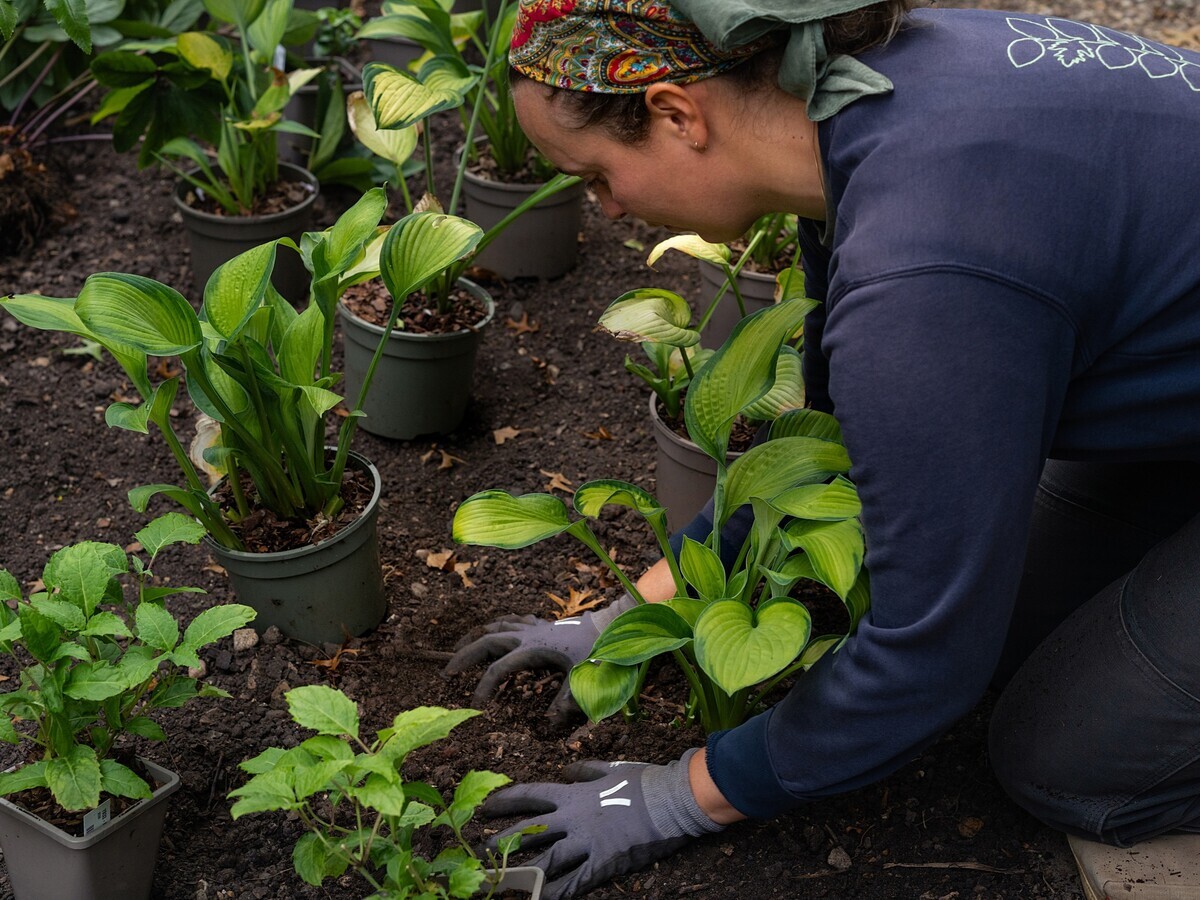
Autumn Planting: helping gardeners adapt to a changing climate
POSTED 8th September 2026

Autumn planting: warm soil, cool air – the perfect combination
Now is the perfect time to plant! The intense heat of summer is breaking, the air is cooling down, and autumn rain is finally making the soil become damp and workable – an ideal time for getting your plants in the ground.
For generations, spring has been seen as the start of the gardening year: the time to sow, plant and get our gardens growing. I think most gardeners would agree that the first signs of spring never fail to bring a real sense of excitement. As plants begin to emerge from the ground and begin to wake up from dormancy, we can’t wait to get outside, feel the sunshine and get our hands back in the soil. There is nothing quite like the start of a new gardening season – planting, growing and watching the garden come back to life.
But as our climate becomes more unpredictable, perhaps it’s time to rethink that approach. With hotter, drier summers becoming increasingly challenging for plants, autumn offers a valuable opportunity to get ahead of the growing season and give plants the best possible start.
After a summer of prolonged drought and unprecedented heat, it’s becoming increasingly clear that our gardens – and the way we garden – need to adapt. As our climate changes we need to think differently about when we plant, and how we can create gardens that are resilient and better able to cope with the extremes of weather we’re experiencing.
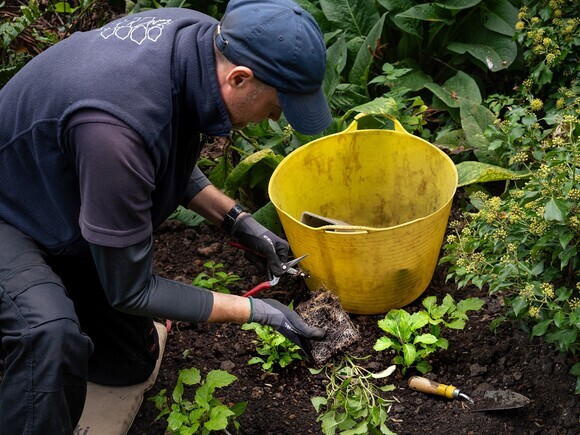
Here at Beth Chatto’s we’re moving away from spring planting. By planting in autumn, we give plants more time to establish their roots before the heat and pressures of summer return, helping them become stronger and more resilient from the outset.
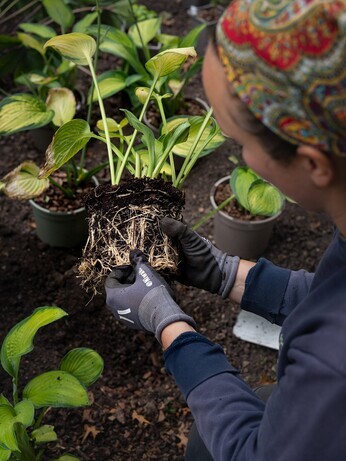
One of the great advantages of autumn planting is the combination of warm soil and cooler air. As temperatures begin to fall, the soil still holds much of the warmth it has built up over the summer, while cooler air reduces the stress on newly planted plants and helps limit moisture loss. Add in more plentiful and, hopefully, more reliable autumn rainfall, and you have some pretty ideal conditions for getting plants established.
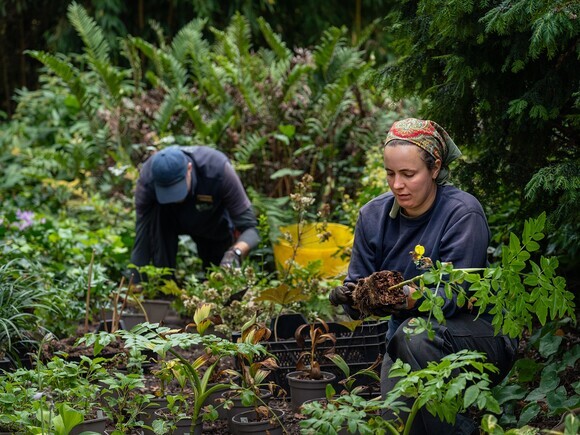
For newly planted perennials, shrubs, trees and ornamental grasses, this combination of warm soil, cooler air and increased moisture creates a very favourable environment for root growth. Plants have the opportunity to put down roots and establish themselves before the winter really sets in. Come spring, they already have a head start.
This is particularly important as we experience increasingly hot and dry springs and summers. A plant that has had several months to establish its roots is in a much stronger position to cope when temperatures rise and rainfall becomes less predictable. It can also mean less need for additional watering – something that is becoming increasingly important as we face a greater risk of water shortages and hosepipe bans during the summer months.
So, rather than waiting until spring, why not give your plants a head start? Get them in the ground this autumn, and come spring, your garden will already be one step ahead.
Start planning for spring colour
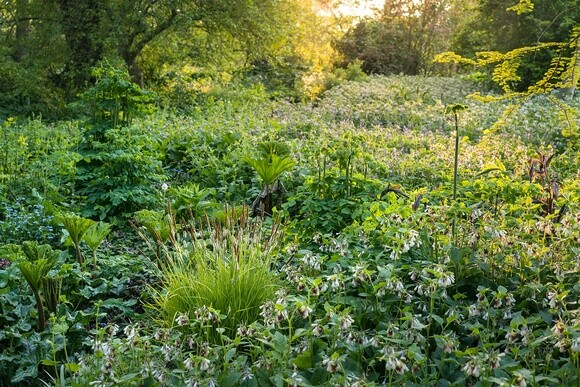
After such a challenging summer, now is a good time to take a look at your borders and think about what worked well – and what didn’t. Autumn is the perfect time to fill any gaps and give your borders a fresh start.
This week, we’ll look at some great plants that will bring colour and interest to the garden next spring.
Lamprocapnos spectabilis ‘Valentine’
Bleeding hearts are such classic shade-loving perennials, admired for their heart-shaped blossom, gracefully dangling from arching stems. Their top growth fades and disappears in summer, while their root system is very much alive underground, so grow them alongside ferns and shade-loving perennials that can fill the empty space. This bleeding heart featues warm red flowers, held gorgeous maroon stems above the plum-tinted young foliage.
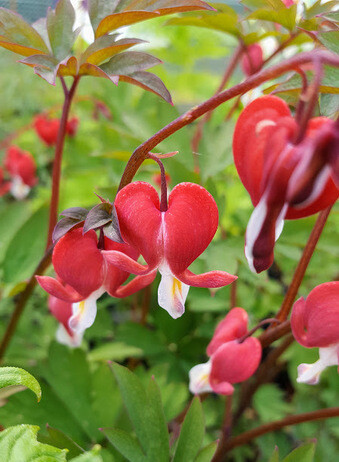
Lamprocapnos spectabilis ‘Valentine’
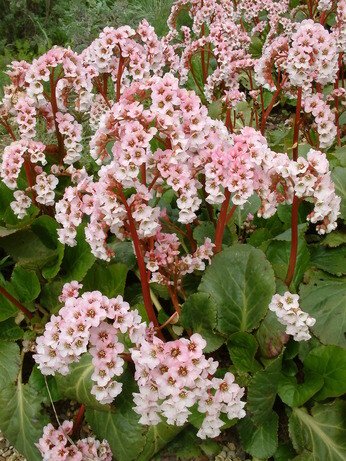
Bergenias are all too often consigned to a shady corner but will, in our experience, give their best performance in an open sunny spot. Especially cultivars which have good winter colour, such as B. ‘Abendglocken’, their leathery leaves turning deep wine-red and maroon, extending the season of interest. In early spring clusters of bell-shaped flowers appear. Bergenia flowers are a valuable source of early season nectar and pollen for bees and hoverflies. One of our favourites is Bergenia ‘Schneekönigin’, with large flowers in the palest shell-pink elegantly held above the foliage.
The Sibirian bugloss is happier in shady spots, with reasonable moisture, but will cope with drier condition once established. Brunnera macrophylla ‘Alexander’s Great’ makes an impressive mound of huge silver-marbled leaves, with sky-blue flowers floating above the heart-shaped leaves.
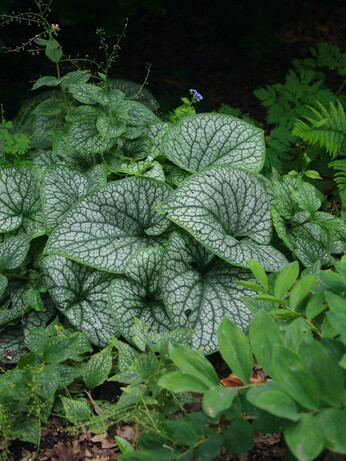
Brunnera macrophylla ‘Alexander’s Great’
Epimedium x versicolor ’Discolor’ thrives in light shade and makes an excellent groundcover around or below trees and shrubs. We always make sure to remove the old, weathered foliage in late winter or early spring, before fresh, new foliage and the flowers start to emerge. If you do it too late in the season, you might accidentally cut off the new flower buds as they push through the soil. This cultivar carries delicate coppery-pink and yellow flowers on wiry stems above the new foliage which is tinted in reddish bronze.
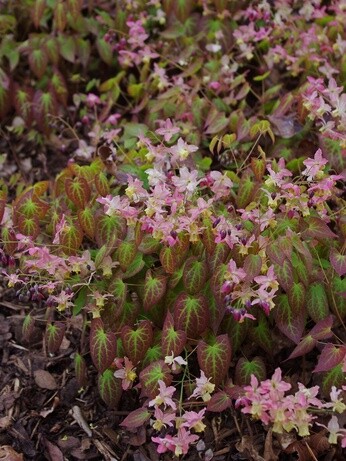
Epimedium x versicolor ’Discolor’
Euphorbia epithymoides is another perennial we wouldn’t want to be without. It may not be as showy as some of the larger spurges, but it’s a tough, reliable choice with a compact habit, forming a neat cushion of acid-yellow flowers in spring.
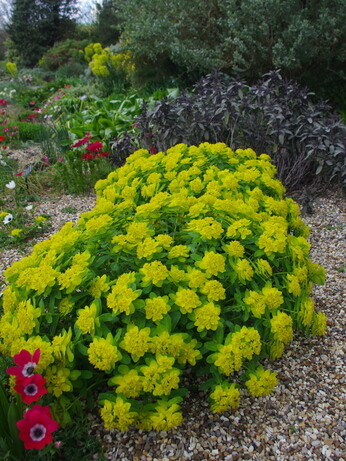
Euphorbia characias subsp. wulfenii makes a wonderful, architectural feature in a dry garden. Clothed in blue-grey foliage it makes a handsome backdrop to summer and autumn flowering perennials. In late spring each stem carries a beautiful, huge head of lime-green flowers.
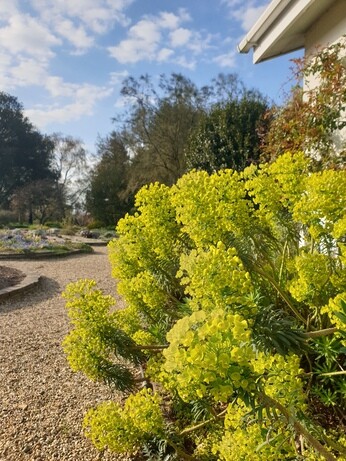
Euphorbia characias subsp. wulfenii
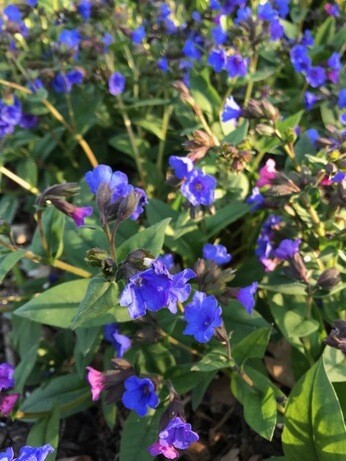
Lungworths produce an abundant supply of nectar and pollen in early spring, so are great for attracting and feeding emerging pollinators. Pulmonaria ‘Blue Ensign’ is one of the most stunning pulmonarias available, known for its intense gentian-blue flowers held above the deep green, unmarked leaves.
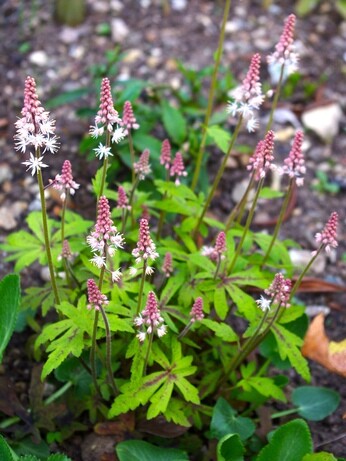
This charming foam flower, Tiarella ’Spring Symphony’, looks equally wonderful in a container, paired with other spring delights, as it does as a groundcover in dappled shade. En masse, it makes a green carpet - each deeply lobed leaf decorated with a dark stain - topped with a frothy mass of blush-white flowers.
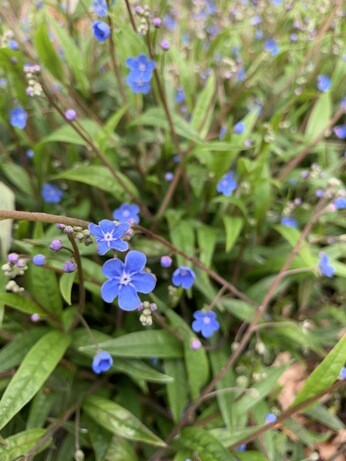
Omphalodes nitida carries airy sprays of the same intense blue flowers as other omphalodes, but flowers a little later. This is not a creeping form, instead forming compact clumps of narrow, elongated leaves. Self-seeds prolifically in our garden.
COMMENTS