
Find out what the propagation and garden teams have been up to this week.
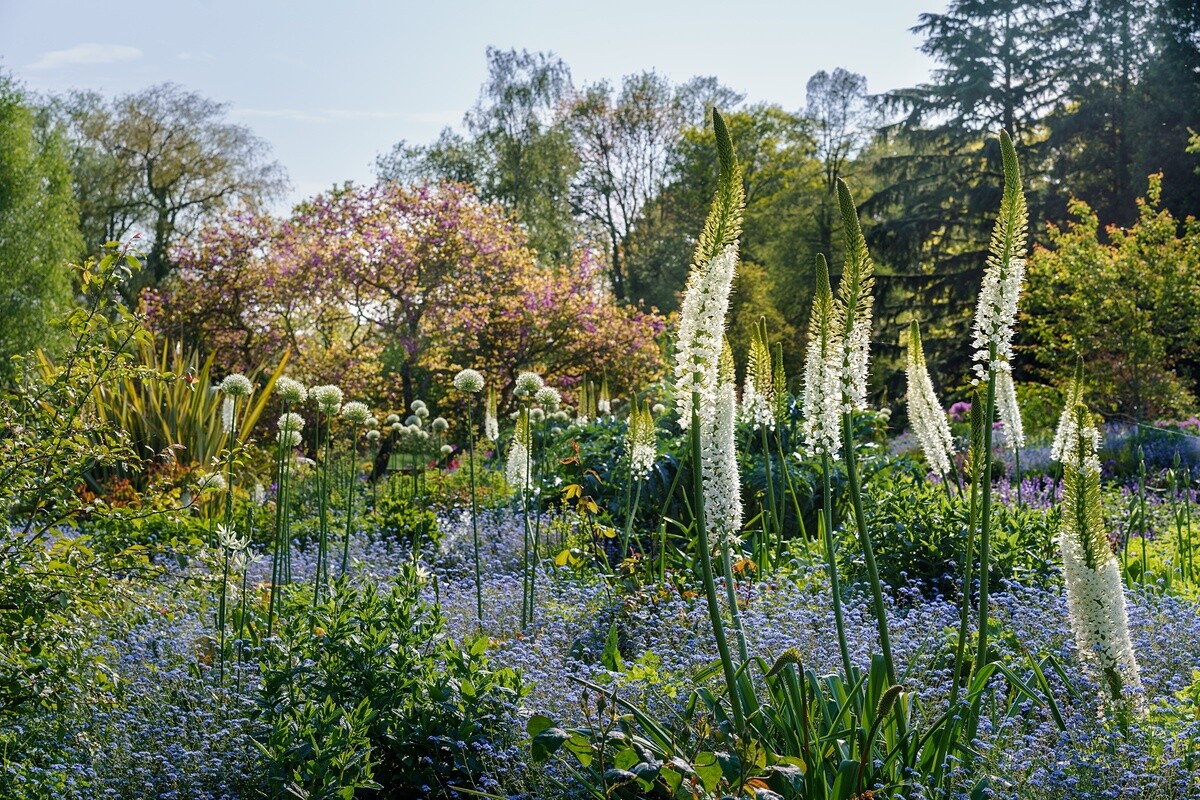
Eremurus: The Garden’s most Sumptuous Spires
POSTED 9th October 2026

Few plants make quite such a dramatic statement in the garden as eremurus, commonly known as foxtail lilies or desert candles. Their towering flower spikes bring height and a real sense of theatre to the border, rather like giant bottle brushes, only much more elegant. The flowers come in gorgeous shades of crisp white, cream, soft pink, yellow, apricot and bright orange.
Each spire is densely packed with hundreds of star-shaped flowers that gradually open from the bottom upwards, offering a magnificent, long-lasting display.
The scientific name Eremurus comes from the Greek words eremos, meaning desert or solidary, and oura, meaning tail.
Eremurus ‘Cleopatra’ is one of the easiest to grow and a reliable performer in the garden. It may not one of the tallest varieties – in our Gravel Garden it reaches around 1.2 m - but more than makes up for it by its vivid display.
It’s warm tangerine flower spikes glow in the sunshine, bringing a lovely splash of colour to the border. The rich tones work particularly well against silvery foliage, ornamental grasses and cooler colours.
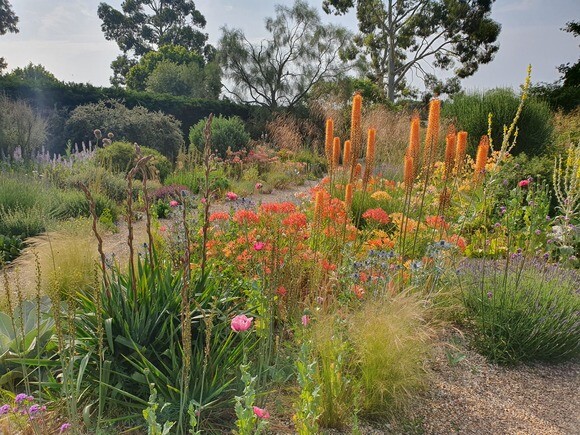
The warm tones of Alstroemeria ligtu hybrids mirrored by E. 'Cleopatra'
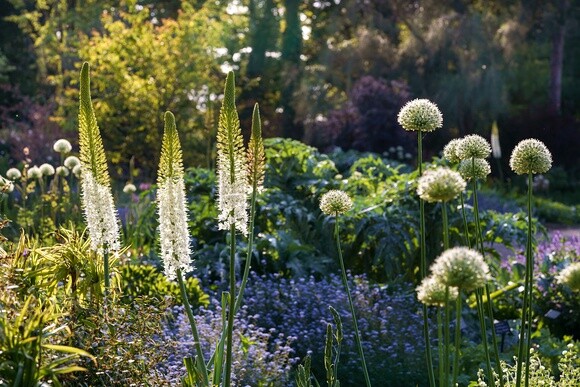
Then there is Eremurus himalaicus, one of the earliest foxtail lilies to flower, sending up elegant, pure white spires that can reach an impressive 2.5m. It appears to be slightly more tolerant of heavier soil. In our Reservoir Garden, we’ve paired it with the striking globe-shaped blooms of Allium stipitatum ‘White Giant’, whose rounded flower heads create a lovely contrast with the eremurus’ tall, slender spires. Plants raised from seeds can take up to 5 years to reach flowering size.
Planting the foxtail lilies
The key to growing foxtail lilies successfully is good drainage. Native to the dry grasslands, semi-deserts and mountainous regions in central and western Asia, eremurus are happiest in full sun and require well-drained soil. Avoid very exposed, windy sites, particularly if you’re growing the taller varieties, and frost pockets. They also dislike wet, heavy clay where their roots are prone to rotting over winter.
The distinctive octopus-like roots are brittle and snap easily, so handle them with care when planting. If they appear dry, rehydrate them by soaking them in a bucket of water for a couple of hours before planting.
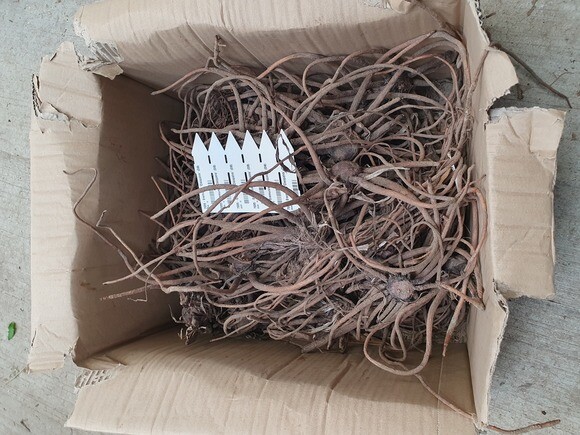
The central growing point is surrounded by fleshy roots that can store water and nutrients
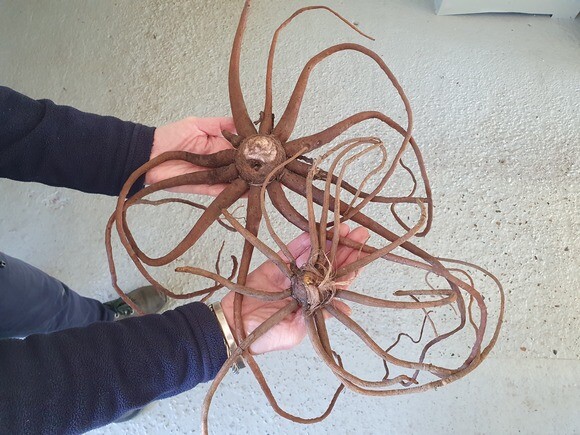
Root sizes vary depending on the specific cultivar.
Always plant eremurus shallowly, with the central bud just below the soil surface.
Dig a wide, shallow hole and create a mound about 5cm (2 inch) tall of sharp sand or grit in the centre. Position the crown on top of the mound and then gently spread the roots horizontally, slightly downwards. Carefully backfill with soil and water to settle it around the roots.
Mark the planting spot to avoid accidentally damaging the roots when you’re working in the border later on.
Good companion plants
There is just one small drawback to these magnificent plants: the foliage can look a little untidy as it dies back after flowering. The trick is to let other plants hide the fading leaves. Salvias, nepetas and hardy geraniums are particularly useful for filling the gap as the foxtail lily retreats, while roses, ornamental grasses and late flowering perennials keep the borders looking colourful and full of interest well into autumn.
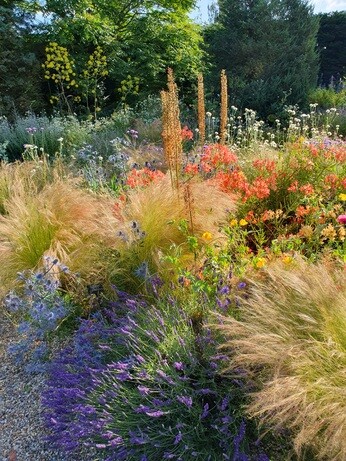
Stipa tenuissima helps fill the gaps as the eremurus dies back after flowering.
As always, think about adding contrasting textures and flower shapes to bring out the best in those magnificent spires. Combine the bold, vertical lines with softer textures and more relaxed shapes to add depth and movement to the border.
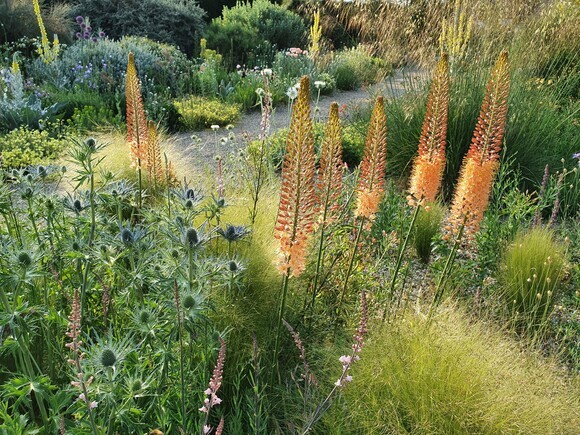
The soft wispy texture of Stipa tenuissima and the sea holly’s flower heads contrast beautifully with the orange flower spikes.
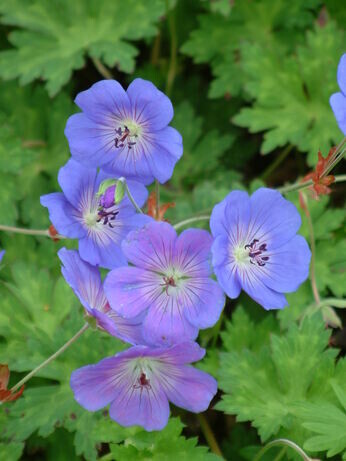
Geraniums are ideal companions, with long-flowering varieties such as G. ‘Rozanne’ (pictured below), ‘Orion’, ‘Ivan’ and ‘Patricia providing colour for months.
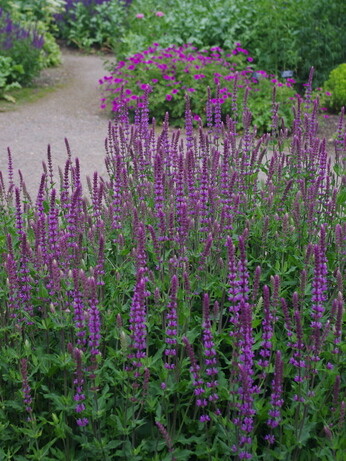
Salvia ‘Amethyst’
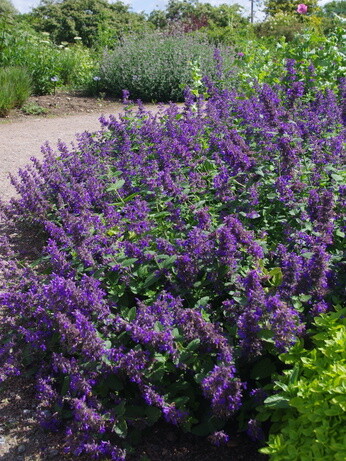
Nepeta ‘Hill Grounds’
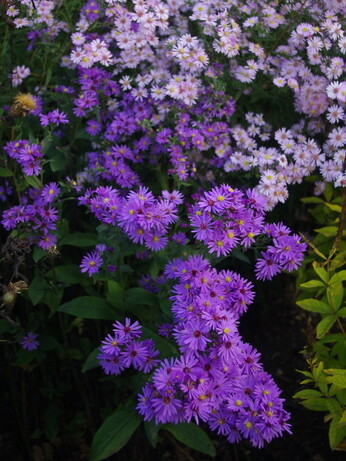
Late flowering perennials: Aster ‘Ice Cool Pink’ and Symphyotricum ‘Prairie Purple’.
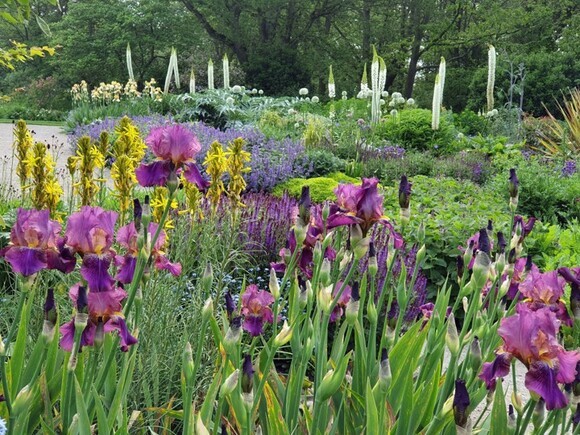
Iris ‘Benton Menace’, Ashodeline lutea, salvia and nepeta flower alongside foxtail lilies in the Reservoir Garden, creating a beautiful mix of colour, form and texture.
COMMENTS