
Find out what the propagation and garden teams have been up to this week.
Wild Words from the Ground - February
POSTED 10th March 2026

Welcome to our blogs featuring the photos and sightings of wildlife in the garden (and outreach sites like Chattowood and the Meanwhile Garden) by our staff, whether in the office, shop, tea-room, nursery or garden. The images are curated and commented upon by Dr Chris Gibson, our Wildlife Advocate.
While the photos are not always of the highest quality – our staff are busy doing their main jobs! – they give a real feel of life in the garden, something we are very keen to encourage, as indeed was Beth.
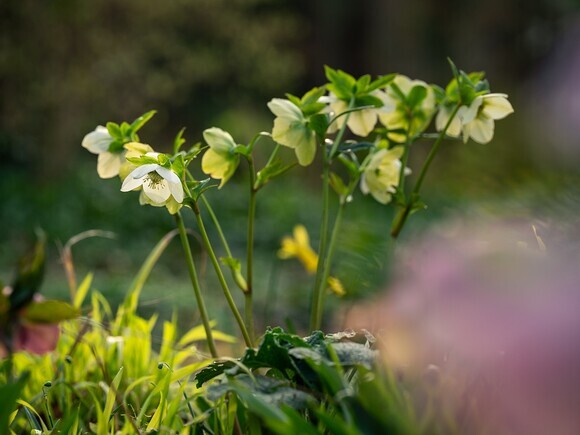
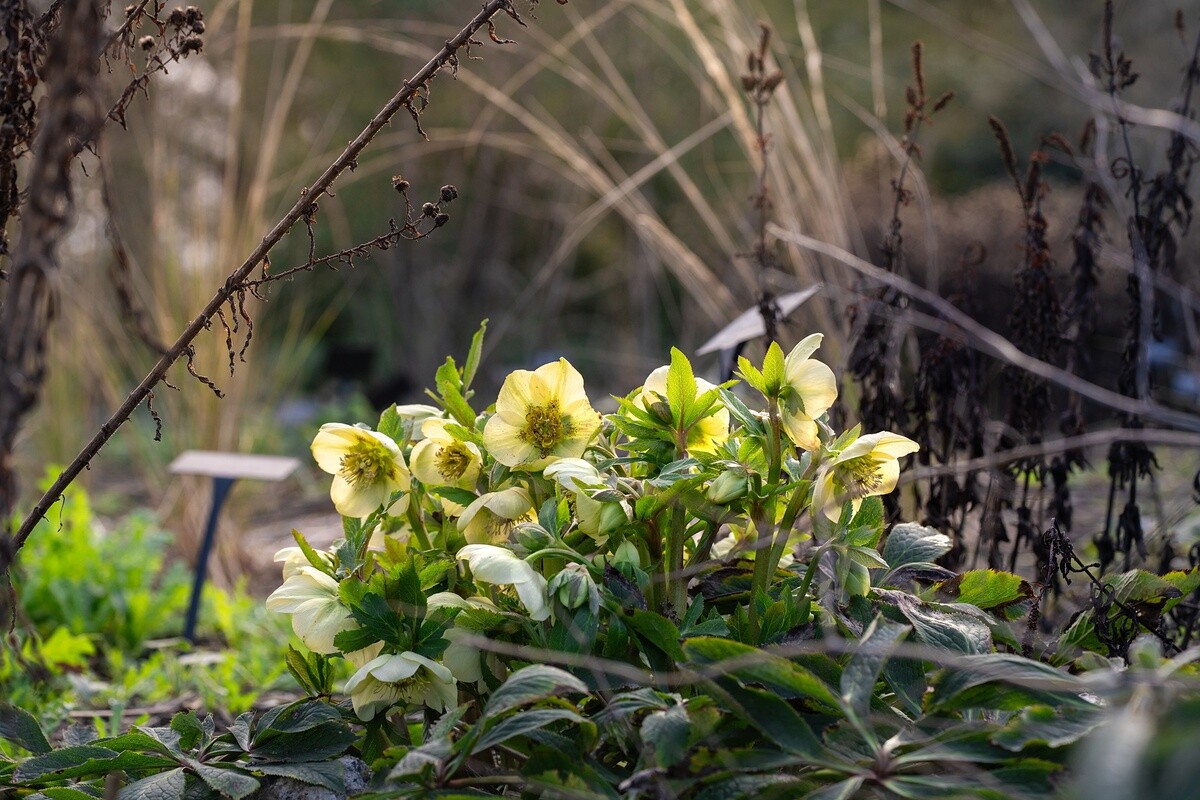
February was another wet one, continuing the theme for much of the preceding winter. The short days and lack of sunlight until the end of the month at least mean that we have relatively little to report about wildlife in the garden this time.
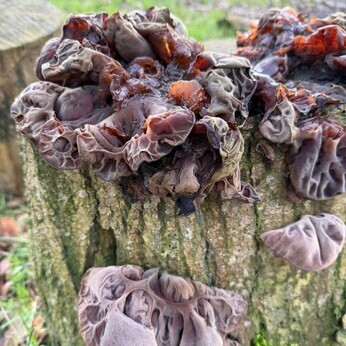
Out in the wildlife area, Nicola found some wonderful fungi going about their winter business of turning death back into life, recycling the nutrients, continuing the essential cycle of life. The Jelly Ear, as it is now known, used to be Judas's Ear, and grows mostly from dead Elder, one of the trees that Judas is supposed to have hanged himself from. It is also to my taste one of the better edible fungi, fried into a crispy bacon-like state.
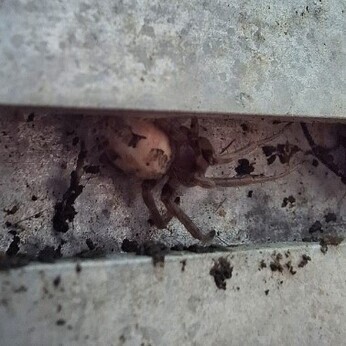
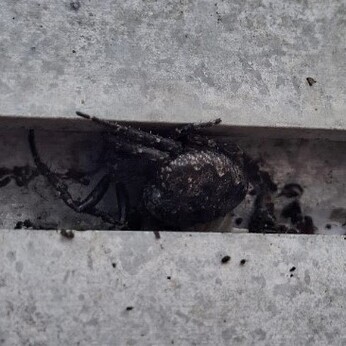
Spiders and their relatives are often to be found during the winter months, as they are sometimes much less seasonal than many insects. But you sometimes need to hunt for them, as Rob did with this couple of crevice-dwellers. The paler one is the Furrow Orbweaver and the dark spotty one the Walnut Orbweaver, probably a new record for the garden. We are in the process of compiling a list of things that have been found here, so when that is complete we will be able to be more definite about such statements.
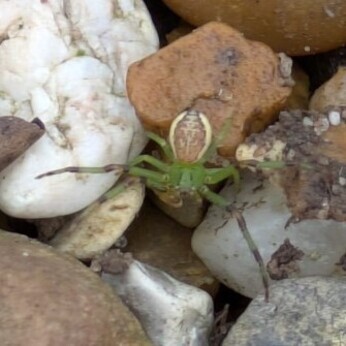
And Scott found this colourful one wandering out and about, a lovely little crab spider Diaea dorsata. Not common in Essex: we have seen it once in Wivenhoe, but there are just a couple of other records in Tendring district. Again it is probably first record for the garden.
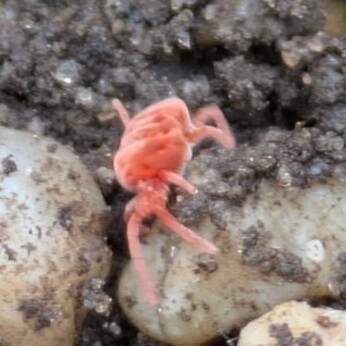
Mites are small relatives of spiders, sharing the same feature of eight legs. In the first warmth of spring Velvet Mites, here photographed by Scott, emerge hunting for even smaller critters in leaf litter and on bark.
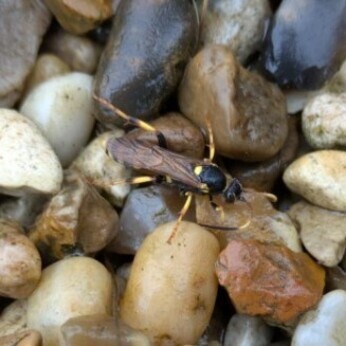
Predators are valuable in helping bring balance to the garden, and likewise parasites, even though their lifestyle may be gory. Ichneumon wasps lay their eggs in the still-living body of their caterpillar host; the parasite larvae devour it from the inside, leaving the vital organs to the last moment, so keeping their meat fresh. They are legion, and often very hard to identify, but the one Scott found scuttling around the Gravel Garden is Ichneumon xanthorius, one of the more recognisable and parasitic upon moth caterpillars.
Beetles too are often very difficult to identify, especially for those of us not prepared to catch, kill and dissect the objects of our study. So this must remain as ‘Sharon’s little beetle’, as good a name as any, another good sign of the advancing season.
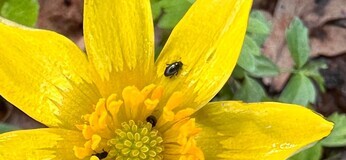
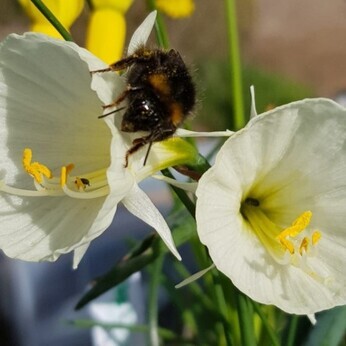
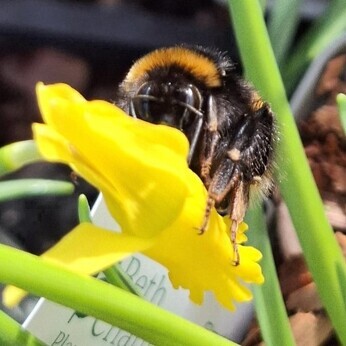
And especially in the last week of the month, other signs of spring started to appear increasingly frequently. On 28th February, Scott spotted the first butterfly, a Brimstone (everyone’s favourite buttery fly) and on the very same day, a visitor reported the first Comma. These butterflies are emerging from hibernation, having overwintered as adults, and the same is true of the queen bumblebees, attracted especially to the beds of Crocus tommasinianus. But not exclusively: these photos from Emily and Rob were both of bees visiting dwarf daffodils in pots. Wherever they are, flowers will attract wildlife! Well, most flowers…but that’s another story for another blog another day.
Looking forward now, it feels that the floodgates of spring (hopefully figuratively only!) have been opened. Even if, as some longer-term forecasts are hinting, we get a cooler snap in mid-March, The seasons are changing, Spring is here, and we can all look forward with confidence to the light and life of summe
For a different perspective, see my personal blog from this month:
The Wild Side of Beth Chatto Gardens: February is the LONGEST month! | Chris Gibson Wildlife
COMMENTS