
Find out what the propagation and garden teams have been up to this week.
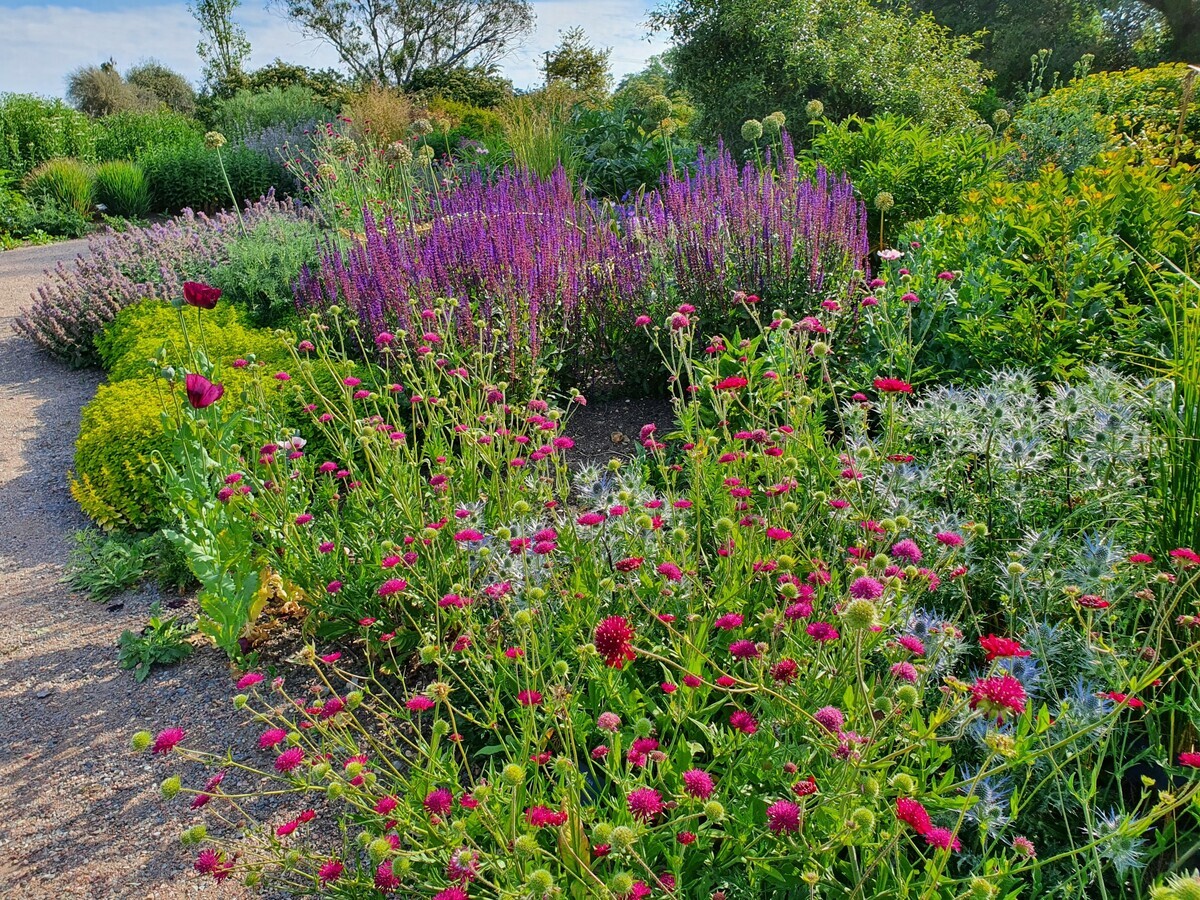
A Garden for Summer Begins in Autumn
POSTED 16th September 2026

What are the benefits of planting in Autumn?
With summer winding down, lingering soil warmth and fresh rainfall offer ideal planting conditions.
Planting now, while conditions are ideal for plants to establish, gives them the best possible start. With time to settle in and develop strong roots, they’ll be ready to put on a rewarding display next year.
Last week we finally welcomed just over 20mm of rain in a single day, followed a few days later by another 17mm. It was a much-needed downpour, and the garden practically gasped a sigh of relief as the parched soil soaked it in. While we will definitely need plenty more rain over the coming weeks to truly break this dry spell, it was a fantastic start. The plants have already perked up, and we are seeing exciting signs of life. It’s giving us a greater indication of which plants are likely to recover and which ones we might need to replace.
We’re trying not to rush into any big decision just yet. Instead, we are giving our plants time to respond to the cooler weather. Now is actually the perfect time to look around and see what’s thriving. Take note of which plants have been coping best with the scorching temperatures and drought – not just in your own garden, but around your neighbourhood too. Just keep in mind that it sometimes can be tricky to know if a neighbour’s plant is naturally tough, or if they have secretly been watering it!
In this week’s blog, we are exploring some the best early-summer plants to bring colour, rich texture, and plenty of interest to your garden. As summer unfolds, these standout varieties will keep your borders looking lush and vibrant, while also providing a valuable source of food and shelter for wildlife.
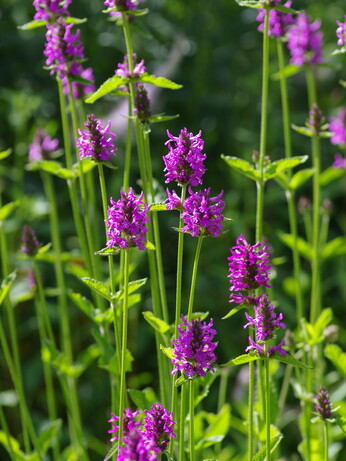
Bees and butterflies absolutely love Betonica officinalis 'Hummelo'. Its upright stems are topped with vibrant pinkish-mauve flowers that bloom over a long period in summer, rising above mounds of crinkled green leaves. Hardy geraniums, iris sibirica, astrantia, daylilies and ornamental grasses make great companions.
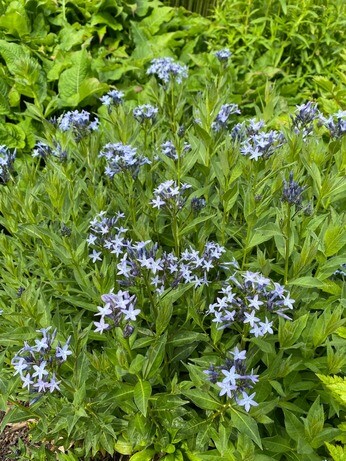
Amsonia, commonly known as bluestar, is a real star in a climate-resilient garden. Amsonia orientalis, like all amsonias, can take a couple of years to settle in and really get going, but it’s well worth the wait. In early summer it produces clusters of beautiful blue flowers, which combine well with most early flowering perennials including irises, astrantia and Salvia nemorosa. Later in the season, geranium, asters, hylotelephium and ornamental grasses make excellent companions.
As the days shorten and temperatures cool, the bluestars’ foliage turn a beautiful butter yellow, giving it a whole new moment in the garden. Its deep, robust root systems also make amsonias particularly well suited to cope with hot, dry conditions, as well as heavier soils and wet winters, making them an excellent choice for a climate-resilient garden.
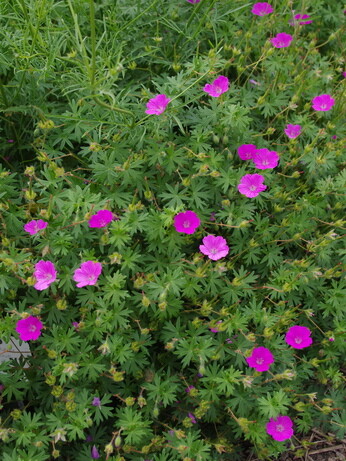
Geranium sanguineum held up incredibly well during this summer’s heatwaves, forming neat hummocks of finely cut, fresh green leaves, producing a constant succession of flowers throughout the summer. Colours range from white and pale pink, to vibrant magenta. Bloody cranesbill, as it's also known as, makes a lovely companion planted at the base other drought resiliant perennials such as amsonia, baptisia or thermopsis, adding colour at ground level.
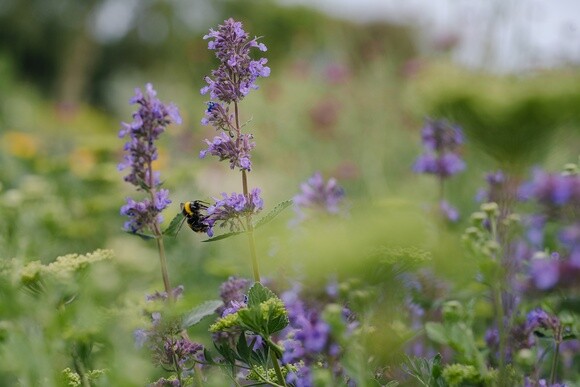
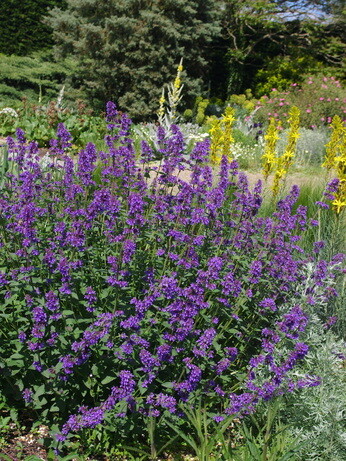
Nepeta 'Chettle Blue' is one of our favourite nepetas, and is hugely popular with bumblebees too, which are constant visitors when it’s in flower. Reaching 75cm in height, it forms a strong, bushy plant, producing intense blue flowers, greatly enhanced by the purple calyces, for many weeks in summer. It’s also wonderfully resilient, coping well with both heat and drought.
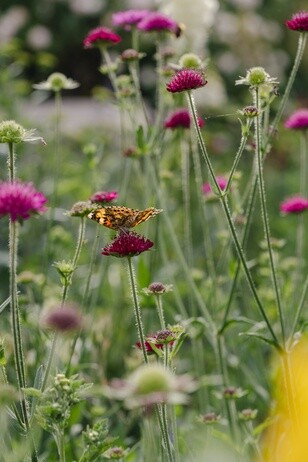
Knautia macedonica is another great plant for a sunny border. It’s crimson pincushions-like flowers are carried on masse on wiry branched stems, giving the plant a lovely airy quality. It does have a tendency to sprawl, though, so it’s best planted alongside partners that can help support it such as salvias, nepetas and achilleas.
Another outstanding performer this summer was Salvia verticillata ‘Purple Rain’, alongside the paler lilac-blue Salvia. v. ‘Hannay’s Blue’. Despite the heat, we decided to give these plants a trim to remove the spent flowers and were quickly rewarded with a fresh mound of foliage, followed by a second flush of blooms. As anyone who has tried to remove young seedlings of this salvia can testify, they’re incredibly deep rooted, even at a young age, making the plants very drought resilient.
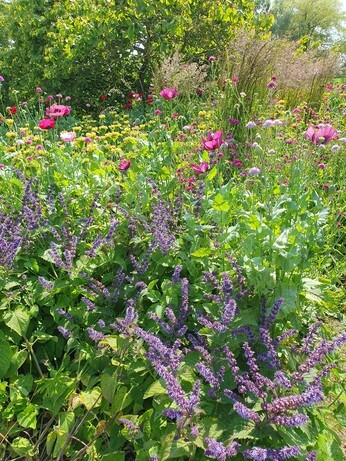
Salvia nemorosa usually receives a similar chop, to encourage a second flush of flowers. This year, however, with one heatwave following another and drought conditions, we decided to leave them until the heatwaves had passed. We thought a chop would do them more harm than good, instead leaving the old foliage to help shade and protect the crown, as well as the roots. Sometimes the best thing we can do in a difficult summer is simply step back and let the plants look after themselves.
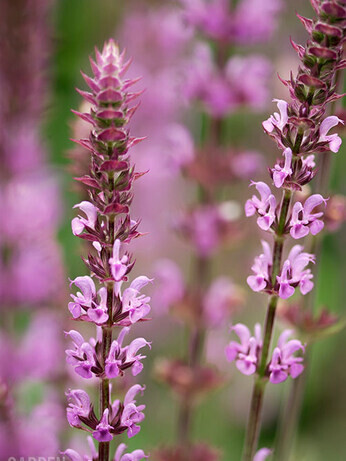
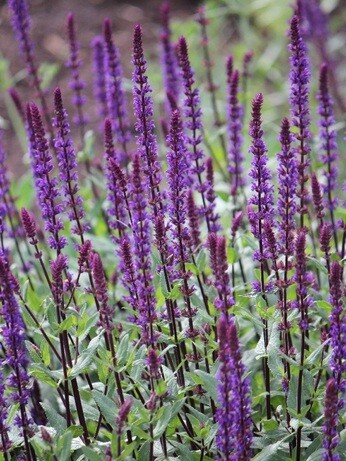
Some held their colour well, even after the petals faded and dropped, as their dark stems and calyces keep the plant looking attractive. Salvia nemorosa 'Amethyst’ and S. ‘Caradonna’ never disappoint.
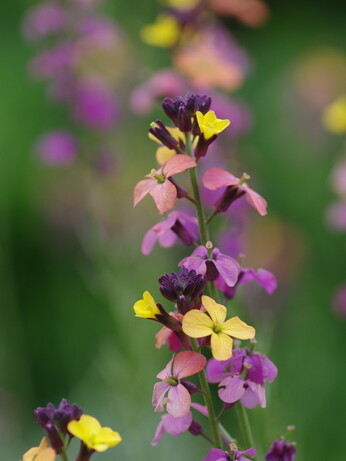
Among the perennial wallflowers, Erysimum mutabile is a firm favourite, flowering for months in our Gravel Garden - a delightful display of multicoloured flowers, its dark purple buds open creamy-yellow, turning mauve as they age.
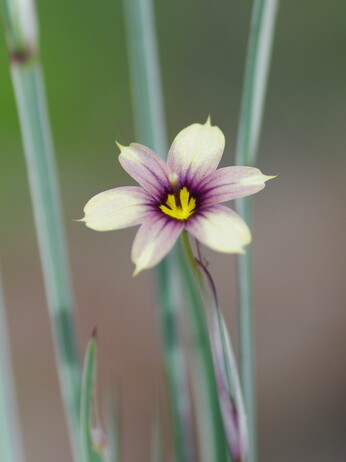
Sisyrinchium 'Janet Denman' has delicate, sword-shaped leaves beautifully striped with cream. Purple buds open to reveal dainty, star-shaped creamy flowers, each with a bright yellow centre surrounded by a purplish ring. around the bright yellow centre. The flowers open in the afternoon, adding a lovely little burst of colour as the day goes on. Ideal for a raised bed, trough or container.
In shade, you need to rely more on interesting textures and contrasting leaf sizes and shapes, than on vibrant colour.
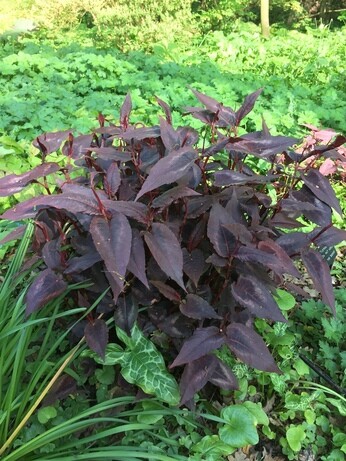
Persicaria microphylla ‘Red Dragon’ is one exception, emerging deep burgundy with silver-grey chevron-like markings. As summer progresses, the leaves gradually shift to green, while the chevron markings become increasingly redder. Although it enjoys part shade, try to make sure it catches the afternoon sun from behind, so the young red foliage really comes alive and glows. It performs best in a soil that doesn’t become too dry.
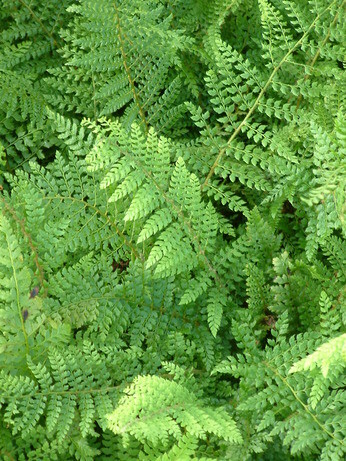
Ferns have naturally evolved beneath forest canopies, so are brilliant for shady borders. Once established, they need very little care. The main job is simply removing the old, tatty fronds before new growth emerges in spring – something we always make sure to do. Their delicate, feathery fronds make a lovely contrast with epimedium, brunnera, hosta, dicentra and other shade-loving plants.
The soft shield fern Polystichum setiferum (Div Group) 'Herrenhausen' is aparticularly lovely form. Its finely cut fronds are held more horizontally than in some other cultivars, giving it a more spreading habit. It is also extremely tough and easy to grow, and once established surprisingly tolerant of dry soil. It will thrive in deep shade or even in sun, provided the soil doesn’t become too dry. Being semi-evergreen, it also gives a good presence through the winter. In late winter we remove the old frond to better enjoy snowdrops, hellebores, daffodils and Primula vulgaris, our native soft-yellow primrose.
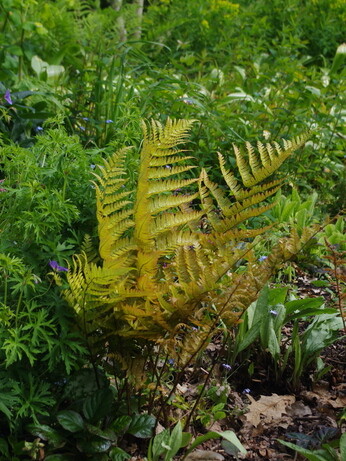
The Coppery Shield fern, Dryopteris erythrosora, makes a lovely feature in the garden, particularly in spring and early summer when its young fronds emerge in bronze and coppery shades, before gradually maturing to green. It continues to produce new fronds through the growing season, keeping the plant looking interesting through the summer. We love it planted with tiarella, brunnera, pulmonaria and primroses, then paired with hardy fuchsias and Japanese anemones to carry the interest into late summer and autumn.
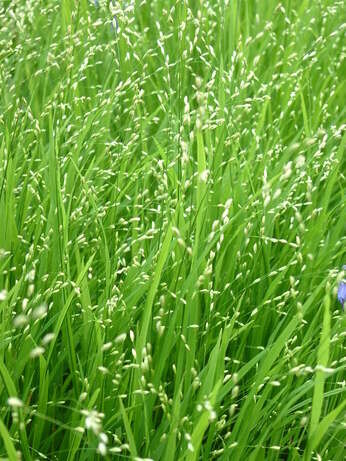
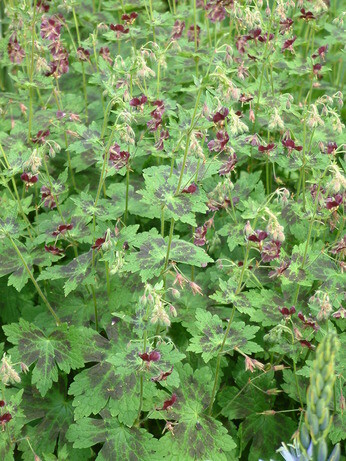
Melica uniflora f. albida is always admired by visitors who find its delicate, rice-grain-like flowers particularly charming. It grows well in dappled or partial shade, where it looks lovely paired with ferns, hosta and Geranium phaeum. The leaves of G. phaeum ‘Samobor’ are especially attractive, marked with a deep maroon blotch that keeps the plant looking interesting even when not in flower.
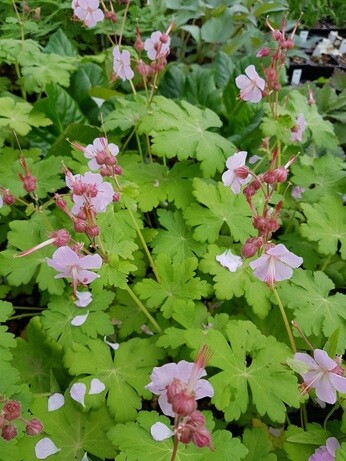
Last, but not least, Geranium macrorrhizum 'Cham-Ce' (below) makes a reliable, evergreen groundcover and is tolerant of a wide range of conditions. It is particularly suited to dry shade, where its soft pink flowers appear in abundance, providing a lovely splash of colour. Similar to Geranium m. 'Ingwersen's Variety' but has a softer flower colour and a slightly more compact habit.
COMMENTS